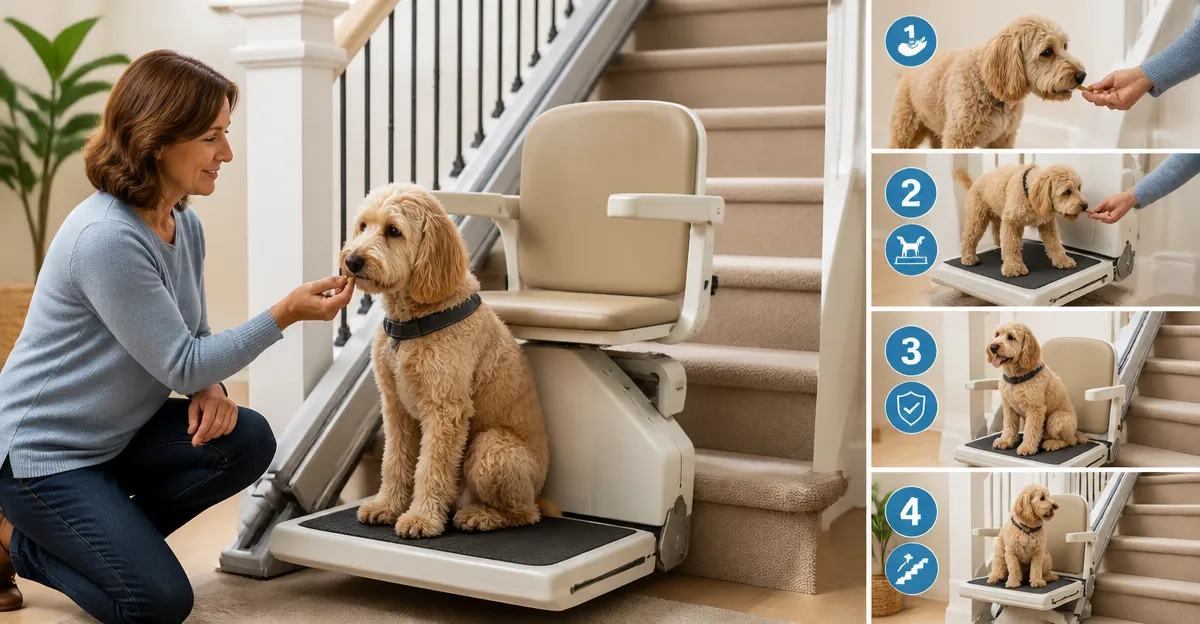
How to Introduce a Motorized Stairlift to an Anxious Dog: Step‑by‑Step Low‑Stress Training for Safe, Confident Use
This guide explains how a pet owner can teach an anxious dog to use a motorized stairlift without fear. It outlines preparation, gradual exposure, and reinforcement techniques that protect joint health and build confidence. By following the instructions, one will reduce stress for both dog and owner while ensuring safe operation of the lift.
What You Will Need
- Motorized stairlift installed according to manufacturer specifications.
- Non‑slip dog stair ramps for gradual introduction (e.g., inanil Dog Stair Ramps 6‑Pack, ROYALAY Interlocking Dog Ramp 4‑Pack).
- Treats, clicker, and a calm voice for positive reinforcement.
- Leash and harness for controlled guidance.
- Cleaning supplies for maintaining ramp covers.
Step 1: Evaluate the Stairlift Environment
Begin by inspecting the stairlift platform, railings, and surrounding floor. Ensure that the surface is level and free of debris. Verify that the lift moves smoothly at the lowest speed setting. This assessment prevents accidental slips and allows the dog to sense a stable platform. If the lift has a hard plastic or metal surface, consider placing a non‑slip mat or a low‑profile ramp to provide a softer foothold.
Step 2: Introduce a Stationary Ramp as a Familiar Tool
Before activating the motorized lift, allow the dog to become comfortable with a stationary ramp placed on the stairs. The inanil Dog Stair Ramps 6‑Pack are made from 40D high‑density foam, providing firm yet gentle support for pets up to 30 lb. Their anti‑slip bumps and washable cover make them ideal for repeated training sessions. Place two wedges side by side on a single step, securing them with the self‑sticky pads, and encourage the dog to step onto the ramp using treats.
Key features that aid training include:
- Gentle slope with added surface grip, reducing anxiety about slipping.
- Stable placement via non‑slip rubber dot and hook‑and‑loop tape.
- Machine‑washable cover for hygiene after frequent use.
Price: $79.99, Rating: 3.7/5 (30 reviews).
Step 3: Associate the Ramp with Positive Rewards
Use a clicker or verbal marker each time the dog steps onto the ramp voluntarily. Follow the click with a high‑value treat. Repeat this process for several short sessions of five minutes each, allowing the dog to explore the texture and height at its own pace. If the dog shows hesitation, step back and let it observe from a distance before attempting again. Consistency builds confidence and creates a positive association with the ramp.
Step 4: Transition to the Motorized Lift While Keeping the Ramp in Place
Once the dog reliably uses the stationary ramp, position the ramp on the lift platform itself. The ROYALAY Interlocking Dog Ramp 4‑Pack offers interlocking wedges that can be arranged to cover the entire lift surface. Its high‑density sponge core and wooden boards provide sturdy support for small to medium dogs. The anti‑slip bottom and hook‑and‑loop fasteners keep the ramp fixed during lift movement.
Features to note:
- Sturdy materials suitable for dogs up to 44 lb.
- Easy installation with hook‑and‑loop and anti‑slip bottom.
- Versatile design for indoor stairs, courtyards, or beds.
Price: $64.99, Rating: 4.5/5 (4 reviews).
Guide the dog onto the ramp while the lift remains stationary. Reward the dog for staying on the ramp. Then, gently press the lift button to move the platform a few inches while the dog remains on the ramp. Keep the movement slow and stop immediately if the dog shows signs of stress.
Step 5: Gradual Increase of Lift Travel Distance
Increase the travel distance incrementally, adding only a few seconds of motion per session. Continue to use treats and praise for each successful ride. If the dog becomes uneasy, revert to the previous distance and practice more repetitions. The goal is to reach the full height of the staircase within a week, depending on the dog’s temperament.
Step 6: Fade the Ramp When Confidence Grows
When the dog demonstrates comfort riding the lift without the ramp, begin to reduce the ramp’s presence. Remove one wedge at a time, allowing the dog to stand directly on the lift surface. The lift’s low‑speed setting and the non‑slip mat underneath provide sufficient traction. Observe the dog’s posture; a relaxed stance indicates readiness to forgo the ramp entirely.
Step 7: Establish a Consistent Routine
Incorporate the lift into daily activities such as accessing a bedroom or a patio. Use the same cue word (“up” or “lift”) and reward system each time. Consistency reinforces the behavior and prevents regression. Monitor the dog’s joints for any signs of strain, especially in senior pets, and adjust the lift speed if necessary.
Tips & Pro Tips
- Maintain a calm environment: Close doors, turn off loud appliances, and speak softly.
- Use a harness instead of a collar: A harness distributes pressure evenly and prevents neck strain.
- Schedule training during low‑energy times: Early morning or after a short walk are ideal.
- Keep the ramp clean: Wash the removable cover after each week of use to avoid odors that might deter the dog.
- Consider a wider ramp: The Giaousin 2‑Step Dog Stair Ramp provides an extra‑wide surface and a 26° incline, suitable for dogs up to 44 lb. Its triple‑layer anti‑slip system offers additional security during early training phases.
Price: $75.99, Rating: 4.2/5 (23 reviews).
Troubleshooting Common Issues
- Dog refuses to step onto the ramp: Reduce the height of the ramp by using a single wedge instead of two, and increase treat frequency.
- Slip on the lift platform: Apply a thin anti‑slip mat or use the INRLKIT Dog Stair Ramps 3‑Pack to create a textured surface.
- Excessive barking or panting during lift movement: Pause the lift, allow the dog to settle, and resume at a slower speed.
Price: $39.99, Rating: 4.4/5 (16 reviews).
Conclusion
By assessing the environment, introducing a supportive ramp, rewarding calm behavior, and gradually increasing lift movement, one can transform a motorized stairlift into a low‑stress mobility aid for an anxious dog. The recommended ramps—inanil Dog Stair Ramps 6‑Pack, ROYALAY Interlocking Dog Ramp 4‑Pack, and others—provide reliable footholds during each training phase. Consistent practice, patience, and positive reinforcement will result in a confident, safe, and independent pet capable of using the stairlift without anxiety.
Products Mentioned in This Guide
Frequently Asked Questions
How can I safely introduce my anxious dog to a motorized stairlift?
Start with a non‑slip ramp on the lift platform, let the dog explore at its own pace, and use treats and a calm voice to reward calm behavior.
What equipment do I need to train a dog to use a stairlift?
You’ll need the installed stairlift, non‑slip dog ramps, treats, a clicker, a leash and harness, and cleaning supplies for the ramp covers.
How long should each training session be for an anxious dog?
Keep sessions brief—2 to 5 minutes—and end on a positive note before the dog shows signs of stress.
Can I use a clicker to reinforce confidence on the stairlift?
Yes, click the moment the dog steps onto the ramp or lift, then immediately give a treat to associate the action with a reward.
What signs indicate my dog is ready to use the stairlift without a ramp?
When the dog consistently steps onto the ramp without hesitation, follows the lift’s movement calmly, and shows relaxed body language, it’s ready for direct lift use.