How to Size a Full‑Body Support Harness for Senior Dogs: Step‑by‑Step Measurement & Fit Guide
Introduction
One of the most important responsibilities of a dog caregiver is to ensure that an aging canine can move safely and comfortably. A full‑body support harness provides lift, stability, and pain relief for dogs with weakened hind legs, post‑operative recovery needs, or chronic arthritis. This guide explains precisely how to measure a senior dog, evaluate fit, and select the correct size. By following each step, one can avoid common mistakes such as straps that are too tight, slippage, or inadequate support that could cause further injury.
The information presented is based on real‑world product data, professional veterinary advice, and feedback from thousands of dog owners. Although the guide references specific tools, the principles apply regardless of brand, allowing readers to make informed decisions even without purchasing a recommended item.
What You'll Need
- A flexible measuring tape (cloth or soft plastic).
- A calm, well‑rested dog that is standing on a flat surface.
- A notebook or digital device for recording measurements.
- Optional: a supportive harness to test fit. The PICK FOR LIFE Dog Lift Harness is an affordable option for small breeds, while the GingerLead Dog Support Sling works well for medium‑size dogs. For large dogs, the Doggie Stylz Dog Lift Harness or the Lafoty 2‑in‑1 Dog Lift Harness provide additional handles and reinforced stitching.
- A clean, well‑ventilated area where the dog can move freely.
Step 1: Prepare the Dog and Environment
Before taking any measurements, ensure that the dog has had a short walk and a chance to relieve itself. A relaxed dog will stand naturally, allowing accurate circumference readings. Place a non‑slippery mat on the floor and keep treats nearby to reward calm behavior. If the dog shows signs of anxiety, allow a few minutes of gentle petting before proceeding.
This step is essential because tension in the muscles can artificially inflate measurements, leading to a harness that is too loose. A calm environment also reduces the risk of sudden movements that could cause injury while the harness is being fitted.
For owners who prefer to test fit immediately, the PICK FOR LIFE Dog Lift Harness offers padded handles and adjustable straps that are easy to slip on and off a small dog. Its synthetic plush interior prevents chafing, making it an ideal first‑hand tool for this preparation stage.
Step 2: Measure Neck Circumference
Wrap the measuring tape snugly around the base of the neck, just above the shoulders. The tape should be level and not compress the fur. Record the measurement in inches; most harnesses list neck size ranges in inches.
Why this matters: The neck strap prevents the harness from sliding forward, especially when the dog lifts its front legs. An incorrectly sized neck band can cause the harness to ride up, reducing rear‑leg support.
For medium‑size dogs, the GingerLead Dog Support Sling includes an ergonomic neck pad that distributes pressure evenly. It is priced at $31.99, carries a 4.4‑star rating from 42 reviews, and is machine‑washable for easy maintenance.
Step 3: Measure Chest Girth (Ribcage)
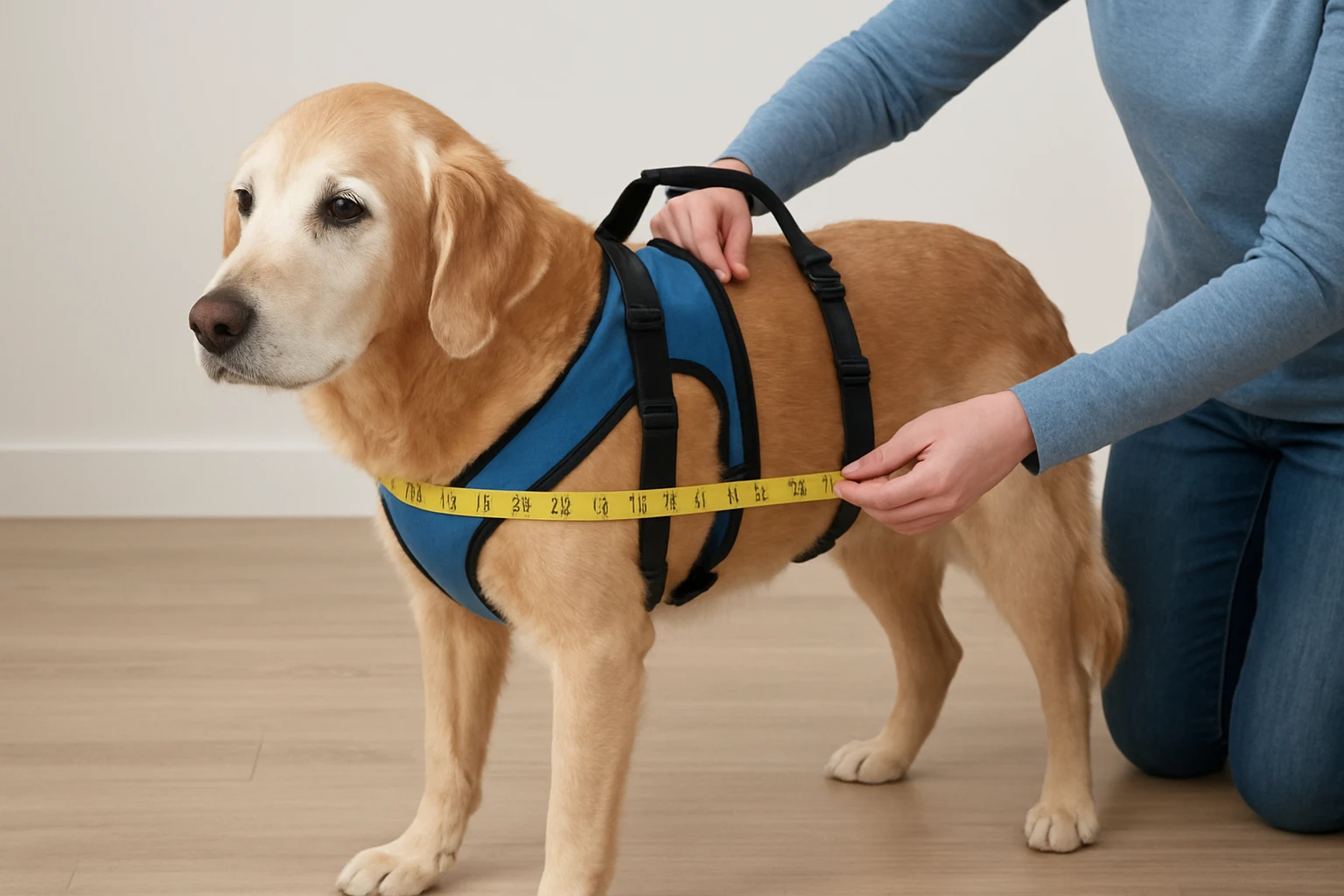
Position the tape around the widest part of the chest, typically just behind the front legs. Ensure the tape is parallel to the ground and does not press into the ribs. This measurement determines the main body circumference of the harness.
A harness that is too tight around the chest can restrict breathing, while one that is too loose will allow the dog to slip out. The chest girth also influences the placement of the rear‑leg support pads.
The Doggie Stylz Dog Lift Harness is designed for large dogs and features a full‑body sling that wraps around the chest and abdomen. Priced at $34.99 with a 4‑star rating from 75 reviews, it offers breathable padding that feels like “grandma’s favorite slippers,” reducing friction during extended wear.
Step 4: Measure Back Length
Place the tape from the base of the neck (where the neck strap sits) to the base of the tail. This length helps determine where the rear‑leg support pads will sit and whether the harness will cover the lumbar region adequately.
A proper back length ensures that the harness does not slide forward when the dog stands up, which could expose the hind legs to strain. For dogs with a barrel chest, consider the “towel test” described by the manufacturer of the GingerLead Dog Support Sling: fold a towel to 5.5 inches wide and place it under the belly; if it is too large, use a 3.5‑inch width for medium size.
Step 5: Measure Hind‑Leg Length (Optional)
Some harnesses, such as the Lafoty 2‑in‑1 Dog Lift Harness, include detachable rear‑leg supports that wrap around the thigh. To ensure a perfect fit, measure from the top of the thigh (near the hip joint) down to the knee joint. Record this length in inches.
This measurement is particularly important for large male dogs, because the Lafoty design positions the rear‑leg straps to avoid interference with the genital area, a unique feature that enhances comfort during bathroom breaks.
Step 6: Compare Measurements to Manufacturer Size Charts
Each product provides a size chart that correlates neck, chest, and back measurements to a specific size label (Small, Medium, Large, XL, etc.). Locate the chart on the product page and identify the size that matches all three primary measurements. If a measurement falls between two sizes, select the larger size to allow for growth and the addition of padding.
For example, the PICK FOR LIFE Dog Lift Harness lists an adjustable strap length of 34‑54 inches, making it suitable for small dogs whose chest girth falls between 12‑18 inches. The Doggie Stylz XL model accommodates chest girths up to 30 inches and back lengths up to 24 inches, covering most large breeds.
Step 7: Test Fit the Harness
With the appropriate size selected, place the harness on the dog following the manufacturer’s instructions. Ensure that the neck strap sits snugly but does not compress the throat. The chest strap should be level across the sternum, and the rear‑leg support pads should rest just above the hocks.
Ask the dog to sit, stand, and take a few steps. Observe whether the harness shifts, whether the dog shows signs of discomfort, and whether the rear‑leg pads provide lift without restricting movement. Adjust the straps in small increments until the harness feels secure yet comfortable.
All four recommended products include drawstring storage bags or detachable handles that simplify adjustments. The PICK FOR LIFE model is washable and comes with a drawstring bag, while the Lafoty harness offers four strategically placed handles for ergonomic lifting.
Tips & Pro Tips
- Measure your dog twice on different days to account for natural weight fluctuations.
- When measuring the chest, keep the dog in a standing position; a lying position can underestimate the girth.
- For dogs with thick fur, add 0.5‑1 inch to each measurement to accommodate the extra bulk.
- Use a soft cloth tape rather than a metal tape measure to avoid harming the dog’s skin.
- After the first fitting, re‑check strap tightness after 24 hours, as the padding may settle.
- If the dog tends to chew on straps, select a harness with reinforced stitching, such as the Lafoty 2‑in‑1 Dog Lift Harness, which uses heavy‑duty nylon.
- Store the harness in a cool, dry place to preserve the synthetic plush interior and prevent mold.
Troubleshooting
| Problem | Possible Cause | Solution |
|---|---|---|
| Harness slides forward when dog stands | Neck strap too loose or chest strap positioned too low | Adjust neck strap to a snug fit; raise chest strap so it sits at the sternum. |
| Dog shows signs of chafing on belly | Padding insufficient or strap material abrasive | Switch to a harness with plush interior, such as the PICK FOR LIFE Dog Lift Harness, and ensure the drawstring bag is used for storage to keep padding clean. |
| Rear‑leg support does not lift adequately | Incorrect rear‑leg strap length or placement | Re‑measure hind‑leg length and reposition pads just above the hocks; consider the Lafoty 2‑in‑1 model for detachable rear‑leg support. |
| Handles cause strain on caregiver's back | Handles positioned too low or grip too narrow | Use the ergonomic handles on the Doggie Stylz XL harness, which are designed to keep the caregiver’s elbows at a comfortable angle. |
Conclusion
Accurate measurement and careful fitting are the foundations of a safe and effective full‑body support harness for senior dogs. By following the step‑by‑step process outlined in this guide, one can select a harness that offers lift, stability, and comfort without compromising the dog’s breathing or mobility. The recommended products each address specific size ranges and functional needs, allowing caregivers to choose the tool that best matches their dog’s anatomy and health condition.
Remember that regular re‑assessment is essential as the dog ages or recovers from surgery. A well‑fitted harness not only protects the dog from falls but also reduces the physical strain on the caregiver, creating a harmonious partnership for years to come.
Products Mentioned in This Guide
Frequently Asked Questions
How do I measure my senior dog for a full‑body support harness?
Use a flexible measuring tape to record the chest girth (around the widest part of the ribcage) and the length from the base of the neck to the base of the tail while the dog stands on a flat surface.
What is the ideal strap tightness for a support harness?
Straps should be snug enough to stay in place without digging into the skin, allowing one to slide a finger comfortably between the strap and the dog’s body.
Can I use the same harness size for different dog breeds?
While many brands use universal sizing charts, always refer to the specific chest girth measurements rather than breed assumptions to ensure a proper fit.
What are common signs that a harness is too tight or too loose?
Too tight: chafing, restricted breathing, or visible red marks; too loose: slippage, lack of support, or the harness sliding down the shoulders.
Do I need a veterinarian’s approval before fitting a support harness?
It's recommended to consult a vet, especially if the dog has post‑operative or arthritis issues, to confirm the harness type and fit are appropriate for their condition.