Introduction
Choosing the correct orthopedic bed firmness for a senior dog is a decision that directly influences the animal’s comfort, mobility, and overall health. This guide will teach the reader how to evaluate a dog’s orthopedic condition, understand the spectrum of firmness options, and implement a selection process that balances support with relaxation. By following the steps outlined, one will be able to provide a sleeping surface that reduces joint strain, encourages proper spinal alignment, and enhances restorative rest. The information presented is valuable for pet owners, veterinarians, and caregivers who seek evidence‑based recommendations while maintaining a practical approach.
What You’ll Need
- Measuring tape or ruler to assess dog’s length and weight.
- Notebook for recording observations and measurements.
- Access to reputable orthopedic reference material such as Netter's Concise Orthopaedic Anatomy for understanding canine joint structures.
- Budget for purchasing a high‑quality orthopedic dog bed.
Step 1: Evaluate Your Dog’s Orthopedic Condition
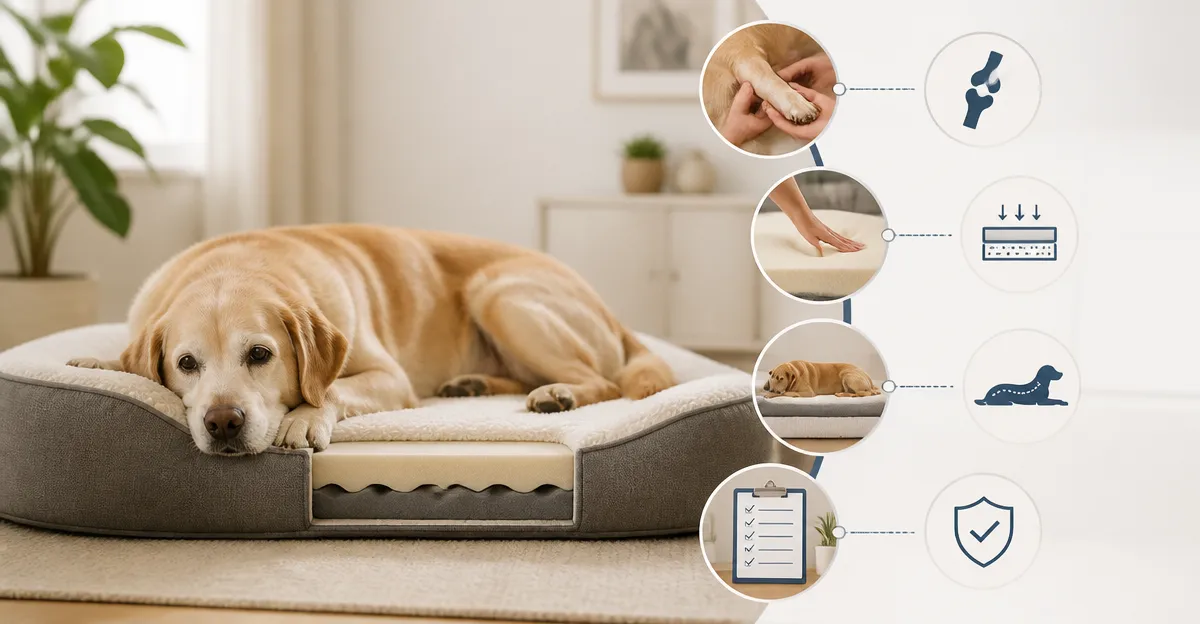
The first step is to conduct a thorough assessment of the senior dog’s musculoskeletal health. Observe the animal’s gait, noting any limping, stiffness, or reluctance to rise after rest. Gently palpate the hips, shoulders, elbows, and knees for signs of swelling or tenderness. Record the dog’s weight, as heavier dogs typically require firmer support to prevent sinking. If uncertainty remains, schedule a veterinary examination to obtain a professional diagnosis. Understanding the specific joints that are affected will guide the selection of a bed that targets those areas with appropriate firmness.
Step 2: Research Orthopedic Bed Materials and Construction
Orthopedic dog beds are constructed from a variety of materials, each offering distinct firmness characteristics. Memory foam provides contouring support that distributes weight evenly, while high‑density polyurethane foam offers a firmer, more resilient surface. Hybrid designs combine a supportive core with a softer top layer for a balanced feel. Consult Netter's Concise Orthopaedic Anatomy to gain insight into how different materials interact with canine joint anatomy. The book’s detailed illustrations and explanations enable one to match material properties with the dog’s specific orthopedic requirements.
Step 3: Determine Desired Firmness Level
Firmness is measured on a scale ranging from ultra‑soft to ultra‑firm. Senior dogs with advanced arthritis often benefit from a medium‑to‑firm surface that limits excessive compression of the hips and elbows. Conversely, a dog with mild joint discomfort may prefer a slightly softer top layer that relieves pressure points without sacrificing support. To quantify firmness, press a hand into the bed material; a firm bed will resist indentation after the initial pressure is removed, whereas a soft bed will return slowly. Select a bed whose firmness aligns with the observations made in Step 1.
Step 4: Compare Product Specifications and Reviews
When evaluating specific products, examine price, customer rating, and the number of reviews to gauge overall satisfaction. For example, a premium orthopedic bed may cost several hundred dollars but receive a 4.7‑star rating from hundreds of owners, indicating reliable performance. In contrast, a high‑cost surgical reference such as Minimally Invasive Surgery in Orthopedics is priced at $1,043.22 and holds a perfect rating from a single reviewer, suggesting it is a specialized resource for veterinary professionals rather than a direct bedding solution. By comparing these metrics, one can make an informed purchase that balances quality with budget.
Step 5: Test the Bed in the Home Environment
After selecting a candidate bed, place it in the area where the senior dog normally rests. Allow the dog to explore the surface without pressure, then observe its behavior during the first few sleep cycles. Signs of acceptance include relaxed breathing, spontaneous lying down, and minimal shifting. If the dog appears uncomfortable, consider adding a removable, softer cushion to adjust the firmness level. Many manufacturers provide interchangeable inserts that enable fine‑tuning without purchasing an entirely new bed.
Tips & Pro Tips
- Rotate the bed weekly to prevent uneven wear and maintain consistent support.
- Use a washable, hypoallergenic cover to protect the bed from moisture and odors.
- Consider a bed with a removable foam insert; this allows adjustment of firmness as the dog ages.
- Consult a veterinarian if the dog exhibits persistent pain despite using an orthopedic bed.
Troubleshooting
Problem: The senior dog continues to show signs of joint pain after using the new bed.
Solution: Verify that the bed’s firmness matches the dog’s weight and joint condition. If the bed is too soft, replace the core with a higher‑density foam. Additionally, ensure the dog’s sleeping area is free from drafts and excessive heat, as temperature extremes can exacerbate discomfort.
Conclusion
By systematically assessing the dog’s orthopedic health, researching material properties, selecting an appropriate firmness level, and testing the bed in the home environment, one can provide a senior dog with a sleeping surface that promotes joint health and restful sleep. The guide equips the reader with actionable steps, practical tools, and reliable references such as Netter's Concise Orthopaedic Anatomy. Implementing these recommendations will enhance the quality of life for senior dogs and reduce the risk of chronic musculoskeletal issues.
Frequently Asked Questions
How do I determine the right firmness level for my senior dog’s orthopedic bed?
Measure your dog’s length and weight, then match those dimensions to the manufacturer’s firmness chart, aiming for a surface that supports joints without feeling too hard.
What signs indicate my dog needs a firmer or softer bed?
If your dog struggles to get up, shows joint pain, or sleeps on its side, a firmer bed may help; excessive sinking or discomfort suggests a softer option.
Does my dog’s weight affect the choice of bed firmness?
Yes, heavier dogs usually require firmer support to prevent bottoming out, while lighter seniors benefit from a slightly softer cushion that relieves pressure points.
How often should I replace an orthopedic dog bed?
Replace the bed every 2–3 years or sooner if the foam loses its shape, develops lumps, or no longer provides consistent support.
Are there any materials that provide optimal support for senior dogs?
High‑density memory foam or gel‑infused foam layers are commonly recommended for orthopedic beds because they conform to the body while maintaining firm support.