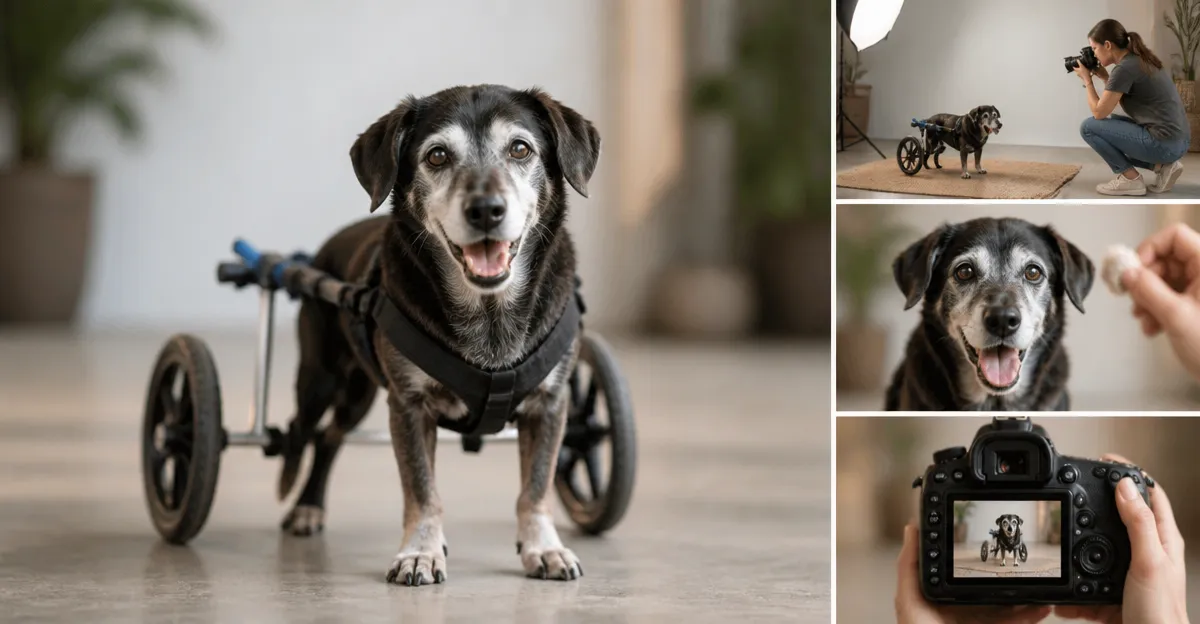
How to Photograph Senior Dogs with Mobility Aids for Adoption: Practical Tips to Capture Personality, Mobility, and Heart
Introduction
One will discover how to create compelling images of senior dogs that rely on mobility aids, thereby increasing their visibility to prospective adopters. The guide explains why authentic representation of movement, temperament, and vulnerability matters for rescue organizations and independent photographers alike. It also outlines how thoughtful composition and gentle interaction can convey the unique story of each dog, encouraging a faster adoption decision. By the end of this article, the reader will possess a clear workflow from preparation to post‑processing, supported by carefully selected tools.
What You’ll Need
- Camera body with manual controls (DSLR or mirrorless)
- Standard zoom lens (24‑70mm) or prime lens (50mm) for portrait work
- Portable lighting (softbox or reflector)
- Treats and gentle harnesses to keep the dog comfortable
- Reference books for technique and inspiration
Reference books such as Dogtography and Dog Photography For Dummies provide detailed guidance on camera settings, lens selection, and working with canine subjects.
Step 1: Understand Senior Dogs and Their Mobility Aids
Before any shutter click, one must recognize the specific challenges that senior dogs face. Mobility aids may include wheelchairs, orthopedic braces, or supportive ramps. Each device alters the dog’s posture, balance, and field of view. Observing how the dog moves with the aid will inform framing choices and timing. The photographer should prioritize comfort, allowing the dog to adjust at its own pace, and avoid any sudden movements that could cause stress.
When the dog appears relaxed, one can begin to plan shots that highlight both the aid and the animal’s personality. Capturing a gentle smile or a curious glance while the dog is seated in a wheelchair tells a story of resilience.
Step 2: Prepare Your Equipment
Choosing the right camera settings is essential for low‑light environments often found in shelters. Dogtography recommends a wide aperture (f/2.8‑f/4) to isolate the subject and a moderate ISO (800‑1600) to maintain image quality without excessive grain. The book’s rating of 4.9/5 from 512 reviews confirms its reliability for professional‑level advice.
For beginners, Dog Photography For Dummies offers step‑by‑step instructions on exposure and focus, earning a 4.5/5 rating from 79 reviewers. Its approachable language makes it a valuable companion for those who are not yet comfortable with manual mode.
A 24‑70mm zoom lens provides flexibility to frame both wide environmental shots and intimate close‑ups without changing lenses, reducing the risk of startling the dog. If a prime lens is preferred, a 50mm f/1.8 offers excellent low‑light performance and a natural perspective.
Portable lighting, such as a softbox, should be positioned at a 45‑degree angle to avoid harsh shadows on the dog’s face while still illuminating the mobility aid.
Step 3: Set Up a Calm Environment
Senior dogs are sensitive to noise and rapid movement. Choose a quiet room with natural light, or supplement with soft artificial light. Remove clutter that could distract the dog or obscure the aid. Lay down a non‑slippery mat to provide stability for the wheelchair or brace.
Before the shoot, allow the dog to explore the space while the photographer remains at a respectful distance. Offering a favorite treat can create a positive association with the area, encouraging the dog to stay relaxed.
When using a wheelchair, position the device so that the dog’s head is slightly elevated, creating a flattering angle that showcases the aid without dominating the composition.
Step 4: Communicate with the Dog and Handler
Effective communication reduces anxiety. Speak in a calm tone, use gentle gestures, and maintain eye contact with the handler to gauge the dog’s comfort level. The handler can cue the dog to sit, lie down, or walk slowly, providing natural poses that reflect the dog’s true character.Utilize treats to reward the dog for maintaining a pose, especially when the wheelchair limits movement. This positive reinforcement mirrors the techniques described in Dogtography, where the author emphasizes the power of encouragement.
Step 5: Capture Personality Through Expression
Senior dogs often convey emotion through subtle facial cues. Use a shallow depth of field to keep the eyes in sharp focus while gently blurring the background. A 50mm prime lens at f/1.8 excels at this task, highlighting the dog’s soulful gaze.
Incorporate props that reflect the dog’s history, such as a favorite blanket or toy, placed near the mobility aid. This contextual element adds narrative depth, inviting the viewer to imagine the dog’s life beyond the shelter.
Reference images from The Dog in Photography can inspire creative composition, as the book showcases historic and contemporary canine portraits that balance emotion and technical excellence.
Step 6: Highlight Mobility and Adaptation
Document how the dog interacts with its aid. Capture a sequence of images showing the dog rolling forward, pausing, and looking ahead. Use a faster shutter speed (1/250 s or higher) to freeze motion and avoid blur.
When the dog is stationary, frame the wheelchair or brace as part of the story rather than a barrier. Position the aid at an angle that leads the eye toward the dog’s face, creating visual flow.
Consider shooting from a low angle to align the camera with the dog’s eye level, emphasizing dignity and agency. This perspective is frequently employed in the work of Elias Weiss Friedman, author of The Dogist, whose portraits capture the spirit of each canine subject.
Step 7: Post‑Processing and Presentation
After the shoot, select images that best convey warmth, resilience, and hope. Adjust exposure to ensure the dog’s fur and the aid are clearly visible without overexposure. Use selective sharpening on the eyes to draw attention to the expression.
Color grading should retain natural tones; avoid overly saturated hues that could misrepresent the dog’s appearance. When preparing images for adoption listings, add a brief caption describing the dog’s personality, mobility aid, and any special care requirements.
For inspiration on layout and storytelling, review the coffee‑table style of Good Dog, which presents portraits alongside heartfelt narratives, encouraging emotional connection.
Tips & Pro Tips
- Always test lighting before the dog enters the frame; a quick light meter reading can prevent harsh shadows.
- Use a remote shutter or timer to avoid camera shake, especially when shooting at slower shutter speeds.
- Carry a portable battery pack to ensure continuous power for lighting and camera.
- When possible, shoot during the dog’s most active time of day; senior dogs may have limited energy reserves.
- Include a “before and after” series showing the dog with and without the aid to illustrate improvement and adaptability.
Troubleshooting
Problem: Images appear blurry despite fast shutter speed.
Solution: Verify that the focus point is on the dog’s eyes. Use single‑point autofocus and lock focus before the dog moves.
Problem: The mobility aid casts unwanted shadows.
Solution: Reposition the light source or add a reflector opposite the light to fill in shadows.
Problem: The dog becomes anxious when the camera is near.
Solution: Increase distance, use a longer lens, and allow the dog to approach the photographer at its own pace.
Conclusion
One now possesses a structured approach to photographing senior dogs with mobility aids, from preparation through post‑processing. By combining technical precision with compassionate interaction, the photographer can produce images that highlight both the challenges and the enduring spirit of these dogs. Such photographs serve as powerful tools for adoption campaigns, increasing the likelihood that each senior dog finds a loving home.
Products Mentioned in This Guide
Frequently Asked Questions
What camera settings work best for photographing senior dogs with mobility aids?
Use a wide aperture (f/2.8‑f/5.6) for shallow depth of field, a moderate ISO (400‑800) to avoid noise, and a fast shutter speed (1/250 s or higher) to freeze gentle movement.
How can I make a senior dog feel comfortable during a shoot?
Bring familiar treats, use a soft harness or blanket, and allow the dog to explore the space at its own pace before taking photos.
What lighting is ideal for highlighting a dog’s personality without harsh shadows?
Soft, diffused lighting from a portable softbox or reflector creates even illumination and reduces glare on mobility aids.
Which lenses are most effective for capturing personality and detail in senior dogs?
A 24‑70mm zoom offers flexibility for full‑body and close‑up shots, while a 50mm prime provides flattering portrait depth.
How should I edit photos of senior dogs to enhance adoption appeal?
Adjust exposure and contrast modestly, boost eye sharpness, and use subtle color correction to keep the image natural and inviting.