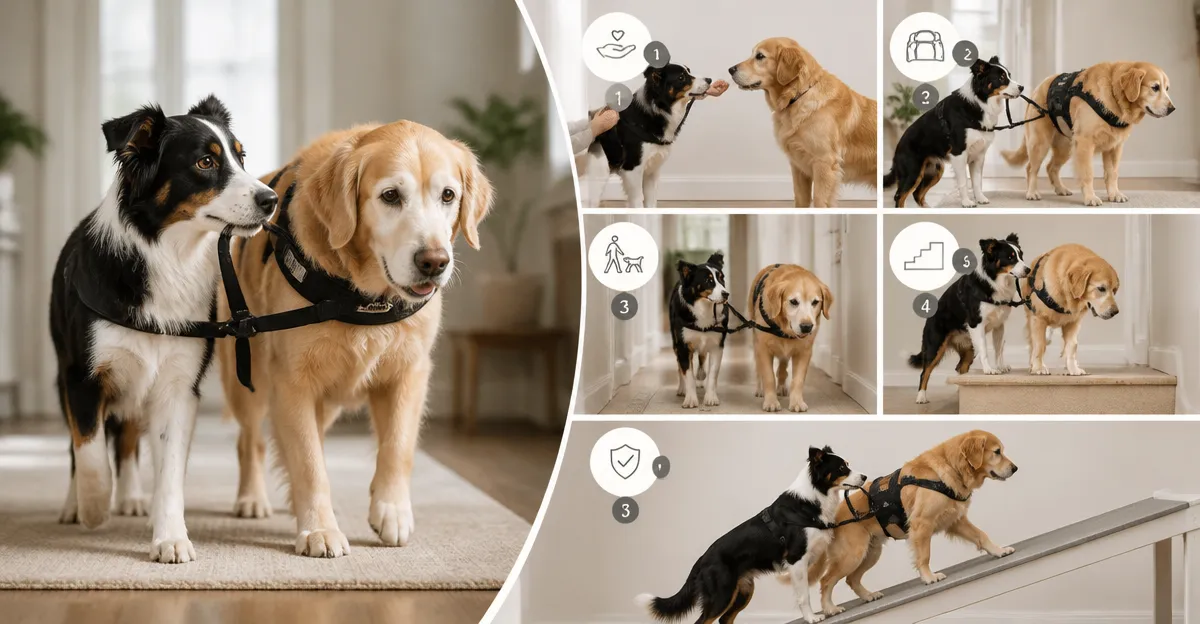
How to Train a Companion Dog to Assist a Senior Dog’s Mobility: Step‑by‑Step Guide
Introduction
Pet owners often face the challenge of maintaining an active lifestyle for senior dogs that experience joint pain, arthritis, or post‑surgical weakness. This guide explains how to train a healthy companion dog to provide safe, reliable assistance to an older dog while preserving dignity and reducing caregiver strain. Readers will learn assessment techniques, equipment selection, training cues, progressive practice, and monitoring strategies. The information is valuable because it combines behavior‑based training with proven mobility aids, allowing families to extend the quality of life for their beloved seniors.
The approach respects the canine hierarchy, encourages positive reinforcement, and integrates tools that distribute weight evenly, minimize stress on the senior’s hind legs, and protect the caregiver’s back. By following each step, one can create a cooperative partnership that mirrors professional rehabilitation programs without requiring costly veterinary visits for every activity.
What You’ll Need
- A sturdy, adjustable dog sling or lift harness appropriate for the senior dog’s size.
- A comfortable, well‑fitted collar or harness for the companion dog.
- Treats and clicker for positive reinforcement.
- Non‑slip flooring or carpeted area for initial training.
- Leash and lead for controlled outdoor practice.
- Optional: reflective safety gear for low‑light walks.
All of the recommended slings and harnesses are available through the links below and include detailed sizing information to ensure a secure fit.
Step 1 – Assess the Senior Dog’s Mobility Needs
Before introducing a companion, one must evaluate the senior dog’s specific limitations. Observe the dog while it rises from a lying position, climbs stairs, and walks on different surfaces. Note any hesitation, wobbling, or pain signals. A veterinarian may recommend a particular support device based on weight, hip dysplasia severity, or recent ACL surgery.
During this assessment, record the dog’s weight and height to match it with the appropriate sling or harness. For large breeds exceeding 100 lb, the LOOBANI Dog Sling provides a reinforced nylon strap and soft sheepskin‑like lining that can lift up to 150 lb. The product holds a 4.5‑star rating from 13,776 reviewers and costs $21.59, making it an affordable option for heavy‑weight seniors.
For medium‑sized dogs between 30‑60 lb, the OneTigris Dog Lift Harness offers a 360° support design with multiple handles and adjustable straps, rated 4.5 stars by 922 reviewers at $62.89. Its metal hardware ensures durability during repeated lifting.
Document the findings in a simple chart, noting weight, preferred support region (hind legs, hips, back), and any veterinary recommendations. This chart will guide product selection and training intensity.
Step 2 – Select the Appropriate Mobility Aid
Based on the assessment, choose a sling or harness that matches the senior’s size and the caregiver’s handling preferences. The following table compares the five recommended products:
| Product | Weight Range | Key Feature | Price | Rating |
|---|---|---|---|---|
| LOOBANI Dog Sling | Up to 150 lb | Heavy‑duty reflective strap, soft lining | $21.59 | 4.5/5 (13,776) |
| OneTigris Dog Lift Harness | 18‑180 lb (multiple sizes) | 360° support, three grab handles | $62.89 | 4.5/5 (922) |
| Pick for Life Dog Sling (Medium) | 30‑70 lb | Soft plush interior, washable | $18.99 | 4.4/5 (6,019) |
| Pick for Life Dog Sling (Large) | 70‑150 lb | Durable oxford fabric, padded handles | $19.99 | 4.4/5 (6,019) |
| NOYAL Dog Lift Harness | 15‑80 lb | Ultra‑soft plush lining, dual‑fastening | $29.99 | 4.2/5 (4,502) |
Select the product that aligns with the senior’s weight and the caregiver’s budget. The LOOBANI Dog Sling is ideal for owners who prioritize ease of folding and machine‑washability, while the OneTigris Harness excels for dogs that require comprehensive weight distribution across the chest and back.
Once the appropriate device is purchased, assemble it according to the manufacturer’s instructions. Ensure all buckles, Velcro straps, and reflective bands are securely fastened before the first training session.
Step 3 – Introduce the Companion Dog to the Equipment
Begin by allowing the companion dog to sniff and explore the sling or harness while it lies on the floor. Use a calm voice and reward the companion with a treat each time it approaches the equipment without showing anxiety. This desensitization reduces the likelihood of fear‑based reactions during later lifts.
Next, place the senior dog in the sling while the companion observes from a short distance. The senior should be supported but not yet lifted. Reward the senior with gentle praise for remaining calm. This simultaneous exposure helps both dogs associate the equipment with safety rather than restraint.
If the senior dog is hesitant, slide the soft interior under its belly slowly, using the padded handle to provide a light lift. The Pick for Life Dog Sling (Large) offers a plush interior that many seniors find comforting, as noted in customer reviews praising its softness and durability.
Repeat this exposure for several short sessions, gradually increasing the time the senior spends in the sling. The goal is for both dogs to accept the equipment as a neutral object before any lifting occurs.
Step 4 – Teach the Companion Dog a “Support” Cue
Training a clear verbal or hand cue is essential for reliable assistance. Choose a distinct word such as “support” or a hand signal that is not used for other commands. Begin in a low‑distraction environment.
- Position the senior dog in the chosen sling or harness.
- Hold the sling’s padded handle with one hand and place the other hand near the companion’s chest.
- Say the cue “support” and gently apply a small upward pressure on the senior’s hind end while the companion watches.
- Immediately reward the companion with a high‑value treat when it looks toward the senior or places a paw on the sling handle.
Repeat this sequence until the companion associates the cue with the action of approaching the sling. The OneTigris Dog Lift Harness includes three grab handles that allow the caregiver to demonstrate the lifting motion without excessive strain, reinforcing the cue for the companion.
Progress to a “steady” cue that signals the companion to maintain pressure while the senior dog takes a step. Use a clicker to mark the exact moment the companion exerts consistent support, then reward. Over time, the companion will learn to provide a stable base as the senior moves forward.
Step 5 – Practice Assisted Mobility in Controlled Settings
Start on a flat, non‑slippery surface such as a carpeted hallway. Place the senior dog at one end of the space, the companion at the other, and the caregiver holding the sling’s handle in the middle. Issue the “support” cue, then the “go” cue to encourage the senior to step forward while the companion provides gentle pressure.
Observe the senior’s gait. If the senior wobbles, pause, adjust the sling’s position, and repeat. The LOOBANI Dog Sling’s reflective nylon band ensures visibility if training continues outdoors during dusk, adding a safety layer for low‑light conditions.
Gradually increase the distance traveled, introducing short stair climbs once the senior demonstrates confidence on level ground. The OneTigris Harness’s rear leg straps can be attached to support the hind limbs specifically during stair ascent, reducing the risk of falls.
Record each session’s duration and any observed improvements. Consistent documentation helps identify patterns, such as which cue elicits the strongest response or which handle provides the most comfortable lift for the caregiver.
Step 6 – Increase Complexity and Real‑World Application
After mastering indoor walks, transition to outdoor environments with variable terrain. Begin on grass, then progress to gravel, and finally to pavement. The NOYAL Dog Lift Harness’s ultra‑soft plush lining reduces chafing during longer outings, a benefit highlighted by owners of active senior dogs.
Introduce distractions such as other dogs or passing vehicles. Reinforce the “support” cue with higher‑value treats to maintain focus. If the senior dog requires a brief rest, the companion can gently guide it back to a designated rest spot using a “pause” cue.
For owners who travel, the Pick for Life Dog Sling (Medium) folds into a compact drawstring bag, making it convenient for veterinary appointments or vacations. Its lightweight design does not add significant bulk to a travel bag, ensuring the senior dog receives consistent support wherever the family goes.
Continue to evaluate the senior’s health. If the dog’s weight changes significantly, re‑measure and adjust the sling or harness accordingly. All recommended products feature adjustable straps that accommodate growth or weight fluctuations.
Tips & Pro Tips
- Always warm up the senior dog with a short walk before assisted sessions to reduce joint stiffness.
- Use a clicker or marker word to provide precise feedback during training.
- Keep the sling’s interior clean; most products are machine‑washable, but follow the manufacturer’s care instructions.
- Rotate the companion’s role if multiple healthy dogs are available, preventing fatigue.
- Monitor the senior’s skin for signs of irritation; adjust padding or strap tension as needed.
- Consider reflective accessories for evening walks; the LOOBANI Dog Sling includes reflective nylon for added visibility.
Troubleshooting
| Problem | Possible Cause | Solution |
|---|---|---|
| Companion dog ignores cue | Lack of motivation or unclear cue | Increase treat value, shorten distance, and rehearse cue in a distraction‑free zone. |
| Senior dog shows skin irritation | Straps too tight or material rubbing | Loosen straps slightly, add a thin cloth barrier, or switch to a softer liner such as the NOYAL plush lining. |
| Lift feels uneven | Improper positioning of sling handles | Re‑center the sling under the dog’s belly; use the OneTigris front and rear handles for balanced weight distribution. |
| Owner’s back aches during lifts | Improper lifting technique | Engage leg muscles, keep back straight, and consider the shoulder strap option on the OneTigris harness for ergonomic support. |
Conclusion
Training a companion dog to assist a senior dog’s mobility combines careful assessment, appropriate equipment, and consistent positive reinforcement. By following the seven steps outlined above, pet owners can create a safe, supportive environment that enhances independence for the senior while reducing physical strain for the caregiver. The recommended slings and harnesses—LOOBANI Dog Sling, OneTigris Dog Lift Harness, Pick for Life Dog Sling (Medium and Large), and NOYAL Dog Lift Harness—provide reliable, adjustable support across a range of body sizes and medical conditions. Continued practice, regular health checks, and attentive adjustments will ensure long‑term success and a stronger bond among all members of the canine family.
Products Mentioned in This Guide
Frequently Asked Questions
What basic equipment is needed to train a companion dog for senior dog mobility?
You need a sturdy, adjustable harness for the senior, a lightweight support vest or harness for the companion, and a non‑slip leash or tether to connect them safely.
How can I teach the companion dog to provide steady support without pulling?
Start with short, positive‑reinforced sessions using cue words like “steady” and reward the companion for walking beside the senior without tension on the leash.
What signs indicate the senior dog is uncomfortable with the assistance?
Watch for limping, excessive panting, avoidance behavior, or reluctance to move, which suggest the aid is too heavy or the pace is too fast.
How often should I practice the assisted walks to build confidence?
Practice 5‑10 minute sessions 2‑3 times daily, gradually increasing distance as both dogs become comfortable.
When should I consult a veterinarian during this training process?
Seek veterinary advice if the senior shows persistent pain, swelling, or if the companion dog displays stress behaviors despite training adjustments.