Introduction
This guide examines the ergonomic principles that underpin safe lifting of heavy senior dogs. Readers will learn how body mechanics, equipment selection, and daily routines intersect to reduce strain on caregivers and prevent injury to vulnerable pets. The article presents evidence‑based strategies, product recommendations, and a structured comparison to aid informed purchasing decisions. By the end of the guide, caregivers will possess a clear plan for supporting dogs with limited hind‑leg mobility while preserving their own musculoskeletal health.
Background and Context
Senior dogs frequently experience hip dysplasia, arthritis, or post‑operative weakness that compromises their ability to rise from a seated position, climb stairs, or exit a vehicle. When a dog cannot bear its own weight, caregivers must provide external support, which introduces biomechanical challenges. Improper lifting can generate compressive forces on the lumbar spine, elevate shoulder torque, and increase the risk of repetitive‑strain injuries. Understanding the anatomy of the caregiver’s core, the lever arms involved, and the role of assistive devices forms the foundation for injury‑free assistance.
Core Ergonomic Concepts
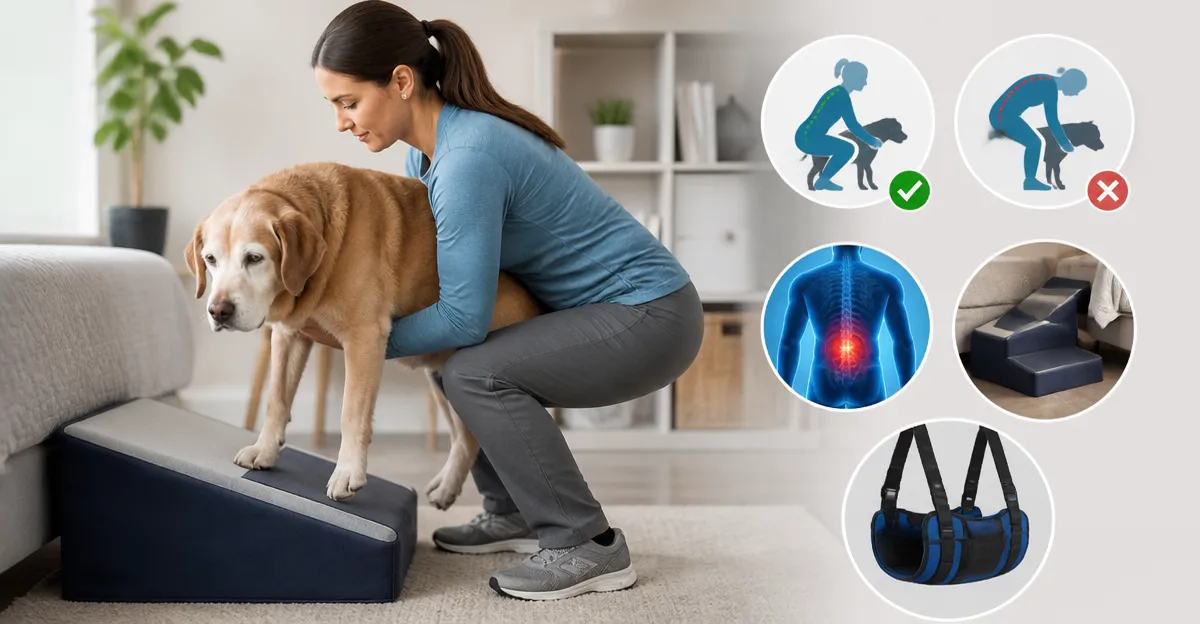
Three core concepts govern safe dog lifting: alignment, load distribution, and controlled movement. Alignment refers to maintaining a neutral spine by bending at the hips and knees rather than the waist. Load distribution involves using handles or slings that spread the dog’s weight across the caregiver’s forearms and shoulders, reducing peak pressure on any single joint. Controlled movement emphasizes slow, deliberate transitions, allowing the caregiver to anticipate shifts in the dog’s center of gravity.
Applying these concepts without assistance is possible for small breeds, but dogs over thirty pounds often require a supportive device. The market offers several options that integrate ergonomic handles, padded straps, and reflective materials for visibility. The following sections evaluate the most highly rated products that embody these principles.
Product Recommendations and How They Fit the Ergonomic Model
The first device examined is the LOOBANI Dog Hind Leg Sling. This sling provides a single, reinforced strap that runs under the dog’s hindquarters, allowing the caregiver to lift using a padded handle. The thick sheepskin‑like lining reduces pressure points on the dog’s belly, while the reflective nylon band enhances safety during low‑light walks. With a 4.5‑star rating from 13,784 reviews and a price of $18.89, the sling offers an affordable entry point for caregivers who need basic hind‑leg support.
For owners seeking a more comprehensive system, the OneTigris Dog Lift Harness (Green, Large) delivers a full‑body vest with three adjustable handles, detachable rear‑leg straps, and a utility shoulder sling. The 360º support design distributes weight across the chest and back, while stainless‑steel D‑rings and zinc‑alloy snap hooks provide durability. Priced at $55.99 and backed by 923 reviews, this harness addresses both front‑leg and hind‑leg assistance, making it suitable for dogs weighing 60–90 lb.
The OneTigris Dog Lift Harness (Black, Large) mirrors the green model’s features but offers a different color option for owners who prefer a classic aesthetic. It shares the same sizing chart, metal hardware, and configurable build, and it also carries a 4.5‑star rating from 923 reviewers at $55.99. The color variation does not affect functionality, but it allows caregivers to match the harness with existing accessories.
For larger breeds, the OneTigris Dog Lift Harness (Black, X‑Large) extends the weight range to 85–140 lb. At $63.19, this model retains the 360º support system while increasing strap length and handle reach to accommodate bigger frames. The reinforced stitching and anti‑chafing sleeves are especially valuable for dogs with extensive post‑operative swelling.
Finally, the NOYAL Dog Lift Harness Sling combines a rear‑leg support sling with an ergonomic padded handle and a dual‑fastening system that prevents slippage. Its ultra‑soft plush lining protects delicate skin, and the seat‑belt‑compatible strap facilitates safe transport in vehicles. With a rating of 4.2 stars from 4,502 reviews and a price of $28.99, this product offers a middle‑ground solution for dogs up to 20 lb, though larger sizes may require additional adjustments.
Comparison and Selection Guide
| Feature | LOOBANI Dog Hind Leg Sling | OneTigris Harness (Green/Black Large) | OneTigris Harness (Black X‑Large) | NOYAL Harness Sling |
|---|---|---|---|---|
| Price (USD) | 18.89 | 55.99 | 63.19 | 28.99 |
| Weight Capacity | Up to 100 lb (manufacturer claim) | 60‑90 lb | 85‑140 lb | Up to 20 lb (optimal) |
| Handles | Single padded handle | Three grab handles + shoulder sling | Three grab handles + shoulder sling | Padded handle + seat‑belt strap |
| Adjustability | Reflective nylon strap, universal size | Multiple strap lengths, chest and leg adjustments | Extended straps for larger frames | Dual‑fastening chest patch and back buckle |
| Rating | 4.5/5 (13,784 reviews) | 4.5/5 (923 reviews) | 4.5/5 (923 reviews) | 4.2/5 (4,502 reviews) |
When selecting a device, caregivers should first determine the dog’s weight range and the specific mobility challenge. For pure hind‑leg support without full‑body coverage, the LOOBANI sling offers a lightweight, cost‑effective solution. When comprehensive support for both front and rear limbs is required, the OneTigris harness series provides a modular system that can be scaled from large to extra‑large sizes. The NOYAL sling excels for small breeds that need a rear‑leg lift combined with a secure chest fit, especially for owners who travel frequently.
Best Practices and Tips for Safe Lifting
- Maintain a neutral spine by bending at the hips and knees before reaching for the dog.
- Engage core muscles throughout the lift to stabilize the lumbar region.
- Position the dog close to the body, keeping the load within arm’s length to reduce torque.
- Use padded handles or shoulder straps to spread the weight across the forearms and shoulders.
- Perform a brief warm‑up of the caregiver’s shoulders, back, and legs before assisting a dog with limited mobility.
- Check the device’s straps for wear before each use; replace any frayed components immediately.
- When assisting a dog onto stairs, place the device under the hindquarters first, then guide the front legs with a separate hand to ensure balanced ascent.
In addition to equipment, caregivers should schedule regular veterinary evaluations to monitor joint health and adjust support levels accordingly. Gradual strength‑building exercises, such as assisted sit‑to‑stand drills, can reduce reliance on lifts over time. However, abrupt removal of support before the dog regains sufficient strength may lead to falls and secondary injuries.
Frequently Asked Questions
- What is the optimal height for the caregiver’s handle when using a sling?
- The handle should be positioned at roughly waist level for most adults, allowing the caregiver to keep the elbows close to the body and avoid excessive shoulder elevation.
- Can these devices be used for dogs recovering from hip replacement surgery?
- Yes, both the LOOBANI hind‑leg sling and the OneTigris full‑body harnesses are designed for post‑operative support, provided the veterinarian approves weight‑bearing activities.
- How often should the straps be tightened during a lifting session?
- Straps should be checked before each lift and readjusted if the dog shifts position, as slippage can increase load on the caregiver’s back.
- Are reflective materials necessary for daytime use?
- Reflective nylon improves visibility during low‑light conditions, but it does not affect daytime performance. Caregivers who walk in dusk or dawn may find it beneficial.
- Is it safe to leave a harness on a dog for extended periods?
- Extended wear can cause skin irritation or chafing; most reviewers recommend removing the device after a few hours and inspecting the skin for redness.
- Do any of these products require a separate neck buckle?
- Both OneTigris models lack a dedicated neck buckle, a point noted by several reviewers. Caregivers may need to rely on the adjustable chest straps for a secure fit.
Conclusion
Ergonomic lifting of heavy senior dogs demands a blend of proper body mechanics, appropriate assistive devices, and vigilant monitoring of both caregiver and canine health. By applying the alignment, load distribution, and controlled movement principles outlined above, caregivers can minimize the risk of back strain, shoulder injury, and dog discomfort. The product recommendations presented—ranging from the economical LOOBANI sling to the fully adjustable OneTigris harnesses—provide scalable solutions that align with the ergonomic model. Ultimately, informed equipment choices combined with disciplined lifting techniques empower caregivers to preserve the dignity and mobility of their senior companions.
Products Featured in This Guide
LOOBANI Dog Hind Leg Sling
Price: $18.89 | Rating: 4.5/5 (13,784 reviews)
Featured because it offers a low‑cost, single‑point hind‑leg lift with a padded handle and reflective strap, ideal for dogs up to 100 lb.
OneTigris Dog Lift Harness (Green, Large)
Price: $55.99 | Rating: 4.5/5 (923 reviews)
Featured for its 360º support design, multiple handles, and detachable rear‑leg straps, suitable for dogs weighing 60‑90 lb.
OneTigris Dog Lift Harness (Black, Large)
Price: $55.99 | Rating: 4.5/5 (923 reviews)
Featured as a color‑variant of the large harness, offering identical ergonomic features for owners preferring a classic black finish.
OneTigris Dog Lift Harness (Black, X‑Large)
Price: $63.19 | Rating: 4.5/5 (923 reviews)
Featured for extending support to larger breeds up to 140 lb while retaining the same 360º ergonomic design.
NOYAL Dog Lift Harness Sling
Price: $28.99 | Rating: 4.2/5 (4,502 reviews)
Featured because it combines a rear‑leg sling with a padded handle and a seat‑belt‑compatible strap, ideal for small to medium dogs and frequent travel.