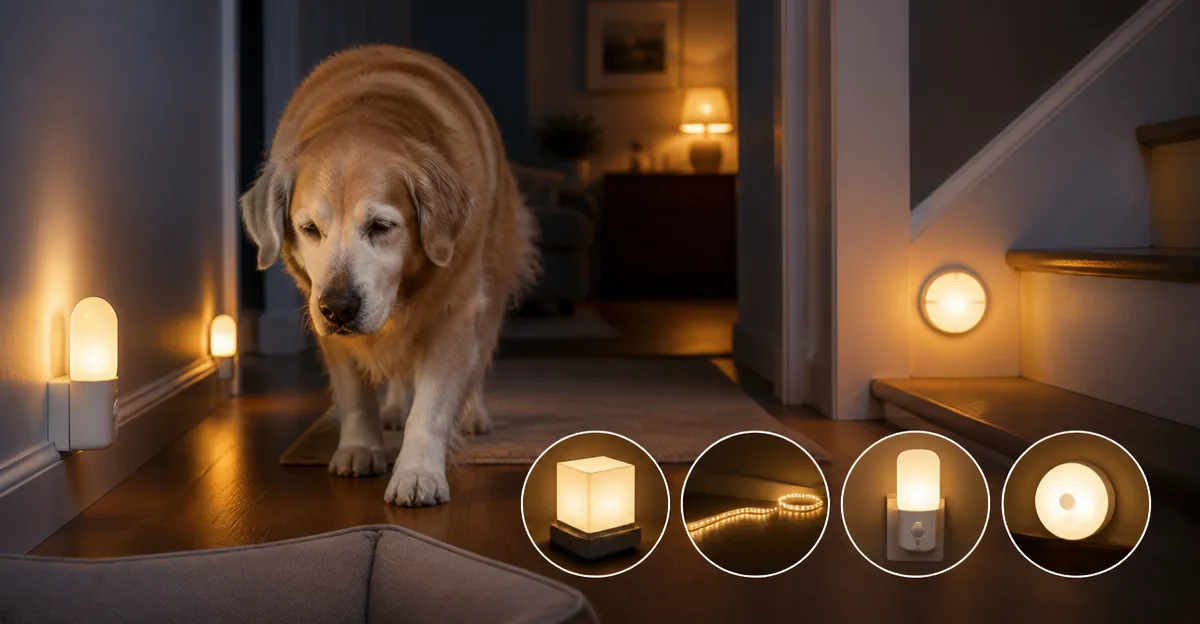
Nightlights for Blind Senior Dogs: The Ultimate Guide to Safety, Best Picks, and Setup Tips
Introduction
Blind senior dogs rely heavily on subtle cues to navigate their familiar environment after daylight fades. This guide explains why nightlights are essential, outlines the science behind canine vision loss, and presents carefully selected products that can improve safety and confidence. Readers will learn how to assess lighting needs, compare top-rated options, and implement practical setup strategies. By the end, one will be equipped to create a low‑stress nighttime routine for a visually impaired companion.
Background and Context
Age‑related vision decline in dogs often stems from cataracts, retinal degeneration, or glaucoma, reducing the ability to detect contrast and motion. Unlike humans, dogs see fewer colors and depend more on motion detection and scent, making sudden darkness especially disorienting. Research indicates that low‑level, warm‑tone illumination can enhance depth perception without disrupting circadian rhythms. Moreover, safe, non‑toxic materials are crucial because senior pets may chew or paw at objects placed within reach.
When selecting a nightlight, three criteria dominate: light quality (soft, flicker‑free, blue‑light reduced), power source (rechargeable vs. plug‑in), and durability (water‑resistant silicone or robust housing). Understanding these factors helps owners choose a device that blends seamlessly with a home’s décor while meeting a dog’s unique needs.
Key Concepts for Choosing Nightlights
First, the illumination level should be gentle enough to avoid startling a dog yet bright enough to outline furniture and obstacles. A luminosity of 5–10 lux is typically sufficient for indoor pathways. Second, the light’s color temperature should lean toward warm amber (around 2700 K) because cooler blue light can interfere with melatonin production. Third, durability matters; silicone‑based lamps resist drops and are easy to clean, while plug‑in units must have sturdy housings that protect against accidental tugging.
Finally, consider the control mechanism. Touch‑squeeze lamps allow quick activation without needing to locate a switch, whereas sensor‑activated plug‑ins turn on automatically at dusk, reducing the need for manual interaction. Each approach offers distinct advantages for households with limited mobility or multiple pets.
Product Recommendations
Below are three highly rated nightlights that satisfy the criteria outlined above. The first mention of each product includes a direct affiliate link using the friendly name.
- Capybara Night Light – a silicone squeeze lamp offering two brightness levels, a 20‑minute auto‑timer, and a rechargeable 1200 mAh battery. It holds a 4.8‑star rating from 972 reviews.
- Penguin Night Light – a washable, BPA‑free silicone lamp with tap control, dual brightness, and up to 15 hours of portable use. It is priced at $18.99 and carries a 4.8‑star rating from 44 reviews.
- GE Dusk-to-Dawn Plug‑In Night Light – a UL‑certified, sensor‑driven LED that automatically illuminates at dusk and shuts off at dawn. Sold as a 2‑pack for $11.96, it enjoys a 4.7‑star rating from over 31,000 reviews.
Comparison and Selection Guide
| Feature | Capybara Night Light | Penguin Night Light | GE Dusk‑to‑Dawn Plug‑In |
|---|---|---|---|
| Power Source | Rechargeable 1200 mAh battery | Rechargeable 1200 mAh battery | Hard‑wired AC with dusk‑to‑dawn sensor |
| Brightness Levels | 2 (low & high) | 2 (low & high) | Single steady LED (auto‑adjusts) |
| Auto‑Timer | 20 minutes | 20 minutes | Sensor‑based (on at dark, off at light) |
| Material | Food‑grade silicone, BPA‑free | Washable silicone, BPA‑free | ABS plastic housing, UL certified |
| Portability | Fully portable, cordless | Fully portable, cordless | Fixed outlet placement |
| Price (USD) | Not listed | $18.99 | $11.96 (2‑pack) |
| Average Rating | 4.8/5 (972 reviews) | 4.8/5 (44 reviews) | 4.7/5 (31,691 reviews) |
Owners seeking a portable, tactile device that can be placed beside a dog’s bed may prefer the silicone options. Those who want a hands‑free, always‑on solution for hallways or stairways will find the sensor‑driven GE model most convenient. Price sensitivity, durability preferences, and the need for a timer should guide the final decision.
Best Practices & Setup Tips
- Position lights near common pathways such as the bedroom doorway, hallway, and near the dog’s favorite resting spot. A low‑mounted placement reduces glare and creates a gentle guide.
- Use warm‑tone settings whenever possible. If the lamp offers adjustable color temperature, select the amber or soft‑white mode to mimic natural dusk lighting.
- Secure cords or battery packs out of reach. For plug‑in units, consider a short‑extension cord with a built‑in strain relief to prevent accidental tugging.
- Test the auto‑timer feature before bedtime. A 20‑minute shut‑off is ideal for short nighttime bathroom trips, while sensor‑based lights require no manual intervention.
- Clean silicone lamps with a damp cloth and mild soap weekly to maintain hygiene, especially if the dog tends to lick or chew the surface.
Implementing these steps creates a predictable environment that reduces anxiety for a blind senior dog. Consistency is key; once the lighting routine is established, the dog will learn to rely on the soft glow as a reliable cue for safe navigation.
Frequently Asked Questions
- Can nightlights interfere with a dog’s sleep cycle? Warm, low‑intensity light does not significantly suppress melatonin, especially when the lamp is set to a dim setting or equipped with an auto‑off timer.
- Is silicone safe if my dog chews the nightlight? Food‑grade silicone is BPA‑free and non‑toxic, making it safe for occasional chewing. However, supervise initial interactions to ensure the lamp remains intact.
- How long does a rechargeable nightlight last on a single charge? Both the Capybara and Penguin models provide up to 56 hours on low brightness and 24–15 hours on high brightness, respectively, reducing the need for frequent recharging.
- Do sensor‑based plug‑ins work in rooms with variable lighting? Yes; the built‑in photodiode detects ambient light levels and activates when illumination falls below a preset threshold, ensuring consistent performance across different rooms.
- What maintenance is required for LED plug‑in lights? Periodically dust the lens with a soft cloth and verify that the outlet remains free of debris. LEDs have a lifespan of tens of thousands of hours, so replacement is rarely needed.
Conclusion
Providing a blind senior dog with reliable, gentle illumination dramatically improves safety, confidence, and overall quality of life. By understanding the importance of light quality, power source, and durability, owners can select a nightlight that aligns with their household’s layout and budget. Whether opting for a portable silicone squeeze lamp like the Capybara Night Light or a sensor‑driven outlet solution such as the GE Dusk-to-Dawn Plug‑In Night Light, the key is consistency and thoughtful placement. Implement the best‑practice tips, monitor your dog’s response, and adjust as needed to create a night‑time environment that feels secure and comforting.
Products Featured in This Guide
Capybara Night Light
Rating: 4.8/5 (972 reviews)
Why featured: Portable silicone lamp with two brightness levels, 20‑minute auto‑timer, and a rechargeable battery—ideal for bedside or travel use.
Penguin Night Light
Price: $18.99 – Rating: 4.8/5 (44 reviews)
Why featured: Washable, BPA‑free silicone design with tap control and up to 15 hours of portable illumination, perfect for dogs that enjoy tactile interaction.
GE Dusk-to-Dawn Plug‑In Night Light
Price: $11.96 (2‑pack) – Rating: 4.7/5 (31,691 reviews)
Why featured: Sensor‑driven LED that automatically lights hallways and stairways, providing hands‑free illumination for senior dogs moving around the home.