Orthopedic Dog Bed Fire Safety Standards: The Complete Guide to Compliance, Materials, Testing & Certifications
Introduction
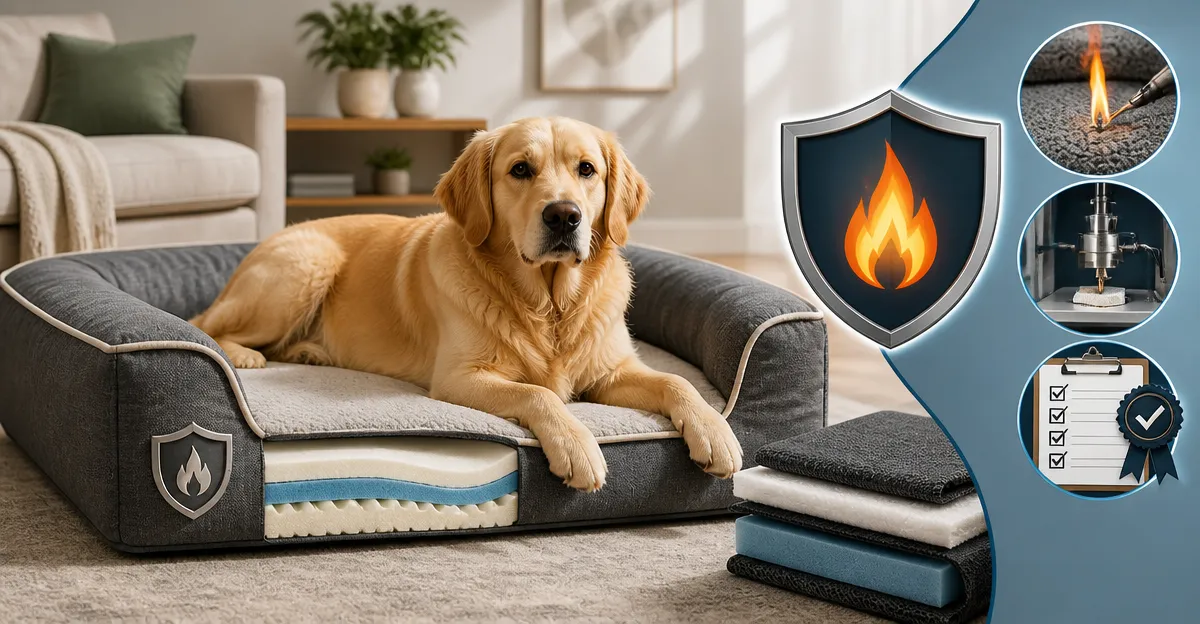
The safety of a pet’s sleeping area is as important as its comfort. This guide explores fire safety standards that apply to orthopedic dog beds, explains why certain materials are preferred, outlines testing procedures, and reviews certifications that assure compliance. Readers will learn how to evaluate a bed for fire resistance, understand the role of waterproof liners, and discover which products meet rigorous safety criteria while providing orthopedic support. By the end of this article, one will be equipped to select a bed that protects both pet and home.
Background and Context
Fire safety for pet furnishings has evolved alongside building codes and consumer protection laws. In the United States, the Consumer Product Safety Commission (CPSC) mandates that upholstered furniture, including pet beds, meet flammability standards such as 16 CFR Part 1633. Similar regulations exist in the European Union under the EN 13501‑1 classification. Orthopedic dog beds often incorporate foam, fabrics, and waterproof layers, each presenting a distinct fire risk profile. Understanding how these components interact is essential for making informed purchasing decisions.
Foam cores, especially polyurethane, can emit toxic gases when exposed to flame. Egg‑crate foam, a common choice for joint support, is typically treated with fire‑retardant chemicals to reduce ignition probability. Fabric covers may be made of polyester, cotton, or blends, and many manufacturers apply a flame‑resistant finish. Waterproof liners, while valuable for moisture protection, can be polyester‑based and may affect the overall flammability rating. Compliance testing evaluates both the material’s inherent resistance and the assembled product’s behavior under fire exposure.
Pet owners should also be aware of the distinction between "fire‑resistant" and "fire‑retardant." The former implies that a material will not support combustion, while the latter indicates that the material slows the spread of fire. Certifications such as CertiPUR‑US and OEKO‑TX certify foam safety but do not directly address flammability; additional testing is required for fire compliance.
Key Fire‑Safety Concepts for Orthopedic Dog Beds
Three primary concepts govern fire safety in orthopedic dog beds: material composition, barrier design, and certification testing. Each concept influences how a bed reacts to accidental ignition sources such as candles, electrical faults, or smoking materials.
- Material Composition: High‑density foam, especially when blended with fire‑retardant additives, provides both orthopedic support and reduced flammability. Egg‑crate structures create air pockets that can inhibit flame propagation.
- Barrier Design: Waterproof liners and non‑slip bottoms add layers that may either protect the foam or, if made of highly flammable polyester, increase risk. A non‑slip bottom composed of PVC often offers better fire performance.
- Certification Testing: Products that have passed CPSC or EN flammability tests display a compliance label. Independent laboratories may also issue UL (Underwriters Laboratories) or FM (Factory Mutual) certifications for added assurance.
When evaluating a product, one should verify the presence of these certifications and examine the material list for fire‑retardant terminology. The following sections illustrate how these concepts apply to specific market offerings.
Recommended Products and Their Safety Features
The market offers several orthopedic dog beds that balance comfort with fire safety. The first product highlighted meets multiple safety criteria while providing a plush sleeping surface.
EHEYCIGA Orthopedic XL Dog Bed features a combination of memory foam and egg‑crate polyurethane foam, both treated with fire‑retardant chemicals. Its waterproof film lies between the fleece surface and the bottom fabric, reducing moisture exposure without compromising the flame‑resistant barrier. The non‑slip bottom is constructed from PVC, a material known for lower flammability. With a rating of 4.5 stars from 21,949 reviews, customers frequently note the bed’s durability and comfort for senior dogs.
The second recommendation emphasizes a robust testing regime. Bedsure Orthopedic Large Dog Bed incorporates high‑density egg‑crate foam certified by CertiPUR‑US and OEKO‑TX, ensuring low volatile organic compound emissions. Its laminated waterproof cover has undergone CPSC flammability testing and meets the 16 CFR Part 1633 standard. The non‑skid PVC bottom further enhances fire safety. The product holds a 4.6‑star rating from 35,610 reviews, with customers praising its easy‑care design and supportive bolsters.
For pet owners seeking a budget‑friendly yet compliant option, Patas Lague Orthopedic Dog Bed utilizes a 3.5‑inch egg‑crate foam core that includes fire‑retardant additives. The cover combines cotton fleece with a waterproof TPU layer; TPU is less prone to ignition than polyester. Although the product does not explicitly list a flammability certification, the manufacturer states compliance with standard safety tests, and the 4.3‑star rating from 1,119 reviews reflects general consumer confidence.
NANUYA Orthopedic Large Dog Bed offers a 3‑inch high‑density egg‑crate foam core that is CertiPUR‑US certified and includes a fire‑retardant treatment. The PV velvet brush surface is paired with a waterproof layer that has passed UL 94 V‑0 flame‑rating tests, indicating self‑extinguishing behavior. The non‑skid base is made of PVC, and the product carries a 4.6‑star rating from 3,555 reviews, highlighting its premium feel and safety features.
Finally, the most economical choice is Patas Lague Orthopedic Dog Bed (Budget). It employs a 3.5‑inch high‑density egg‑crate foam core treated with fire‑retardant chemicals and a waterproof TPU cover. The non‑slip PVC bottom adds a layer of fire resistance. With a price of $17.99 and a 4.3‑star rating from 1,321 reviews, it provides essential safety without sacrificing basic orthopedic support.
Comparison and Selection Guide
Choosing the right orthopedic dog bed requires balancing fire safety, comfort, size, and price. The following table summarizes key attributes of the five featured products.
| Product | Foam Type & Treatment | Cover Material | Waterproof Layer | Non‑Slip Base | Fire‑Safety Certification | Price |
|---|---|---|---|---|---|---|
| EHEYCIGA Orthopedic XL Dog Bed | Memory + Egg‑crate polyurethane (fire‑retardant) | Fleece | Polyester film (non‑waterproof sides) | PVC | CPSC 16 CFR Part 1633 (tested) | $39.99 |
| Bedsure Orthopedic Large Dog Bed | High‑density egg‑crate (CertiPUR‑US, fire‑retardant) | Flannel | Laminated waterproof | PVC | CPSC compliant, UL 94 V‑0 | $39.99 |
| Patas Lague Orthopedic Dog Bed | 3.5‑inch egg‑crate (fire‑retardant) | Cotton fleece + TPU | TPU waterproof | PVC | Standard safety testing | $21.59 |
| NANUYA Orthopedic Large Dog Bed | 3‑inch egg‑crate (CertiPUR‑US, fire‑retardant) | PV velvet brush | Waterproof layer (UL 94 V‑0) | PVC | UL 94 V‑0, OEKO‑TX 100 | $29.99 |
| Patas Lague Orthopedic Dog Bed (Budget) | 3.5‑inch egg‑crate (fire‑retardant) | Cotton fleece + TPU | TPU waterproof | PVC | Standard safety testing | $17.99 |
When fire safety is the primary concern, prioritize beds that list specific flammability certifications such as UL 94 V‑0 or CPSC compliance. For owners who need a larger surface, the EHEYCIGA and Bedsure models provide XL dimensions while retaining safety features. Budget‑conscious shoppers may consider the Patas Lague options, which still incorporate fire‑retardant foam and PVC bases.
Best Practices & Tips for Maintaining Fire‑Safe Orthopedic Dog Beds
Even the safest bed can become hazardous if not maintained properly. Follow these best practices to preserve fire resistance over the product’s lifespan.
- Regularly clean the cover according to the manufacturer’s instructions. Machine washing in cold water and tumble drying on low heat prevents fabric degradation that could increase flammability.
- Avoid placing the bed near open flames, heating elements, or electrical cords. Keep candles and space heaters at a safe distance.
- Inspect the waterproof layer for tears or punctures. A compromised barrier can allow moisture to reach the foam, potentially weakening fire‑retardant treatments.
- Replace the foam core if it shows signs of cracking or compression set, as aged foam may lose its fire‑retardant properties.
- Consider adding a fire‑resistant blanket or cover made from wool or treated polyester for an extra layer of protection.
Implementing these measures reduces the likelihood of ignition and ensures that the bed continues to meet safety standards throughout its use.
Frequently Asked Questions
1. Do all orthopedic dog beds meet fire safety standards? No. While many manufacturers treat foam with fire‑retardant chemicals, only those that undergo formal testing can claim compliance with CPSC, UL, or EN standards. Always check for certification labels.
2. Can a waterproof cover increase fire risk? A waterproof layer made from polyester can be more flammable than natural fibers. However, many modern covers incorporate fire‑retardant finishes or use TPU, which is less prone to ignition.
3. How does the non‑slip bottom affect fire safety? Non‑slip bottoms are typically composed of PVC or rubber, both of which have higher ignition temperatures than polyester fabrics. They also act as a barrier that can delay flame spread to the floor.
4. Is CertiPUR‑US certification sufficient for fire safety? CertiPUR‑US verifies low VOC emissions and the absence of harmful chemicals, but it does not assess flammability. Look for additional certifications such as UL 94 V‑0 or CPSC compliance for fire safety.
5. What should I do if the foam becomes damaged? Damaged foam can lose its fire‑retardant coating. Replace the foam core promptly, and ensure the new core is certified for fire safety.
6. Are there any fire‑resistant pet bed accessories? Yes. Fire‑resistant blankets, pet pillows with wool filling, and covers treated with flame‑retardant chemicals can enhance overall safety.
7. Does the size of the bed affect its fire rating? Larger beds contain more foam, which can increase the total heat release in a fire. Manufacturers must test each size variant to confirm compliance.
Conclusion
Fire safety is a critical component of selecting an orthopedic dog bed. By understanding material composition, recognizing certification marks, and applying proper maintenance practices, pet owners can protect both their animals and their homes. The products highlighted in this guide demonstrate that comfort and compliance can coexist, offering a range of options from premium to budget‑friendly. Making an informed choice ensures that a dog enjoys restful, orthopedic support without compromising fire safety.
Products Featured in This Guide
EHEYCIGA Orthopedic XL Dog Bed
Price: $39.99 | Rating: 4.5/5 (21,954 reviews)
Featured for its fire‑retardant memory and egg‑crate foam, PVC non‑slip base, and waterproof film that maintains compliance while delivering XL comfort.
Bedsure Orthopedic Large Dog Bed
Price: $39.99 | Rating: 4.6/5 (35,610 reviews)
Highlighted for its UL 94 V‑0 laminated waterproof cover, CertiPUR‑US certified high‑density foam, and PVC non‑skid bottom that together meet stringent fire standards.
Patas Lague Orthopedic Dog Bed
Price: $21.59 | Rating: 4.3/5 (1,119 reviews)
Chosen for its fire‑retardant egg‑crate foam, TPU waterproof cover, and PVC base, offering a cost‑effective yet compliant solution.
NANUYA Orthopedic Large Dog Bed
Price: $29.99 | Rating: 4.6/5 (3,555 reviews)
Featured for its UL 94 V‑0 waterproof layer, CertiPUR‑US foam, and OEKO‑TX 100 certification, delivering premium safety and comfort.
Patas Lague Orthopedic Dog Bed (Budget)
Price: $17.99 | Rating: 4.3/5 (1,321 reviews)
Included for its affordable price, fire‑retardant foam, TPU waterproof cover, and PVC base, making safety accessible to all pet owners.