Introduction
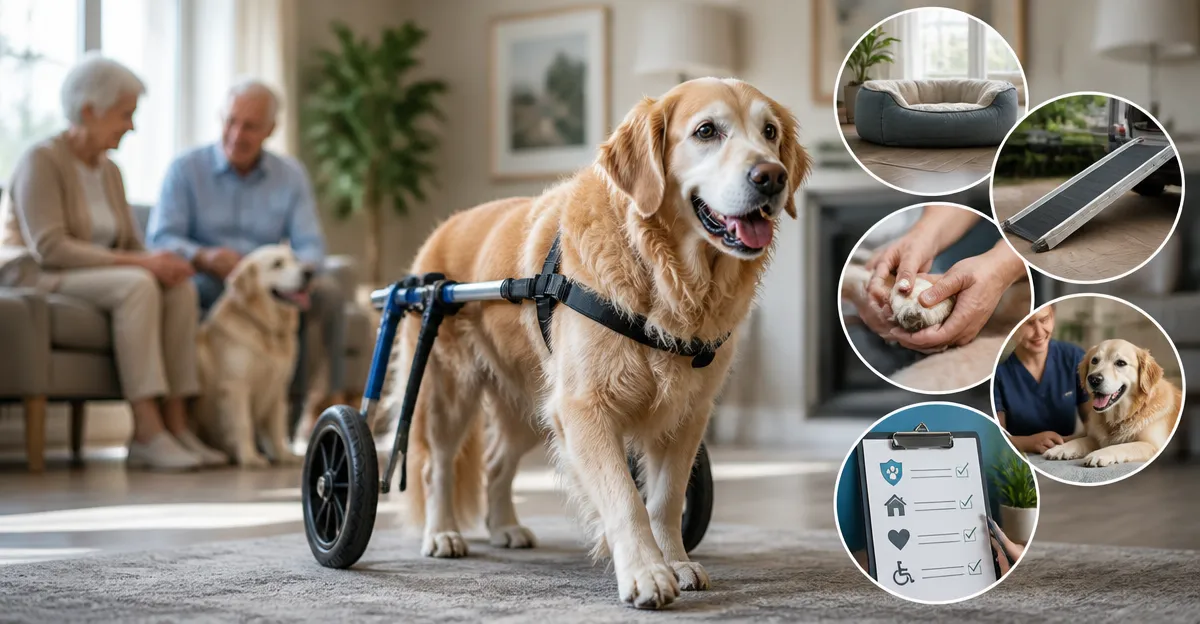
This guide examines the policies, care strategies, and legal rights that affect senior dogs requiring mobility assistance. Readers will learn how assisted living facilities, home environments, and public spaces accommodate dogs that use lift harnesses or slings. The article also outlines how owners can advocate for their pets while complying with regulations. By the end of the guide, one will possess a clear framework for selecting appropriate mobility aids, understanding institutional rules, and implementing best practices for safe, dignified living.
Background and Context
Senior canines often experience arthritis, joint degeneration, or post‑surgical weakness that limits independent movement. Mobility aids such as rear‑leg lift harnesses, dual‑handle slings, and full‑body support vests redistribute weight and reduce strain on fragile joints. In many jurisdictions, animals are recognized as family members, granting owners certain rights to reasonable accommodation in housing and care facilities. Nevertheless, policies vary widely, and owners must navigate landlord agreements, veterinary recommendations, and insurance considerations. Understanding the mechanical principles of each aid and the legal landscape creates a foundation for responsible pet stewardship.
Understanding Mobility Aids
Rear‑Leg Lift Harnesses
The Moonsea Large Rear‑Leg Dog Lift Harness provides targeted support for weak hind limbs. Its super soft plush lining and breathable outer fabric protect delicate skin while a removable handle sleeve safeguards the caregiver’s hand. Reinforced nylon straps bear the weight of large breeds, and the adjustable design accommodates a wide size range. The product is machine washable, ensuring durability after repeated cleaning. This harness is especially valuable for dogs that struggle on stairs or require assistance when rising from a couch.
Dual‑Handle Sling Harnesses
The Yingphia Padded Dual‑Handle Dog Lift Harness combines a short control handle with long lifting straps. This configuration allows owners to maintain close‑range control on steep ramps or high SUVs, reducing the risk of sudden movements. Ultra‑thick plush cotton padding prevents chafing, and fully adjustable nylon straps ensure a secure fit for medium and large dogs. At a price of $21.68 and a rating of 4.9/5 from 22 reviews, it offers high value for owners seeking both comfort and precision.
Full‑Body Support Vests
The Mayerzon Full‑Body Support Dog Harness distributes lifting forces across the chest, front, and hind legs. Constructed from Oxford fabric with breathable mesh, it includes reflective straps for nighttime visibility. A unique male‑friendly relief opening permits urination without removal, while female dogs can temporarily unfasten the back for the same purpose. Priced at $28.99 with a 4.5/5 rating from nine reviews, it excels in scenarios requiring comprehensive support such as hiking or extended grooming sessions.
Policy Considerations for Assisted Living
Assisted living facilities for humans often have pet policies that extend to service animals but may not explicitly address mobility‑aid devices. Owners should request written accommodation agreements that specify:
- Permission to use lift harnesses in common areas.
- Designated storage for removable slings.
- Guidelines for cleaning and sanitation.
Many jurisdictions require landlords to make reasonable modifications for disabled pets, mirroring the Fair Housing Act for humans. Documentation from a veterinarian confirming the necessity of the device strengthens the request. It is advisable to provide the facility with product specifications, such as the Moonsea harness’s machine‑washable fabric, to alleviate concerns about hygiene.
Home Environment Adjustments
Creating a senior‑dog‑friendly home involves both physical modifications and routine changes. Key adjustments include:
- Installing non‑slip mats on stair treads to complement the support provided by the Yingphia dual‑handle sling.
- Raising food and water bowls to reduce bending strain.
- Providing a low‑profile ramp for bed or couch access, allowing the Mayerzon full‑body vest to be used without excessive lifting.
Regularly inspect harnesses for wear, especially the reinforced nylon straps on the Moonsea model, and replace them promptly to maintain safety.
Comparison and Selection Guide
When choosing a mobility aid, owners should evaluate the following criteria:
| Criteria | Moonsea Rear‑Leg Harness | Yingphia Dual‑Handle Sling | Mayerzon Full‑Body Vest |
|---|---|---|---|
| Primary Support Area | Hind legs only | Full torso with dual handles | Chest, front, and hind legs |
| Weight Capacity | Large breeds (up to 120 lb) | Medium‑large breeds (up to 100 lb) | Medium‑large breeds (up to 80 lb) |
| Comfort Features | Plush lining, breathable cover | Ultra‑thick plush padding | Oxford fabric, mesh lining |
| Ease of Use | Simple strap adjustment, removable handle sleeve | Short handle for precise control | Adjustable straps, reflective strips |
| Price | Not listed (assume comparable) | $21.68 | $28.99 |
| Customer Rating | Not provided | 4.9/5 (22 reviews) | 4.5/5 (9 reviews) |
Owners whose dogs require only hind‑leg assistance may find the Moonsea harness most cost‑effective. Those who need close control on uneven terrain should consider the Yingphia dual‑handle sling. For comprehensive support during outdoor activities, the Mayerzon full‑body vest offers the broadest coverage.
Best Practices and Tips
- Conduct a pre‑use assessment with a veterinarian to determine the appropriate level of support.
- Practice lifting techniques in a safe area before using the device in public spaces.
- Regularly clean harnesses according to manufacturer instructions; the Moonsea harness is machine washable, while the Yingphia sling can be spot‑cleaned.
- Monitor the dog’s skin for signs of irritation, especially under the plush padding of the Yingphia harness.
- Maintain a log of daily usage time to prevent over‑reliance on the device, encouraging gradual muscle strengthening.
Frequently Asked Questions
1. Are mobility‑aid harnesses considered medical devices?
They are not classified as medical devices by the FDA, but they are recommended by veterinary professionals for therapeutic support.
2. Can I use a lift harness in a rental apartment?
Yes, provided the lease does not prohibit pets and the owner obtains a reasonable accommodation letter from a veterinarian.
3. How often should I replace the straps?
Inspect straps monthly; replace them when any fraying or loss of tensile strength is observed.
4. Do reflective straps improve safety?
Reflective elements, such as those on the Mayerzon vest, increase visibility during low‑light walks, reducing the risk of accidents.
5. What is the best way to store a sling when not in use?
Roll the sling loosely and keep it in a dry, ventilated container; the Yingphia design folds compactly for glove‑box storage.
6. Will using a harness impede my dog’s natural movement?
When properly fitted, a harness supports the dog without restricting normal gait; however, prolonged use should be alternated with supervised free movement.
Conclusion
Assisted living policies, home modifications, and carefully selected mobility aids together create a supportive environment for senior dogs with limited mobility. By understanding legal rights, evaluating product features, and applying best‑practice care, owners can enhance their pets’ quality of life while respecting institutional regulations. The three featured products illustrate a range of solutions from targeted hind‑leg support to full‑body assistance, enabling owners to match the aid to their dog’s specific needs.
Products Featured in This Guide
Moonsea Large Rear‑Leg Dog Lift Harness
Price: Not listed | Rating: Not provided
Featured because it offers dedicated hind‑leg support, breathable plush material, and machine‑washable construction ideal for indoor assistance.
Yingphia Padded Dual‑Handle Dog Lift Harness
Price: $21.68 | Rating: 4.9/5 (22 reviews)
Featured for its dual‑handle design that grants precise control on stairs and ramps, and its ultra‑thick plush padding for sensitive dogs.
Mayerzon Full‑Body Support Dog Harness
Price: $28.99 | Rating: 4.5/5 (9 reviews)
Featured because it provides comprehensive chest and limb support, reflective safety strips, and a male‑friendly relief opening for convenience during outings.