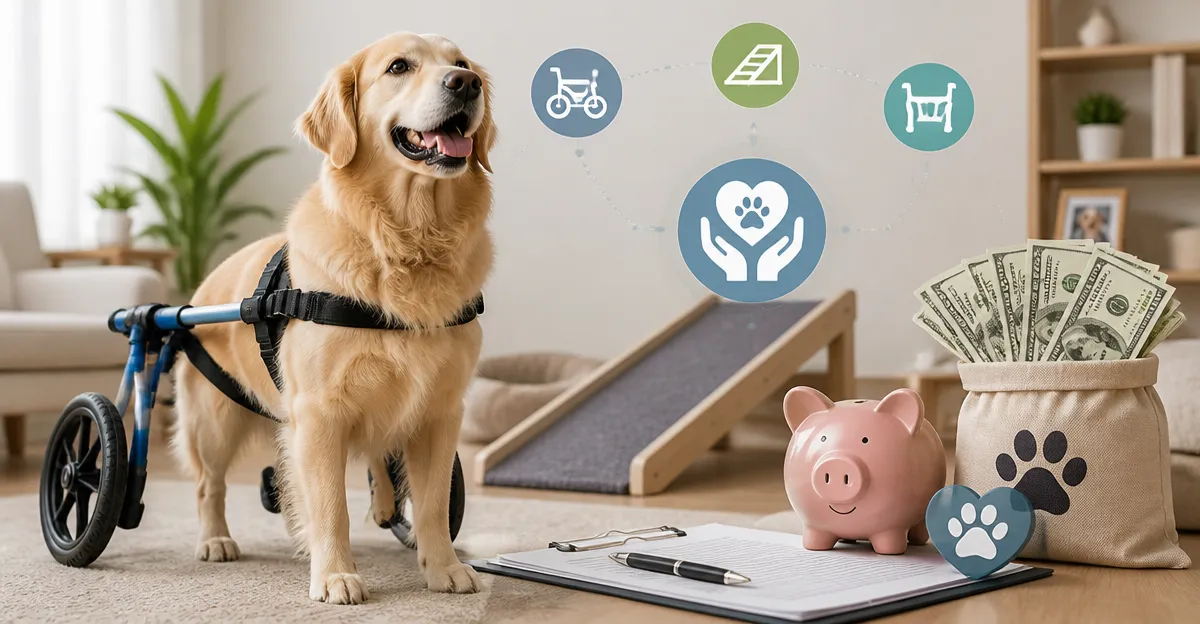
Complete Guide to Grants and Financial Assistance for Pet Mobility Aids: How to Find, Qualify for, and Apply for Funding for Wheelchairs, Ramps, and Support Devices
Introduction
Pet owners increasingly encounter situations where a beloved companion requires a mobility aid. Whether a senior dog struggles with arthritis or a post‑surgical canine needs a sling, the cost of wheelchairs, ramps, and support devices can be substantial. This guide explains the landscape of grants and financial assistance, outlines eligibility criteria, and provides step‑by‑step application advice. Readers will also discover product recommendations that complement funded solutions, ensuring that every dog receives safe and effective support.
The information presented is based on current U.S. programs, nonprofit initiatives, and veterinary association resources. By the end of the guide, one will be equipped to navigate the funding process with confidence and make informed purchasing decisions.
Background and Context
Mobility impairments in dogs often arise from hip dysplasia, cruciate ligament injuries, arthritis, or age‑related muscle loss. Veterinary professionals prescribe devices such as hip slings, lift harnesses, and joint supplements to improve quality of life. However, the average cost of a high‑quality dog wheelchair ranges from $150 to $300, while custom ramps may exceed $500. Financial assistance programs exist to offset these expenses, but they are frequently underutilized due to lack of awareness.
Key terms include "grant," a fund that does not require repayment; "scholarship," typically awarded for educational purposes but occasionally extended to animal welfare; and "reimbursement program," which refunds documented expenses after purchase. Understanding these definitions helps owners select the most appropriate avenue for assistance.
Nonprofit organizations such as the Pet Fund, the American Kennel Club (AKC) Canine Health Foundation, and breed‑specific rescue groups frequently allocate resources for mobility aids. Governmental programs, though limited, may provide assistance through Medicaid waivers for service animals or through local animal welfare grants.
Identifying Funding Sources
Several categories of assistance are available:
- National nonprofit grants: Organizations that award funds based on financial need, medical necessity, and documented veterinary recommendation.
- Breed‑specific rescue grants: Groups dedicated to particular breeds often maintain emergency funds for orthopedic support.
- Veterinary clinic assistance programs: Some practices partner with manufacturers to offer discounted or free devices for qualifying patients.
- Crowdfunding platforms: While not a grant, sites such as GoFundMe enable owners to raise community support quickly.
When evaluating a source, verify its legitimacy by checking for a clear application process, transparent eligibility criteria, and a track record of disbursement.
Eligibility Criteria and Documentation
Most grant programs require the following documentation:
- A recent veterinary diagnosis confirming the need for a mobility aid.
- Proof of income or financial hardship, often in the form of tax returns or pay stubs.
- Estimates or invoices for the recommended device.
- A personal statement describing the pet’s condition and the impact of the aid on daily life.
Applicants should gather these items before beginning the application to avoid delays. Many programs also request photographs or videos of the pet demonstrating the functional limitation.
Application Process: Step‑by‑Step
Below is a systematic approach to applying for pet mobility aid funding:
- Research and shortlist grants: Use online databases, veterinary referrals, and nonprofit directories to compile a list of relevant programs.
- Confirm eligibility: Review each program’s criteria and eliminate those that do not match the pet’s condition or the owner’s financial profile.
- Prepare documentation: Obtain a written recommendation from the veterinarian, collect income statements, and request price quotes for the desired device.
- Draft a compelling narrative: Explain the pet’s history, the anticipated benefits of the aid, and why financial assistance is essential.
- Submit the application: Follow the program’s instructions precisely, attaching all required files in the requested format.
- Follow up: If a response is not received within the stated timeframe, send a polite inquiry to confirm receipt.
- Utilize the funds: Once approved, purchase the device from a reputable vendor and retain receipts for any required reimbursement.
Adhering to this workflow maximizes the likelihood of a successful outcome.
Recommended Products for Funded Solutions
When a grant is secured, selecting a device that aligns with the pet’s size, condition, and lifestyle is critical. The following products have been identified as high‑quality options that complement typical grant recommendations.
LOOBANI Portable Dog Sling
The LOOBANI Dog Sling offers a lightweight, adjustable harness designed to lift the rear legs of senior or post‑surgical dogs. Key features include a reflective nylon strap, soft sheepskin‑like lining, and a removable padded handle for hand comfort. At a price of $12.34, it provides an affordable solution for owners who need temporary support during rehabilitation.
PICK FOR LIFE Adjustable Dog Lift Harness
The PICK FOR LIFE Dog Lift Harness is engineered for larger breeds, offering a 49‑68 inch adjustable strap length and a durable oxford fabric exterior. Its synthetic fleece interior ensures comfort, while padded handles reduce strain on the caregiver. This harness is especially suitable for dogs recovering from ACL or TPLO surgery, and its wash‑able design adds convenience for long‑term use.
Antinol Plus Joint Supplement
For dogs requiring ongoing joint support, Antinol Plus delivers a marine‑oil blend of green‑lipped mussel and Antarctic krill oil. The 60‑soft‑gel bottle is priced at $55.99 and holds a rating of 4.5 out of 5 stars from 834 reviews. Clinical studies indicate observable improvement in mobility within 30 days, making it a valuable adjunct to mechanical aids.
Comparison and Selection Guide
Choosing the appropriate mobility aid involves assessing the dog’s size, the type of impairment, and the intended duration of use. The table below summarizes the three featured products against common criteria.
| Criteria | LOOBANI Dog Sling | PICK FOR LIFE Lift Harness | Antinol Plus Supplement |
|---|---|---|---|
| Primary Use | Rear‑leg lift for short‑term support | Full‑body lift for large breeds, post‑surgery | Joint health maintenance and pain reduction |
| Weight Capacity | Up to 55 lb (approx.) | Up to 110 lb (approx.) | N/A |
| Adjustability | Reflective strap, multiple length options | 49‑68 in adjustable strap | N/A |
| Material Comfort | Sheepskin‑like lining, padded handle | Synthetic fleece interior, padded handles | Marine‑oil soft‑gel delivery |
| Price | $12.34 | Not listed (typically $30‑$45) | $55.99 |
| Customer Rating | Not provided | Not provided | 4.5/5 (834 reviews) |
Owners should match the dog’s weight and rehabilitation timeline with the appropriate product. For a small senior dog requiring occasional assistance, the LOOBANI sling offers a cost‑effective choice. Larger dogs recovering from major surgery benefit from the robust support of the PICK FOR LIFE harness. In all cases, supplementing mechanical aid with Antinol Plus can accelerate joint recovery.
Best Practices & Tips
- Obtain a written recommendation from a licensed veterinarian before applying for any grant; most programs consider this a mandatory requirement.
- Document the pet’s daily challenges with photographs or short videos; visual evidence strengthens the application narrative.
- Maintain a spreadsheet of all grant deadlines, required documents, and submission dates to avoid missed opportunities.
- When purchasing a funded device, retain the original invoice and any warranty information; some programs require proof of purchase for reimbursement.
- Combine grant funding with low‑cost supplemental products, such as the LOOBANI sling, to stretch the budget while still providing comprehensive care.
- Consider joining breed‑specific online communities; members frequently share up‑to‑date grant alerts and success stories.
Frequently Asked Questions
- 1. How long does it typically take to receive grant approval?
- Approval timelines vary; most national nonprofits respond within four to six weeks after a complete application is submitted.
- 2. Can I apply for multiple grants for the same device?
- Yes, but it is essential to disclose any other funding sources to avoid duplicate disbursement, which could violate grant terms.
- 3. Are there grants specifically for wheelchair‑type devices?
- Several organizations, including the Pet Fund and the AKC Canine Health Foundation, have dedicated categories for orthopedic wheelchairs and custom‑built ramps.
- 4. What if my dog outgrows the recommended device?
- Most manufacturers offer exchange programs or adjustable models; keep the original purchase receipt as proof of eligibility for an upgrade.
- 5. Is there a tax deduction for grant‑funded purchases?
- Grants are not considered taxable income, but owners should consult a tax professional to determine if any related expenses are deductible.
- 6. How can I increase my chances of receiving a grant?
- Providing a detailed veterinary letter, clear financial documentation, and compelling personal testimony significantly improves success rates.
Conclusion
Securing financial assistance for pet mobility aids is achievable with thorough research, organized documentation, and strategic application. By leveraging national nonprofit grants, breed‑specific funds, and veterinary assistance programs, owners can alleviate the financial burden of essential devices such as slings, harnesses, and joint supplements. Combining funded equipment with high‑quality products like the LOOBANI Dog Sling, PICK FOR LIFE Lift Harness, and Antinol Plus ensures that dogs receive both immediate support and long‑term joint health benefits. Ultimately, the guide equips readers with the knowledge to enhance the well‑being of their canine companions while navigating the complex landscape of pet‑focused financial aid.
Products Featured in This Guide
LOOBANI Portable Dog Sling
Price: $12.34
Why featured: Provides an affordable, lightweight solution for lifting the rear legs of senior or post‑operative dogs, making it ideal for grant‑funded short‑term rehabilitation.
PICK FOR LIFE Adjustable Dog Lift Harness
Price: Not listed (typically $30‑$45)
Why featured: Designed for medium to large dogs, this harness offers robust support for rear‑leg rehabilitation and post‑surgical recovery, aligning with grant‑approved mobility devices.
Antinol Plus Joint Supplement
Price: $55.99
Rating: 4.5/5 (834 reviews)
Why featured: Clinically proven marine‑oil blend that accelerates joint recovery, offering a nutritional complement to mechanical mobility aids funded by grants.