How Flooring Affects Senior Dog Mobility and Ramp Performance: The Complete Guide
Introduction
Senior dogs often face challenges when navigating stairs, thresholds, and uneven surfaces. This guide explains how flooring materials influence mobility, why the right ramp matters, and how to select equipment that supports confidence and safety. Readers will learn foundational concepts, compare leading ramp solutions, and receive actionable best‑practice tips for everyday use. By the end, one will be equipped to make informed decisions that improve quality of life for aging canine companions.
Background and Context
As dogs age, joint wear, reduced muscle mass, and conditions such as arthritis or intervertebral disc disease become more common. These factors increase the risk of slips, falls, and hesitancy on hard or slick surfaces. Flooring type plays a critical role because it determines friction, shock absorption, and the angle at which a dog approaches a step. Understanding the physics of traction and load distribution enables owners to mitigate pain and prevent injuries.
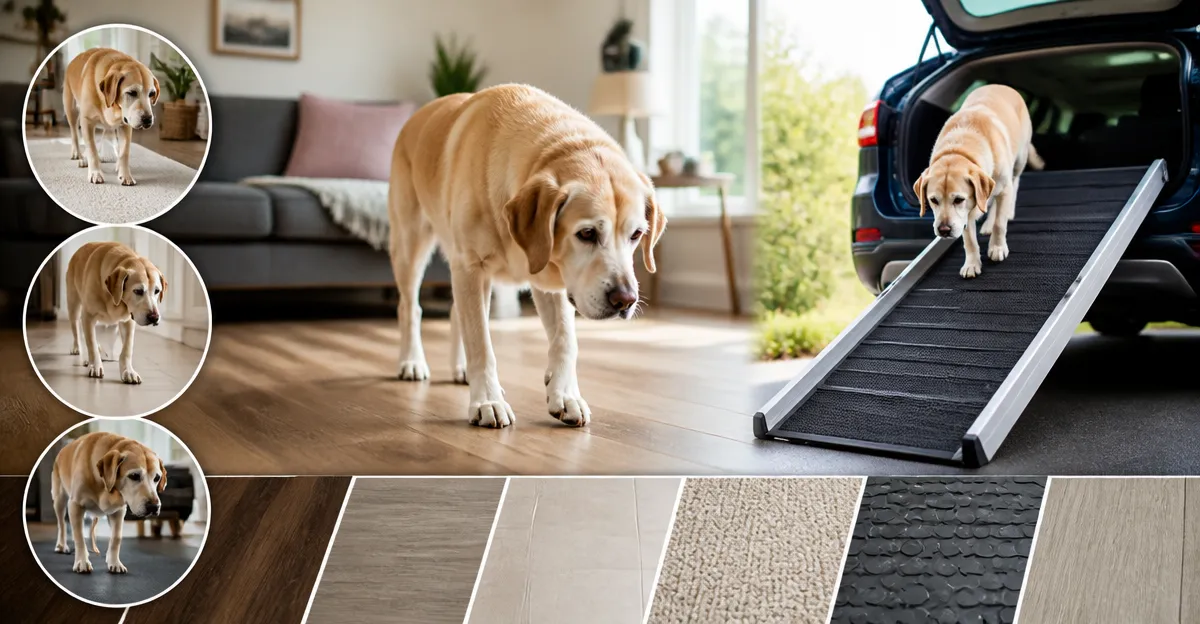
Three primary flooring categories dominate residential environments: hard surfaces (tile, hardwood, laminate), soft surfaces (carpet, area rugs), and hybrid surfaces (vinyl, engineered wood with underlayment). Each presents distinct advantages and drawbacks for senior dogs. Hard surfaces provide stability but can be unforgiving on joints, while soft surfaces cushion impact yet may reduce grip. Hybrid surfaces attempt to balance both attributes, yet the specific finish and texture still affect performance.
Ramps are engineered to modify the angle of ascent, reducing the vertical load on a dog’s hind limbs. However, a ramp’s effectiveness is contingent upon the underlying floor’s ability to hold the ramp securely and provide consistent traction. Slippage at the ramp‑floor interface can negate the safety benefits of the ramp itself. Consequently, selecting a ramp that complements the home’s flooring is as important as choosing the right floor treatment.
Understanding Flooring Types and Their Impact on Mobility
Below is a concise overview of how common flooring materials interact with senior dog gait.
- Tile and Stone: Extremely low compliance, high slip risk when wet. Dogs may hesitate due to the cold surface, which can exacerbate joint stiffness.
- Hardwood and Laminate: Smooth finish offers good traction when finished with a matte sealant, but glossy finishes become slippery. The wood’s natural give is minimal, so impact forces travel directly to the joints.
- Carpet: Provides cushioning and reduces impact shock, yet pile can bunch under a ramp, creating uneven edges that challenge balance.
- Vinyl and Engineered Wood: Often feature textured surfaces that improve grip while still offering some flexibility. These are generally the most versatile for ramp placement.
Owners can enhance safety by applying anti‑slip pads, area rugs with non‑slip backing, or specialized floor treatments. The choice should align with the dog’s weight, stride length, and any existing orthopedic conditions.
Ramp Selection: Key Concepts and Product Recommendations
When evaluating ramps for senior dogs, consider the following criteria:
- Load Capacity: Ensure the ramp supports the dog’s weight plus any additional forces during ascent.
- Surface Texture: A non‑slip tread or rubberized grip reduces the likelihood of sliding on smooth floors.
- Angle and Length: A gentler incline (approximately 18‑20 degrees) minimizes joint strain.
- Portability and Storage: Foldable designs simplify travel and storage, especially for owners who use ramps in vehicles.
- Material Sustainability: Eco‑friendly materials such as cork or recycled rubber align with environmentally conscious households.
Two products exemplify these principles and integrate well with various floor types.
Original StairWedge™
The Original StairWedge is a wedge‑shaped stair ramp designed specifically for small dogs under 25 lb. Its dimensions—10 inches long, 6 inches tall, and 9 inches wide—fit most standard stair treads, creating a consistent angled surface that reduces the vertical rise. The product features a textured tread surface that enhances grip on hardwood, tile, or laminate floors. Constructed from cork oak, the ramp is both lightweight (approximately 2 lb) and eco‑friendly, offering a natural, slightly aromatic finish that dissipates within days.
Key specifications include:
- Dimensions: 10 × 6 × 9 inches, suitable for standard staircases.
- Weight Capacity: Recommended for dogs under 25 lb; ideal for breeds such as Chihuahuas, Pomeranians, and small terriers.
- Surface: Grip‑enhanced tread that maintains traction on smooth surfaces.
- Rating: 3.7 / 5.0 from 199 reviews, indicating moderate satisfaction with room for improvement in durability.
- Price: $30.99, offering an affordable solution for households with limited space.
Because the ramp is wedge‑shaped rather than a full‑length stair, it works well on both indoor stairs and outdoor steps where a short, stable incline is needed. The natural cork material also provides a slight cushioning effect, which can be gentler on arthritic joints.
WeatherTech Easy Ramp
The WeatherTech Easy Ramp is a portable, non‑slip ramp engineered for vehicles but equally effective for home use. Supporting up to 300 lb, it accommodates larger breeds as well as senior dogs that may weigh more than the StairWedge’s recommended limit. Weighing 16 lb, the ramp folds compactly for storage and features soft‑rubber feet that prevent slipping on both vehicle interiors and indoor flooring such as tile or hardwood.
Key specifications include:
- Load Capacity: Up to 300 lb, suitable for medium to large senior dogs.
- Weight: 16 lb, with foldable design for easy transport.
- Surface: Soft‑rubber tread with end grips to maintain stability on smooth floors.
- Rating: 4.5 / 5.0 from 2,300 reviews, reflecting high customer satisfaction and perceived durability.
- Price: $166.95, representing a premium investment for multi‑purpose use.
This ramp’s length and gentle incline make it an excellent choice for accessing vehicle trunks, SUVs, or elevated home furniture. The non‑slip feet are particularly valuable on polished tile or stone, where a standard ramp might slide.
Comparison and Selection Guide
Choosing the appropriate ramp depends on dog size, typical usage scenarios, and floor conditions. The table below contrasts the two featured products across essential dimensions.
| Feature | Original StairWedge™ | WeatherTech Easy Ramp |
|---|---|---|
| Target Dog Weight | Up to 25 lb (small breeds) | Up to 300 lb (all breeds) |
| Length & Angle | 10 inches, 6‑inch rise (steeper wedge) | Adjustable length, gentle incline (≈18°) |
| Material | Cork oak (eco‑friendly, natural) | Aluminum frame with soft‑rubber tread |
| Portability | Lightweight, no folding required | Foldable, 16 lb, travel‑ready |
| Floor Compatibility | Works on hardwood, tile, laminate; grip tread | Soft‑rubber feet prevent sliding on smooth surfaces |
| Price | $30.99 | $166.95 |
| Customer Rating | 3.7 / 5 (199 reviews) | 4.5 / 5 (2,300 reviews) |
For owners of small senior dogs who need a discreet, low‑cost solution for a few steps, the Original StairWedge offers sufficient support and environmental benefits. Conversely, households with larger senior dogs, multiple vehicle trips, or a need for a ramp that can be stored compactly should consider the WeatherTech Easy Ramp despite its higher price point.
Best Practices & Tips for Maximizing Ramp Performance
Implementing the following strategies will ensure that ramps remain safe and effective over time.
- Secure the Ramp: Place anti‑slip pads or double‑sided carpet tape beneath the ramp on polished tile or hardwood. This prevents lateral movement during use.
- Maintain Clean Surfaces: Remove dust, water, or pet hair from both the floor and ramp tread before each use. Moisture dramatically reduces friction.
- Gradual Introduction: Allow the senior dog to explore the ramp at its own pace. Use treats and praise to encourage confidence, especially for dogs unfamiliar with inclined surfaces.
- Regular Inspection: Check for wear on the grip surface, loose screws, or cracked cork. Replace or repair components promptly to avoid accidents.
- Combine with Floor Treatments: On slippery floors, apply a clear anti‑slip coating or install low‑pile area rugs with non‑slip backing. This synergizes with the ramp’s own traction.
- Adjust Angle When Possible: If the ramp is adjustable, set the incline to the lowest comfortable angle. A shallower slope reduces joint strain.
These practices are applicable to both featured products and any other ramp solutions a reader might consider.
Frequently Asked Questions
1. Can I use a pet ramp on carpeted stairs?
Yes, but ensure the ramp’s base is stable. Carpet can compress under weight, so a non‑slip pad or a piece of plywood under the ramp helps maintain a firm surface.
2. How often should I replace a ramp’s tread?
When the grip surface shows significant wear, loss of texture, or becomes slick, replacement is advisable. For high‑use ramps, this may be every 12‑18 months.
3. Is cork a good material for dogs with allergies?
Cork is naturally hypoallergenic and free from synthetic chemicals, making it a safe choice for most dogs. The initial earthy odor dissipates within a few days.
4. Will the WeatherTech Easy Ramp fit in my SUV’s trunk?
When folded, the ramp measures approximately 24 inches in length, allowing it to fit comfortably in most SUV trunks and rear seats.
5. How do I clean the ramp’s rubber feet?
Wipe the rubber feet with a damp cloth and mild soap. Avoid abrasive cleaners that could degrade the rubber’s non‑slip properties.
6. Can I use a ramp outdoors?
Both ramps are suitable for outdoor use on paved surfaces, provided they are kept dry and free of debris. The cork ramp should be stored indoors when not in use to prevent moisture absorption.
7. What is the ideal ramp angle for a senior dog with arthritis?
An angle of 18‑20 degrees is generally recommended, as it reduces the vertical load on hind joints while still providing sufficient elevation.
Conclusion
Flooring and ramp selection are interdependent factors that directly affect a senior dog’s mobility, confidence, and overall well‑being. By understanding the characteristics of various floor types, evaluating ramp specifications, and applying best‑practice maintenance, owners can create a safe environment that encourages independent movement. Whether one chooses the budget‑friendly Original StairWedge for a small breed or the versatile WeatherTech Easy Ramp for larger dogs and travel, the ultimate goal remains the same: to enhance comfort and prevent injury for aging companions.
Products Featured in This Guide
Original StairWedge
Price: $30.99 | Rating: 3.7/5.0 (199 reviews)
Featured because it provides an eco‑friendly, low‑profile solution for small senior dogs navigating standard stairs, with a grip‑enhanced tread that works well on hardwood, tile, and laminate.
WeatherTech Easy Ramp
Price: $166.95 | Rating: 4.5/5.0 (2,300 reviews)
Featured because it supports up to 300 lb, folds for travel, and includes soft‑rubber feet that prevent slipping on smooth indoor floors and vehicle interiors, making it ideal for larger senior dogs.