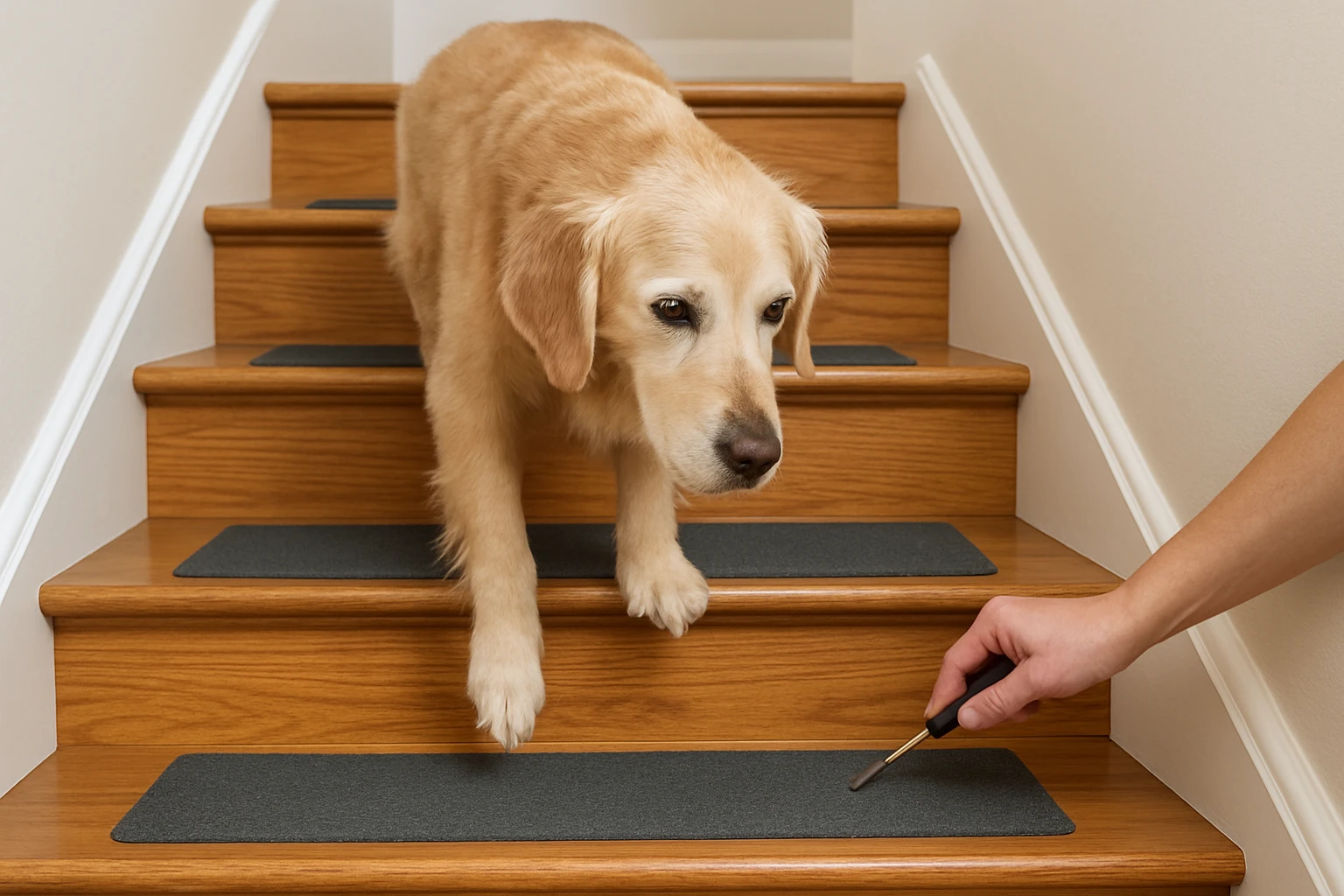
How to Adapt Stairs for a Senior Dog Without a Ramp: Safe At‑Home Tips
Introduction
Many households face the challenge of providing safe stair access for senior dogs who have lost agility or suffer from joint pain. This guide explains how to transform existing stairs into a secure pathway using affordable, easy‑to‑install solutions. The reader will learn how to assess stair conditions, select appropriate non‑slip surfaces, and implement supportive measures that reduce the risk of falls. By following these instructions, one can maintain the dog’s independence while protecting both pet and property.
What You’ll Need
- Non‑slip stair treads such as MBIGM Non‑Slip Carpet Stair Treads
- Additional edge‑protecting treads like COSY HOMEER Black Non‑Slip Stair Treads or COSY HOMEER Beige Non‑Slip Stair Treads
- Measuring tape, scissors, mild cleaning solution, and a vacuum cleaner
- Optional: temporary handrail or sturdy grab bar for additional support
Step 1: Assess the Staircase and Your Dog’s Mobility
Begin by observing the dog as it navigates each step, noting any hesitation, slipping, or difficulty rising. Measure the tread depth and riser height; typical residential stairs have a tread of 10‑11 inches and a riser of 7‑8 inches. Record any uneven edges, gaps, or worn surfaces that could contribute to loss of traction. This assessment determines the quantity of treads required and whether supplemental handrails are advisable.
Step 2: Create a Slip‑Resistant Surface
Install a high‑quality non‑slip carpet stair tread on every step to provide consistent grip. The MBIGM Non‑Slip Carpet Stair Treads feature a three‑layer construction: a wear‑resisting polyester fiber surface, a nonwoven buffer layer, and a TPU non‑skid bottom. Each piece measures 8 × 30 inches, fitting most indoor stairs, and the pack includes fifteen pieces, sufficient for a standard flight. The reusable adhesive backing allows placement without permanent glue, preventing residue when removed. The treads are machine‑washable, ensuring long‑term hygiene for households with pets.
To install, clean the stair surface with a mild solution, dry thoroughly, peel the clear backing, and press the tread firmly onto the step. Trim excess material with scissors if the stair dimensions differ slightly. The anti‑skid bottom supplies a strong grip, reducing the likelihood of the dog slipping during ascent or descent.
Step 3: Add Edge Protection and Visual Cues
Older dogs often rely on visual contrast to gauge step edges. Adding a thin, dark‑colored tread along the stair edge enhances visibility and provides an extra layer of friction. The COSY HOMEER Black Non‑Slip Stair Treads measure 28 × 9 inches and include a TPE non‑skid backing that adheres securely without damaging the underlying wood. Their low‑profile design ensures doors do not catch on the treads, while the 100 % polyester material offers durability.
If a neutral tone better matches interior décor, the COSY HOMEER Beige Non‑Slip Stair Treads provide the same functional benefits in a lighter shade. These treads have received a rating of 4.7 out of 5 stars from over 7,800 reviewers, indicating high customer satisfaction. They can be washed up to thirty times without loss of slip resistance, making them ideal for homes with frequent cleaning needs.
Apply the edge treads after the main surface treads are in place. Align the edge piece so that it overlaps the outermost inch of the step, creating a clear visual line for the dog. Press firmly and smooth out any bubbles to ensure full contact.
Step 4: Install Temporary Handrails or Support Bars
While non‑slip treads address traction, senior dogs may still benefit from a steadying aid. Install a temporary handrail using a sturdy wooden dowel or a commercially available grab bar that can be affixed with removable brackets. Position the rail at a height that allows the dog to place a front paw while maintaining balance, typically 12‑14 inches above the step surface.
Secure the brackets with screws that can be removed later without damaging the stair material. Test the rail for wobble before allowing the dog to use it. This additional support reduces strain on joints and builds confidence during stair navigation.
Step 5: Train Your Dog to Use the Modified Stairs
Introduce the dog to the newly treated stairs in a calm environment. Use a gentle, encouraging voice and reward each successful step with a treat. Begin with a single step, then gradually increase the number of steps as the dog becomes comfortable. If the dog hesitates, guide it with a leash and demonstrate the correct foot placement.
Consistency is essential; practice short sessions twice daily for the first week. Observe the dog for signs of fatigue, such as slowed pace or limping, and adjust the number of steps per session accordingly. Over time, the dog will associate the non‑slip surface with safety, reducing anxiety and preventing falls.
Tips & Pro Tips
- Before installation, test a single tread on a discreet area to ensure the adhesive does not react with the stair finish.
- For stairs with a pronounced curve, cut the tread to match the contour using sharp scissors; the flexible polyester surface bends easily.
- Place a non‑slip runner on the landing area as well, creating a continuous safe zone from the floor to the top of the stairs.
- Schedule regular cleaning of the treads; vacuum dust weekly and wash the treads monthly to maintain grip.
- If the dog continues to slip, consider adding a thin rubber mat beneath the tread for extra cushioning.
Troubleshooting
Problem: Tread loses adhesion after cleaning.
Solution: Ensure the stair surface is completely dry before re‑applying the adhesive backing. If adhesion remains weak, replace the tread with a new piece from the same pack.
Problem: Dog avoids the stairs altogether.
Solution: Use positive reinforcement and a leash to guide the dog step by step. Reduce the height of the first few steps with a temporary riser if necessary.
Conclusion
Adapting stairs for a senior dog without a ramp is achievable through careful assessment, the application of high‑quality non‑slip treads, and the addition of supportive elements. By following the outlined steps, one can create a safe, comfortable environment that preserves the dog’s independence and protects the household from accidents. The recommended products offer durability, ease of installation, and aesthetic flexibility, making them valuable tools for any pet‑friendly home.
Products Mentioned in This Guide
MBIGM Non‑Slip Carpet Stair Treads
Price: Not listed | Rating: Not listed
Features: 8 × 30 in size, three‑layer construction, reusable adhesive, machine‑washable, suitable for most indoor stairs.
COSY HOMEER Black Non‑Slip Stair Treads
Price: Not listed | Rating: Not listed
Features: 28 × 9 in size, 100 % polyester, TPE non‑skid backing, low‑profile design, washable up to 30 cycles.
COSY HOMEER Beige Non‑Slip Stair Treads
Price: $23.99 | Rating: 4.7/5 (7,830 reviews)
Features: 28 × 9 in size, 100 % polyester, TPE non‑skid backing, low‑profile design, washable up to 30 cycles, high customer satisfaction.
Frequently Asked Questions
What are the best non‑slip stair treads for senior dogs?
Low‑profile carpet or rubber treads with a textured surface, such as MBIGM or COSY HOMEER, provide traction without adding height.
How do I measure my stairs to buy the right treads?
Measure the width and depth of each step, then cut the treads to fit, leaving a small gap for expansion.
Can I install stair treads without tools?
Yes, most adhesive‑backed treads peel off the backing and stick directly to clean, dry steps.
How often should I clean and inspect the treads?
Wipe them weekly with a mild cleaner and check for wear or loose edges every month.
Do stair treads help reduce joint pain in senior dogs?
They soften each step and prevent slipping, which lessens strain on joints and lowers the risk of injury.