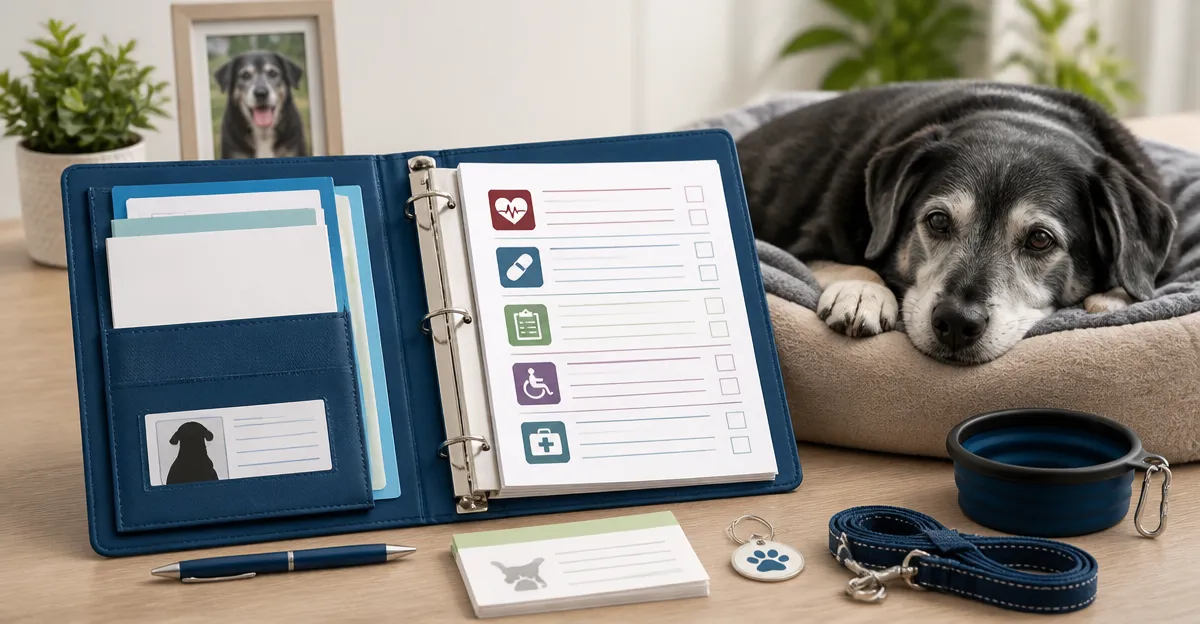
How to Create an Anxiety and Mobility Emergency Binder for Senior Dogs: Step-by-Step Guide with Printable Checklist
Introduction
This guide explains how one can assemble a comprehensive emergency binder that addresses anxiety, mobility challenges, and medical needs of senior dogs. The binder serves as a single reference point for veterinarians, caregivers, and emergency responders during a crisis. By following the steps, one will gain confidence that critical information and supplies are organized, accessible, and ready for rapid deployment.
The value of this binder lies in its ability to reduce stress for both pet and owner, to streamline communication with professionals, and to protect the dog from injury during emergencies such as fires, natural disasters, or sudden health episodes. The guide is designed for pet owners who already have basic supplies, but it also recommends tools that enhance efficiency and reliability.
What You Will Need
- Static cling window decals that alert responders to the presence of pets Pet Alert Stickers
- Cohesive self‑adhesive bandage rolls for wound care and paw protection Vet Wrap Bandages
- Compact vaccination record booklets for each dog Puppy Shot Record Booklets
- Expandable file folder with multiple pockets for organizing documents Dogs Expanding File Folder
- Pre‑printed index tabs for a three‑ring binder Pet Records Organizer Tabs
- Three‑ring binder (not included in the kit)
- Pen, Sharpie, scissors, and a printer for printable checklists
Step 1: Gather All Veterinary Documentation
The first major step is to collect every piece of veterinary paperwork that pertains to the senior dog. This includes vaccination certificates, recent blood work, medication lists, and specialist referrals. One should locate the original documents, then create duplicate copies for the binder. The Puppy Shot Record Booklets are specifically designed for this purpose. Each booklet measures 5 × 3.5 inches folded, providing a portable format that fits easily into a pocket of the Dogs Expanding File Folder. The 12‑page layout offers dedicated sections for vaccination dates, medication dosage, and a space for additional notes, ensuring that no detail is overlooked.
Why this product is useful: the booklet’s high‑quality 300 gsm coated cover protects the pages from wear, while the 100 gsm interior paper resists ink bleed, which is essential for clear record keeping. At a price of $10.99 and a rating of 4.6 / 5.0 from 243 reviewers, it provides excellent value for a senior dog owner.
Step 2: Create an Emergency Contact Sheet
Compile a one‑page sheet that lists the primary veterinarian, after‑hours emergency clinic, pet sitter, and any family members authorized to make medical decisions. Include phone numbers, addresses, and preferred contact times. Print the sheet on durable paper and place it in the front pocket of the Dogs Expanding File Folder. The folder’s 13 pockets allow one to separate contacts from medical records, reducing the chance of misplacement during a frantic moment.
The folder’s zippered front pocket adds an extra layer of security, preventing the contact sheet from sliding out when the binder is moved. Its wrist strap makes it easy to carry the entire organizer while evacuating the home.
Step 3: Assemble Mobility and Anxiety Aids
Senior dogs often experience reduced joint flexibility, arthritis, or anxiety during emergencies. It is prudent to include a small supply of supportive bandages and calming accessories within the binder package. The Vet Wrap Bandages are ideal because they are self‑adhesive, breathable, and do not stick to fur. Each roll measures 2 inches wide by 5 yards long, providing enough material for temporary paw protection, joint support, or wound dressing.
Why this product is useful: the cohesive bandage adheres only to itself, eliminating the risk of skin irritation or fur removal. Its high elasticity (over 180 % stretch) allows the owner to adjust tension for comfort. At $8.49 and a rating of 4.6 / 5.0 from 5,458 reviewers, it is both affordable and reliable for emergency kits.
Step 4: Install Pet Alert Signage on Windows
During a fire or other emergency, first responders may not be aware that a dog is inside the residence. The Pet Alert Stickers solve this problem by providing a bright, static‑cling decal that can be placed on any interior glass surface. The kit includes six 5 × 5 inch stickers, three wallet cards, and one key tag.
Installation instructions are straightforward: clean the glass, peel the backing, write the number and type of pets with a Sharpie, and press the decal onto the window. Because the stickers are UV‑resistant and leave no residue, they can be removed and repositioned without damage, making them suitable for rental homes. The set costs $7.99 and holds a 4.7 / 5.0 rating from 3,418 reviewers, indicating high customer satisfaction.
Step 5: Organize the Binder Using Index Tabs
To enable rapid navigation through the binder, insert the Pet Records Organizer Tabs into a standard three‑ring binder. The kit provides eight professionally printed tabs that correspond to categories such as Adoption Papers, Veterinary Records, Medication Logs, and Emergency Contacts.
Why this product is useful: the tabs are designed to fit standard three‑ring binders, eliminating the need for custom punches. At $10.50 and a rating of 4.1 / 5.0 from 107 reviewers, the tabs add a polished, organized appearance to the binder, which can be especially helpful when a veterinarian or emergency responder must locate information quickly.
Step 6: Populate the Binder
- Insert the Pet Records Organizer Tabs into the binder according to the desired order.
- Place the completed Puppy Shot Record Booklets into the “Veterinary Records” section.
- File the printed emergency contact sheet in the “Contacts” pocket of the Dogs Expanding File Folder, then insert the folder into the binder’s “Supplies” pocket.
- Attach a small roll of Vet Wrap Bandages to the interior pocket of the file folder using a zip tie or elastic band.
- Store the Pet Alert Stickers wallet cards in the “Key Items” section for easy access when leaving the house.
Each component should be labeled with a Sharpie or label maker to avoid confusion during an emergency. The binder should be kept in a location that is both visible and protected from moisture, such as a waterproof cabinet near the front door.
Step 7: Create a Printable Checklist
Develop a one‑page checklist that outlines daily, weekly, and emergency tasks for the senior dog. Include items such as medication administration times, mobility exercise reminders, and a reminder to verify that the Pet Alert Stickers are still visible on windows. Print the checklist on cardstock and attach it to the front cover of the binder with a binder clip.
Example checklist items:
- Morning: Administer prescribed pain medication.
- Midday: Check bandage integrity and replace if necessary.
- Evening: Verify that window decals are clean and unobstructed.
- Weekly: Refill bandage roll and update vaccination record booklets.
- Monthly: Review emergency contact sheet for any changes.
This printable serves as a quick reference for caregivers and reinforces routine care that mitigates anxiety and mobility decline.
Tips & Pro Tips
- Store a spare set of Pet Alert Stickers in a waterproof pouch in the car for travel emergencies.
- When applying Vet Wrap Bandages, ensure the skin is clean and dry to prevent infection.
- Use a color‑coded Sharpie for each section of the Puppy Shot Record Booklets to differentiate between vaccination, medication, and allergy information.
- Periodically test the visibility of the window decals by viewing them from outside the home; replace if colors have faded.
- Consider laminating the emergency contact sheet for added durability.
Troubleshooting
- Sticker does not adhere properly: Ensure the glass surface is completely dry and free of dust before application. Use a soft cloth to press out any air bubbles.
- Bandage rolls stick to fur: The cohesive bandage is designed to adhere only to itself. If adhesion to fur occurs, remove the roll and replace with a fresh segment.
- Binder becomes bulky: Consolidate duplicate records by scanning them and storing digital copies on a secure cloud service, while keeping only the most recent hard copy in the binder.
Conclusion
By following this step‑by‑step guide, one can create a robust emergency binder that addresses anxiety, mobility, and medical needs of senior dogs. The binder centralizes critical information, supplies, and signage, thereby reducing response time during emergencies and providing peace of mind for the owner. Regular maintenance of the binder ensures that the information remains current and that the supplies are ready for immediate use.
Products Mentioned in This Guide
Frequently Asked Questions
What should be included in a senior‑dog emergency binder?
Include medical records, medication list, allergy info, a printable checklist, pet‑alert stickers, and a copy of the dog's emergency care plan.
How do pet‑alert stickers help during an emergency?
They notify first responders and neighbors that a dog is inside, prompting careful entry and preventing accidental injury.
Can I use a printable checklist for anxiety and mobility needs?
Yes, a printable checklist ensures you pack calming aids, mobility supports, and any special equipment each time you prepare for a crisis.
What mobility supplies are essential for a senior dog in a disaster?
Foldable ramps, supportive harnesses, and non‑slip booties help a senior dog navigate stairs, debris, or uneven terrain safely.
How often should I update the emergency binder?
Review and refresh the binder every six months or after any veterinary visit, medication change, or health event.