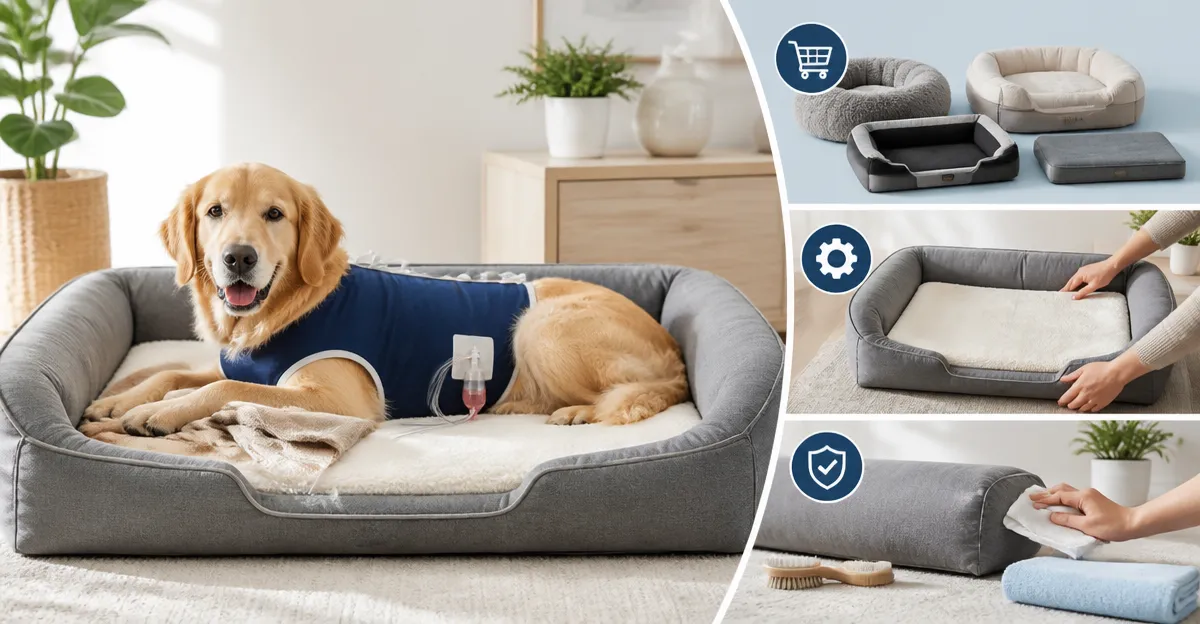
How to Choose and Prepare the Best Dog Bed for Dogs with Post‑Op Drains: Comfort, Cleanliness, and Safety
Introduction
When a dog is recovering from surgery and has drains, the resting surface becomes a critical element of healing. One must provide a bed that offers orthopedic support, protects against moisture, and can be cleaned frequently without compromising comfort. This guide explains how to evaluate needs, select appropriate products, set up the bed safely, and maintain hygiene throughout the recovery period. By following the steps, caregivers can reduce the risk of infection, alleviate joint stress, and promote restful sleep for the recovering pet.
What You’ll Need
- An orthopedic dog bed with waterproof cover and non‑slip bottom.
- Cleaning supplies: mild detergent, disinfectant wipes, and a vacuum.
- Optional calming accessories such as a donut‑style bed for anxiety‑prone dogs.
- Measuring tape to verify proper bed dimensions.
All of the recommended beds are available on Amazon and include removable, machine‑washable covers for easy maintenance.
Step 1: Assess the Dog’s Post‑Op Needs
Begin by reviewing the veterinarian’s instructions regarding drain placement, activity restrictions, and wound care. Determine whether the dog requires a raised edge to prevent accidental tugging of the drain, and whether the dog tends to shift positions during sleep. Larger breeds or senior dogs often benefit from extra lumbar support, while small or anxious dogs may need a snug, enclosed surface. Document the dog’s weight, typical sleep posture, and any allergies to fabrics before proceeding.
Step 2: Select an Orthopedic Bed with Waterproof Features
Orthopedic support is essential because post‑operative dogs may experience limited mobility and joint stiffness. A bed that combines memory foam with egg‑crate foam distributes pressure evenly, reducing strain on incision sites. Waterproof protection prevents fluids from soaking into the foam, which could foster bacterial growth.
For extra‑large or senior dogs, the EHEYCIGA Orthopedic XL Dog Bed provides a 44‑inch surface, a three‑sided bolster, and a waterproof film beneath the fleece layer. Priced at $39.98 with a 4.5‑star rating from 22,172 reviews, this bed offers durable support and easy removal of the cover for washing. The non‑slip bottom keeps the bed stable on hardwood or tile floors, which is vital when a dog moves to adjust the drain.
For medium‑sized dogs, the EHEYCIGA Orthopedic Memory Foam Dog Bed delivers comparable foam technology at $32.39 and the same 4.5‑star rating. Its removable cover and zippered design simplify cleaning after each dressing change.
If a pet prefers a more enclosed feel, the Bedsure Calming Donut Dog Bed offers a plush, round design that can reduce anxiety related to drains. Although not orthopedic, it can be placed atop an orthopedic mattress for added comfort. The donut bed costs $38.24 and holds a 4.6‑star rating from 26,451 reviews.
Step 3: Set Up the Bed for Safety and Stability
Place the selected bed on a flat, non‑slip surface. If the floor is carpeted, consider adding a thin rubber mat beneath the bed to enhance stability. Align the bed so that the bolster faces away from the drain, minimizing the chance that the dog will roll onto the tubing.
Secure the waterproof cover by ensuring the zipper is fully closed and the film layer is smooth. For beds with side bolsters, such as the EHEYCIGA models, adjust the bolsters so they provide gentle head support without pressing on the surgical site. The non‑slip bottom of each recommended product prevents the bed from sliding when the dog shifts, which is especially important for dogs that need to reposition to keep the drain clear.
Finally, create a low‑profile barrier using a lightweight blanket or towel around the perimeter of the bed if additional protection for the drain is required. This barrier can be removed for cleaning and does not interfere with the bed’s orthopedic benefits.
Step 4: Implement a Cleaning Routine
Maintain a strict cleaning schedule to prevent infection. After each dressing change, remove the cover from the bed and machine wash it on a cold, delicate cycle with mild detergent. The EHEYCIGA Orthopedic XL Dog Bed’s cover is machine washable, while the foam core must remain dry; allow the foam to air‑dry for 24–48 hours before re‑assembling.
Disinfect the waterproof film by wiping it with a pet‑safe disinfectant wipe. Avoid bleach, as it can degrade the film and cause irritation. For the Bedsure Orthopedic Dog Bed, the laminated waterproof layer can be wiped clean, and the flannel cover can be removed and machine washed, preserving the CertiPUR‑US certified foam inside.
Vacuum the surface of the bed weekly to remove hair and debris that could harbor bacteria. If the dog has a strong odor, sprinkle a small amount of baking soda on the cover before washing to neutralize smells.
Step 5: Monitor Comfort and Adjust as Needed
Observe the dog’s behavior for signs of discomfort, such as excessive scratching, reluctance to lie down, or changes in drainage output. Adjust the bed’s position or add a soft blanket if the dog appears cold or seeks additional cushioning.
For dogs that display anxiety about the drain, consider layering the Bedsure Calming Donut Dog Bed over the orthopedic mattress. The donut’s raised rim creates a sense of security, encouraging the dog to stay still and reducing the likelihood of accidental tugging.
Document any adjustments and share observations with the veterinarian during follow‑up appointments. Continuous evaluation ensures that the bed remains an effective tool for healing.
Tips & Pro Tips
- Measure the dog’s length from nose to tail tip and add 6‑8 inches to select a bed that allows full stretch without falling off.
- Use a pet‑safe, fragrance‑free detergent to avoid irritating the surgical site.
- Rotate the bed weekly to distribute wear evenly across the foam.
- Consider a portable version of the EHEYCIGA Orthopedic Memory Foam Dog Bed for trips to the vet, as the lightweight design is easy to transport.
- Keep a spare cover on hand to avoid delays in cleaning when the primary cover is in the wash.
Troubleshooting
| Problem | Possible Cause | Solution |
|---|---|---|
| Bed becomes slippery | Insufficient friction on floor | Place a rubber mat underneath or use the non‑slip bottom of the Bedsure Orthopedic Dog Bed. |
| Cover retains odor after washing | Detergent buildup | Re‑wash with a cup of white vinegar and dry thoroughly. |
| Foam feels compressed | Improper expansion after unpacking | Allow the foam to expand for 48 hours in a well‑ventilated area before use. |
Conclusion
Choosing the right dog bed for a pet with post‑op drains involves balancing orthopedic support, waterproof protection, and ease of cleaning. By following the five steps outlined above, caregivers can create a safe, comfortable resting environment that promotes healing and reduces the risk of infection. The recommended Amazon products—EHEYCIGA Orthopedic XL Dog Bed, EHEYCIGA Orthopedic Memory Foam Dog Bed, Bedsure Orthopedic Dog Bed, Bedsure Calming Donut Dog Bed, and BFPETHOME Orthopedic Large Dog Bed—provide reliable tools to achieve these goals. Consistent monitoring and diligent hygiene will ensure that the dog enjoys restful sleep throughout the recovery journey.
Products Mentioned in This Guide
Frequently Asked Questions
What features should I look for in a dog bed for post‑op drain care?
Choose an orthopedic bed with a waterproof, machine‑washable cover and a non‑slip bottom to protect joints, keep drains dry, and prevent sliding.
How do I determine the right size bed for my recovering dog?
Measure your dog’s length from nose to tail base and add a few inches; the bed should allow the dog to lie flat without hanging off the edges.
Can I clean the bed without disturbing the drains?
Use a removable cover that can be machine‑washed with mild detergent, and wipe the base with disinfectant wipes between washes.
Are there any accessories that help reduce anxiety during recovery?
A donut‑style or bolstered pillow can provide a sense of security for anxiety‑prone dogs while still keeping the drain area accessible.
How often should I replace or launder the dog bed during the recovery period?
Launder the cover at least every 2–3 days and replace the bed if the waterproof layer becomes torn or the cushioning loses support.