Introduction
Senior dogs often experience reduced mobility, joint pain, or post‑surgical weakness that can make everyday activities stressful. Introducing a support harness can restore confidence, protect the owner from strain, and prevent injuries. This guide explains how to present a harness to an anxious senior dog in a calm, systematic way, while highlighting tools that simplify each stage. Readers will learn how to assess comfort, select the appropriate device, practice gradual exposure, and troubleshoot common setbacks.
What You’ll Need
- Soft, breathable towels for calming and cleaning.
- Treats or favorite chew toys for positive reinforcement.
- Adjustable leash or long line for controlled walks.
- Noyal Dog Lift Harness – medium‑large size for dogs that require front‑and‑rear support.
- Lafoty Dog Lift Harness – large size with three reinforced handles for heavier breeds.
- Measuring tape to verify chest, girth, and length.
- Instruction manuals provided by the manufacturers.
Step‑by‑Step Instructions
Step 1: Evaluate Your Dog’s Mobility and Anxiety Triggers
Begin by observing how the dog moves on flat surfaces, up stairs, and into vehicles. Note any signs of pain, hesitation, or vocalization. Record the weight, height, and chest girth to match the sizing charts of the harnesses. Understanding the specific triggers—such as loud noises or sudden lifts—allows you to tailor the introduction process.
Step 2: Choose the Appropriate Harness
For dogs that need both front and rear assistance, the Noyal Dog Lift Harness offers a 2‑in‑1 split design. Its fully adjustable buckles ensure a snug fit, and the breathable mesh reduces heat buildup. Priced at $42.99 with a 4‑star rating from 388 reviews, it provides an economical solution for medium‑large breeds.
If the dog is larger or requires additional control, the Lafoty Dog Lift Harness includes three reinforced handles and a padded shoulder strap. At $89.95 and a 4.9‑star rating from 79 reviews, it delivers extra durability and versatility for heavy‑weight dogs.
Step 3: Measure and Adjust the Harness Before First Use
Lay the harness on a flat surface and use a measuring tape to compare the dog’s chest, neck, and back length with the size guide. For the Noyal model, medium fits small dogs, large fits medium, and XL fits large; ensure the buckles can reach the farthest adjustment point. For the Lafoty model, verify that the three handles align with the shoulders and hips without restricting movement.
Adjust all buckles according to the manufacturers’ video tutorials. A proper fit feels secure yet allows a finger’s width of slack at each strap. This prevents chafing and ensures the load is distributed across the body rather than concentrated on a single point.
Step 4: Create a Positive Association with the Harness
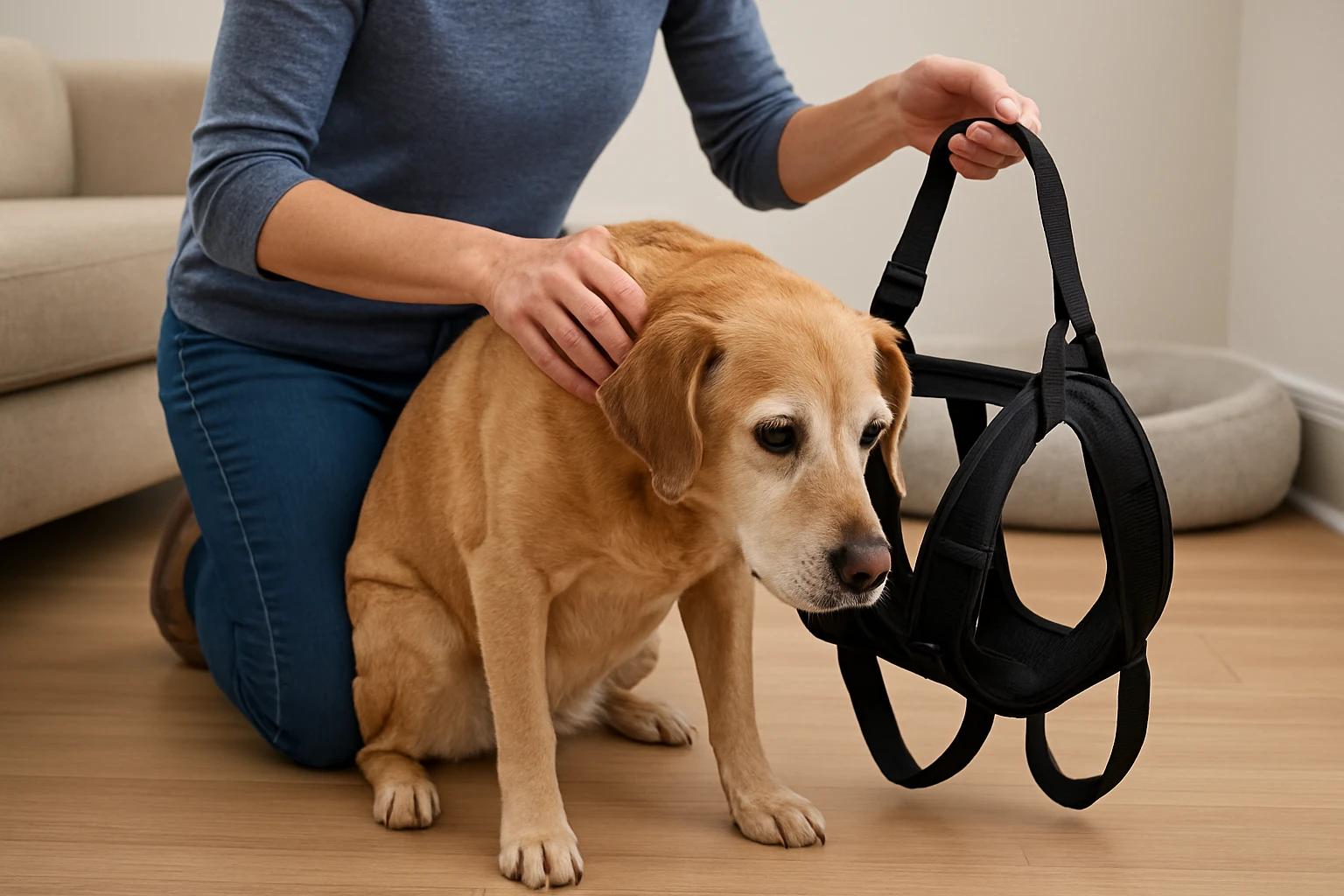
Place the harness on the floor near the dog’s favorite resting spot. Allow the dog to sniff and investigate without pressure. Reward any curiosity with a high‑value treat or gentle praise. Repeat this exposure for several short sessions, gradually increasing the duration the harness remains in view.
When the dog appears comfortable, gently drape the harness over the shoulders without securing any straps. Offer a treat and a soothing voice. This step teaches the dog that the harness itself is not a threat.
Step 5: Secure the Harness for a Brief, Controlled Lift
Using the Noyal Dog Lift Harness, attach the shoulder strap and the front and rear handles. Position yourself beside the dog, place one hand on the front handle and the other on the rear handle, and lift only a few centimeters off the ground. Keep the movement slow and steady, mirroring the dog’s natural gait.
If the dog shows signs of anxiety—such as tail tucking or rapid breathing—lower the harness immediately, provide reassurance, and resume at a slower pace. The Lafoty model’s three handles allow you to lift from a single point if the dog prefers less contact.
Step 6: Practice Short Walks and Stair Assistance
Begin with a short, straight walk on a non‑slippery floor. Use treats to encourage forward movement while holding the harness handles. For stairs, start at the bottom step, lift gently, and allow the dog to place its front paws on the next step before lowering. Repeat until the dog demonstrates confidence.
Maintain a calm voice throughout and avoid rushing. The breathable mesh of the Noyal harness reduces overheating during extended sessions, while the Lafoty harness’s padded shoulder strap distributes weight across the owner’s shoulder, reducing fatigue for the caregiver.
Step 7: Gradually Increase Duration and Complexity
Extend the time the dog spends in the harness by a few minutes each day. Incorporate real‑world scenarios such as car rides, outdoor walks, and gentle jogs on grass. Monitor the dog’s posture; any signs of discomfort should prompt an immediate reassessment of strap tension.
Document progress in a simple log—date, duration, activity, and any behavioral notes. This data helps you identify patterns, adjust the harness fit, and celebrate milestones.
Tips & Pro Tips
- Use a calm environment. Loud noises can exacerbate anxiety; choose a quiet room for early sessions.
- Layer with a soft towel. Placing a thin towel under the harness can cushion sensitive skin, especially for dogs with thin coats.
- Reward consistently. Pair each successful lift with a treat to reinforce positive behavior.
- Rotate handles. For the Lafoty harness, switch between the left, right, and central handles to find the most comfortable grip for both dog and owner.
- Check straps daily. Wear and tear can loosen buckles; regular inspection ensures safety.
Troubleshooting
| Problem | Possible Cause | Solution |
|---|---|---|
| Dog refuses to wear the harness | Negative association or improper fit | Re‑introduce the harness without fastening; use treats; verify that straps are not too tight. |
| Straps slip during lift | Insufficient buckle tension | Adjust buckles to the furthest notch; consider adding a small piece of non‑slip material under the strap. |
| Owner shoulder pain | Poor weight distribution | Switch to the Lafoty harness’s padded shoulder strap or use a supportive backpack while lifting. |
| Dog shows skin irritation | Friction from mesh or padding | Place a breathable cloth between harness and skin; limit sessions to 10‑15 minutes initially. |
Conclusion
Introducing a support harness to an anxious senior dog requires patience, precise measurement, and positive reinforcement. By following the seven steps outlined above, owners can transform a potentially stressful experience into a confidence‑building routine. The recommended Noyal Dog Lift Harness and Lafoty Dog Lift Harness provide reliable tools that address a range of sizes and support needs, while the accompanying tips and troubleshooting guide ensure long‑term success. Continue to observe your dog’s reactions, adjust as needed, and celebrate each incremental improvement.
Products Mentioned in This Guide
Frequently Asked Questions
How can I tell if a support harness fits my senior dog properly?
Measure the chest and girth, ensure straps are snug enough for two fingers to fit, and watch for rubbing or discomfort.
What are the best ways to introduce a support harness to an anxious senior dog?
Begin with short, calm sessions; let the dog sniff the harness, reward with treats, briefly slip it on, and gradually increase wear time.
Can I use treats and toys to make harness training more effective?
Yes, pairing the harness with high‑value treats or a favorite chew creates a positive association and speeds acceptance.
Which harness is recommended for larger, heavier senior dogs?
The Lafoty Dog Lift Harness in large size, featuring three reinforced handles, is designed for heavier senior breeds.
How do I clean and maintain a dog support harness?
Wipe the harness with a damp towel after use, let it air dry, and regularly inspect seams for wear.