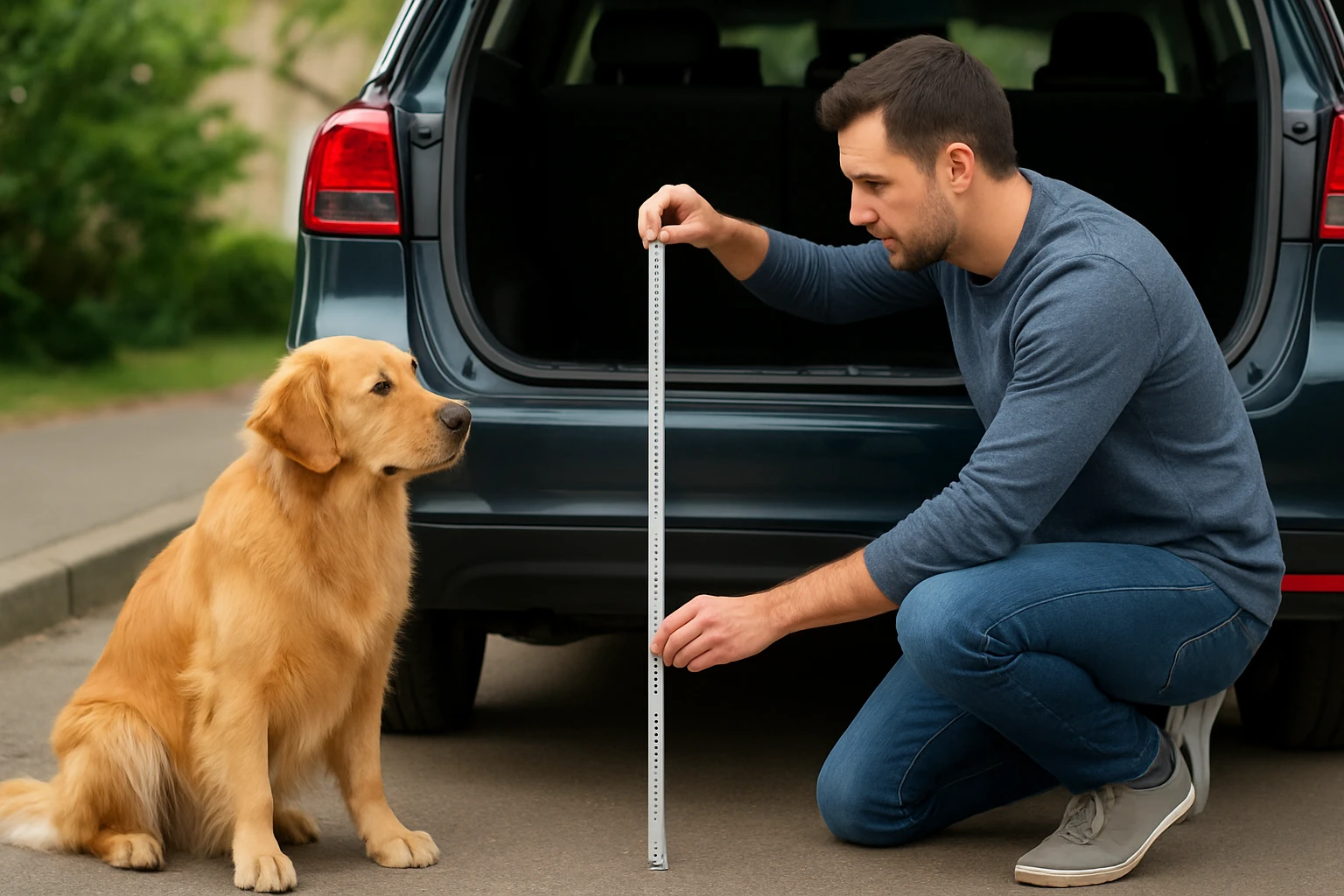
How to Measure Your Car for a Dog Ramp: Step-by-Step Guide for a Perfect Fit
This guide will teach readers how to obtain precise measurements of a vehicle, calculate the optimal ramp angle, and verify load capacity. By following each step, one can select a ramp that protects a dog’s joints, prevents injury, and fits securely within the vehicle. The information is valuable for pet owners who travel frequently, as well as for those who simply need a safe solution for loading a dog into a car.
What You Will Need
- Measuring tape (at least 8 feet)
- Notebook or digital note‑taking app
- Level or smartphone inclinometer app
- Pen or pencil
- Optional: HBTower Folding Dog Ramp for testing the fit
Step 1: Determine the Vehicle Floor Height
Begin by measuring the vertical distance from the ground to the car floor where the dog will step onto. Use the measuring tape to extend from the ground to the highest point of the floor, typically the rear cargo area or the back seat floor. Record the measurement in inches; this value will become the "rise" in later calculations. A common rise for a sedan ranges from 12 to 18 inches, while an SUV may present a rise of 20 to 30 inches.
Understanding the rise is essential because a ramp that is too steep can strain a dog’s hips and knees, especially senior or arthritic pets. A gentle slope distributes weight more evenly and reduces the risk of joint injury.
Step 2: Measure the Door or Tailgate Opening Width
Next, measure the width of the opening through which the ramp will pass. Open the rear door or tailgate fully and place the tape across the interior edge to the opposite edge. Record this width in inches. The ramp must be narrower than this measurement to avoid contact with the door frame during loading.
If the vehicle has a split‑folding rear seat, consider the combined width of the seatbacks when folded, as this will affect the usable opening. Ensure that the ramp’s width, when unfolded, is at least two inches less than the measured opening to allow for a comfortable clearance.
Step 3: Calculate the Desired Ramp Angle
The ideal ramp angle for most dogs lies between 15 and 20 degrees. Angles steeper than 20 degrees increase the effort required by the dog and may cause slipping. To calculate the angle, use the formula: angle = arctan(rise ÷ run). The "run" is the horizontal length of the ramp, which is the value you will determine in the next step.
Alternatively, use a smartphone inclinometer app: set the app to measure degrees, place the device on a flat surface, and slowly extend the ramp until the app reads the target angle. This method provides a quick visual confirmation of the slope.
Step 4: Determine the Required Ramp Length (Run)
Rearrange the angle formula to solve for the run: run = rise ÷ tan(desired angle). For example, if the rise is 18 inches and the desired angle is 18 degrees, the run equals 18 ÷ tan(18°) ≈ 55 inches. Round up to the nearest whole inch to ensure a slightly gentler slope.
When selecting a commercial ramp, compare the calculated run with the product specifications. The HBTower Folding Dog Ramp offers a 63‑inch length, which comfortably accommodates rises up to 30 inches while maintaining a gentle incline. Its 17.3‑inch width fits most sedan and SUV openings, and the ramp’s quad‑folding design allows storage when not in use.
For smaller dogs or limited storage space, the Gardner Pet Dog Stairs & Ramp provides a transformable 2‑in‑1 solution that can act as a short ramp or three‑step stairs. Although its maximum height is 20 inches, it is ideal for vehicles with lower floor heights and for owners who also need a stair for couch access.
Step 5: Verify Load Capacity and Weight Limits
Every ramp is rated for a maximum weight. Ensure that the combined weight of the dog and any accessories (harness, carrier, etc.) does not exceed this limit. The HBTower Folding Dog Ramp supports up to 250 lb, making it suitable for large breeds such as Labrador Retrievers, Golden Retrievers, and German Shepherds.
The PawStep Portable Folding Pet Ramp is rated for 165 lb, which covers most medium‑to‑large dogs but may be insufficient for very large breeds. Consider the dog’s weight, as well as the dynamic load that occurs when the dog steps onto the ramp, when making a final decision.
Step 6: Test Fit the Ramp Inside the Vehicle
Before finalizing the purchase, it is advisable to test the ramp’s fit. If a physical store is available, bring the folded ramp and place it inside the vehicle to confirm clearance. If purchasing online, many retailers offer a 30‑day return policy; use this window to verify that the ramp does not interfere with seat belts, airbags, or interior trim.
When the ramp is positioned, use the level or inclinometer app to confirm that the angle remains within the desired range. Adjust the ramp’s placement as needed, ensuring that the base remains stable on the ground and that the top sits flush with the vehicle floor.
Tips & Pro Tips
- Place a non‑slip mat on the ground beneath the ramp’s base to prevent movement on smooth surfaces.
- Secure the ramp with the included safety rope and stainless steel buckles (available on the HBTower model) to keep it from sliding during travel.
- For dogs with severe arthritis, consider a ramp with a padded cover, such as the Gardner Pet Dog Stairs & Ramp, which includes a waterproof, machine‑washable foam layer.
- Store the ramp in a climate‑controlled area to avoid warping of plastic components.
- Regularly inspect the ramp’s anti‑slip surface for wear; replace or add supplemental grip strips when necessary.
Conclusion
By accurately measuring the vehicle’s floor height, opening width, and calculating the appropriate ramp length, one can select a ramp that protects a dog’s joints and fits securely within the car. The recommended products—HBTower Folding Dog Ramp, Gardner Pet Dog Stairs & Ramp, and PawStep Portable Folding Pet Ramp—offer a range of options for different vehicle sizes and dog weights. Following the steps outlined in this guide will ensure a safe, comfortable loading experience for both pet and owner.
Products Mentioned in This Guide
Frequently Asked Questions
How do I measure the floor height of my car for a dog ramp?
Use a measuring tape to measure the vertical distance from the ground to the car floor where the dog will step, recording the result in inches.
What tools are needed to calculate the optimal ramp angle?
A measuring tape, a level or smartphone inclinometer app, and a notebook or digital app to record measurements.
How can I determine the correct ramp angle for my dog’s safety?
Divide the floor height by the ramp length and use a level or inclinometer to ensure the angle stays between 15° and 20°, which is gentle on joints.
What load capacity should I check when choosing a dog ramp?
Verify that the ramp’s maximum weight rating exceeds your dog’s weight plus any accessories, adding a safety margin of at least 10 %.
Can I test a dog ramp’s fit before purchasing?
Yes, bring a folding ramp like the HBTower model to the vehicle and check clearance and angle before buying.