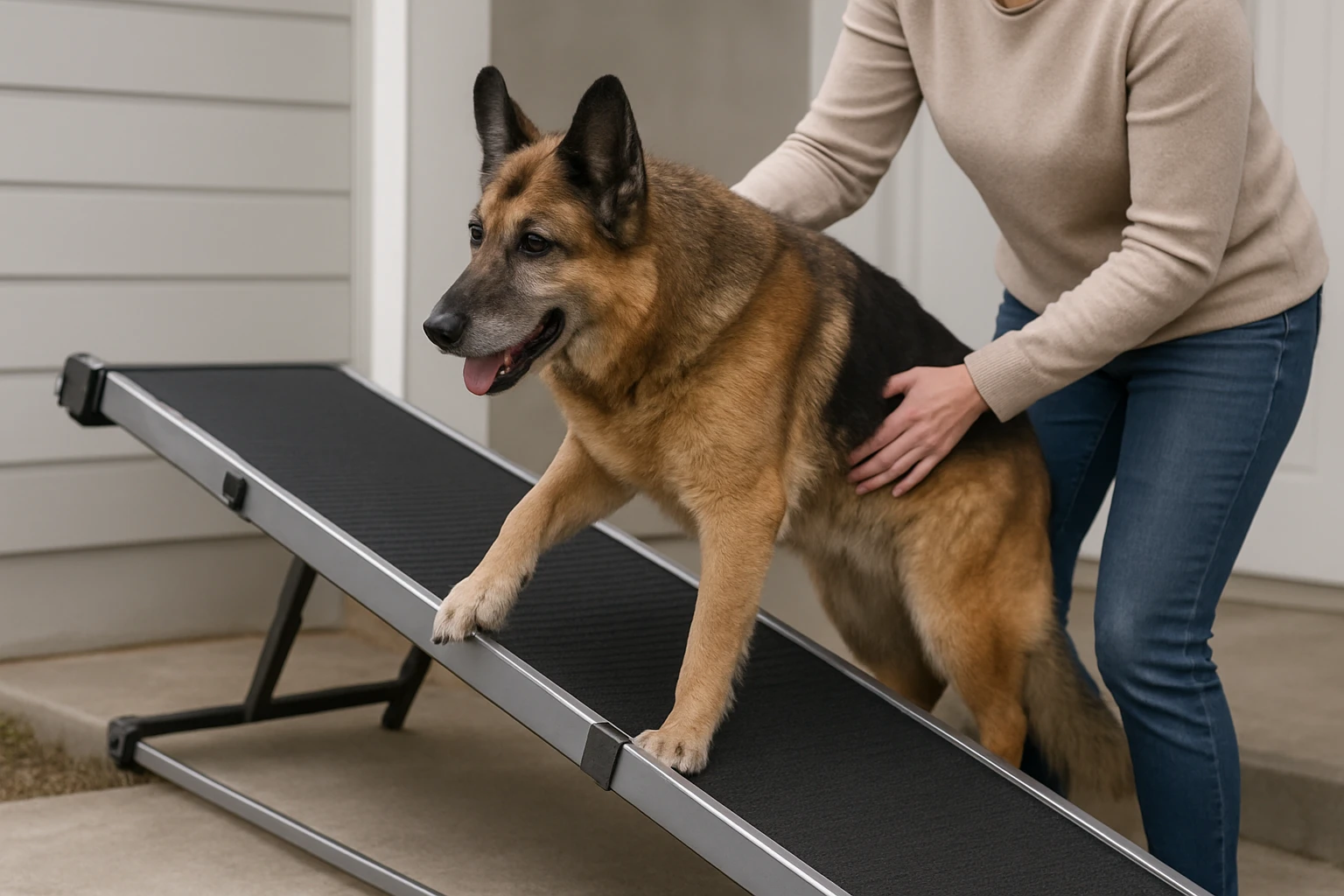
How to Teach a Senior Dog to Use a Ramp: Gentle, Step‑by‑Step Training for Older Dogs
This guide explains how one can train an older dog to use a ramp confidently, reduce joint strain, and maintain independence. The reader will learn a structured training plan, safety considerations, and how specific tools can simplify each phase. By following the recommendations, senior dogs will experience smoother transitions onto beds, sofas, and vehicles. The approach emphasizes patience, positive reinforcement, and the use of high‑quality ramps.
What You Will Need
- A sturdy, height‑adjustable ramp appropriate for the dog’s size and weight.
- Non‑slip surface material or padding for added traction.
- Treats and a clicker or verbal cue for positive reinforcement.
- Soft blankets or mats to place at the top and bottom of the ramp for comfort.
- Optional: storage bag for easy transport between rooms.
Step 1: Choose the Right Ramp
Selecting a ramp that matches the dog’s height, weight, and mobility level is essential. The Veehoo Adjustable Dog Ramp offers five height settings from 12 to 20 inches, a load capacity of 150 lb, and a non‑slip fabric that cushions joints. Priced at $69.99 with a rating of 3.9/5 from 46 reviews, it provides a balance of durability and portability, making it suitable for beds and couches. Its foldable design and side handles allow storage under furniture when not in use, which is valuable for households with limited space.
For owners who prefer a wooden aesthetic, the FurnPulse Folding Wood Dog Ramp features a 12.6‑inch extra‑wide surface, four adjustable heights (11‑20 inches), and a 200 lb capacity. At $52.99 and a rating of 3.6/5 from 79 reviews, it combines a premium solid‑wood construction with anti‑slip rubber pads that prevent sliding on hardwood or tile. The included storage bag and built‑in handle make it convenient for moving between rooms or traveling.
If storage is a priority, the Zerbuger Wider Dog Ramp with Storage integrates stair‑like steps with hidden compartments totaling 106 qt for toys, blankets, or treats. Priced at $29.97 and rated 4.6/5 from 2,797 reviews, it supports up to 200 lb and includes non‑slip bottoms. The dual purpose of climbing aid and storage makes it ideal for small apartments where space efficiency matters.
Step 2: Prepare the Training Area
Place the ramp on a flat, stable surface free of obstacles. If the floor is slippery, lay a rubber mat beneath the ramp to enhance stability. Position a soft blanket at the top of the ramp to create a welcoming landing zone for the dog. Ensure the ramp is set to the lowest height setting initially, allowing the dog to approach a gentle incline.
Check that the ramp’s safety fixture is engaged, especially for the Veehoo model, which can be rotated to lock the structure in place. Verify that the anti‑slip pads on the FurnPulse ramp are firmly attached to avoid movement during training. For the Zerbuger ramp, confirm that all zipper connections are secured so the steps do not wobble.
Step 3: Introduce the Ramp with Positive Association
Begin by allowing the dog to sniff the ramp while offering high‑value treats on the surface. Use a calm voice and a clicker or verbal cue such as “up” each time the dog steps onto the ramp. Reward any contact, even a paw placement, to build confidence. Repeat this process for several short sessions of five minutes each, ensuring the dog does not become overwhelmed.
When the dog shows willingness to place both front paws on the ramp, gradually increase the distance traveled. Keep the ramp at its lowest height until the dog consistently walks up and down without hesitation. The non‑slip fabric on the Veehoo ramp and the rubber pads on the FurnPulse ramp provide the traction needed for hesitant paws.
Step 4: Adjust Height Incrementally
Once the dog can traverse the lowest setting comfortably, raise the ramp one notch to the next height level. Observe the dog’s gait; if any signs of strain appear, revert to the previous setting for a few days before attempting another increase. The Veehoo ramp’s five height options allow precise adjustments, while the FurnPulse ramp’s four levels and the Zerbuger ramp’s step design enable smooth transitions.
Document the height changes in a training log, noting the date, height, and the dog’s response. This record helps identify the optimal height that balances ease of access with minimal joint stress. For senior dogs with arthritis, maintaining a lower incline often reduces pain while still providing the necessary lift.
Step 5: Reinforce the Desired Behavior
Incorporate the ramp into daily routines, such as encouraging the dog to use it when climbing onto the bed for sleep or onto the sofa for relaxation. Consistency reinforces the behavior, turning the ramp into a habitual tool rather than a novelty. Continue to reward successful attempts with treats and praise, gradually tapering the treats as the behavior becomes ingrained.
If the dog hesitates at the top of the ramp, use a treat to lure the final step and click the cue once the dog reaches the destination. Over time, the dog will associate the ramp with positive outcomes, reducing anxiety and encouraging independent use.
Tips & Pro Tips
- Use treats that are small, soft, and highly motivating to avoid over‑feeding.
- Maintain a calm environment; loud noises can startle senior dogs and impede learning.
- Check the ramp’s stability before each session; tighten any loose bolts or re‑engage safety fixtures.
- Consider placing a low‑profile guard rail on the side of the ramp for extra security, especially for dogs with balance issues.
- Rotate the ramp’s position periodically to prevent the dog from developing a single‑point habit that may limit flexibility.
Troubleshooting Common Issues
Dog refuses to step on the ramp: Reduce the height to the lowest setting and increase the number of treat‑luring sessions. Ensure the surface is completely dry, as moisture can reduce traction.
Ramp slides on hardwood floor: Apply a non‑slip rug pad beneath the ramp or use the anti‑slip rubber pads included with the FurnPulse model.
Joint pain after use: Verify that the ramp’s incline is not too steep; lower the height and add a soft blanket on the ramp surface for additional cushioning.
Conclusion
By selecting an appropriate ramp, preparing a safe environment, and employing gradual, reward‑based training, one can help a senior dog regain independence and reduce joint strain. The Veehoo Adjustable Dog Ramp, FurnPulse Folding Wood Dog Ramp, and Zerbuger Wider Dog Ramp with Storage each offer unique advantages that align with different household needs. Consistent practice, patience, and attention to the dog’s comfort will result in a reliable, long‑term solution for navigating elevated furniture.
Products Mentioned in This Guide
Frequently Asked Questions
What size and weight ramp is best for a senior dog?
Choose a height‑adjustable ramp that can support your dog’s weight and reach the surface without a steep angle, typically no more than 18‑20 degrees.
How can I make the ramp safe for my older dog?
Add a non‑slip surface or padding and place soft blankets at the top and bottom to prevent slipping and provide comfort.
What training method works best for teaching a senior dog to use a ramp?
Use positive reinforcement with treats and a clicker or verbal cue, rewarding each successful step up or down.
How long should training sessions be for a senior dog?
Keep sessions short—5 to 10 minutes—and repeat daily to build confidence without causing fatigue.
Can I use the same ramp for beds, sofas, and car access?
Yes, a sturdy, adjustable ramp can be repositioned for different heights, making it versatile for furniture and vehicle entry.