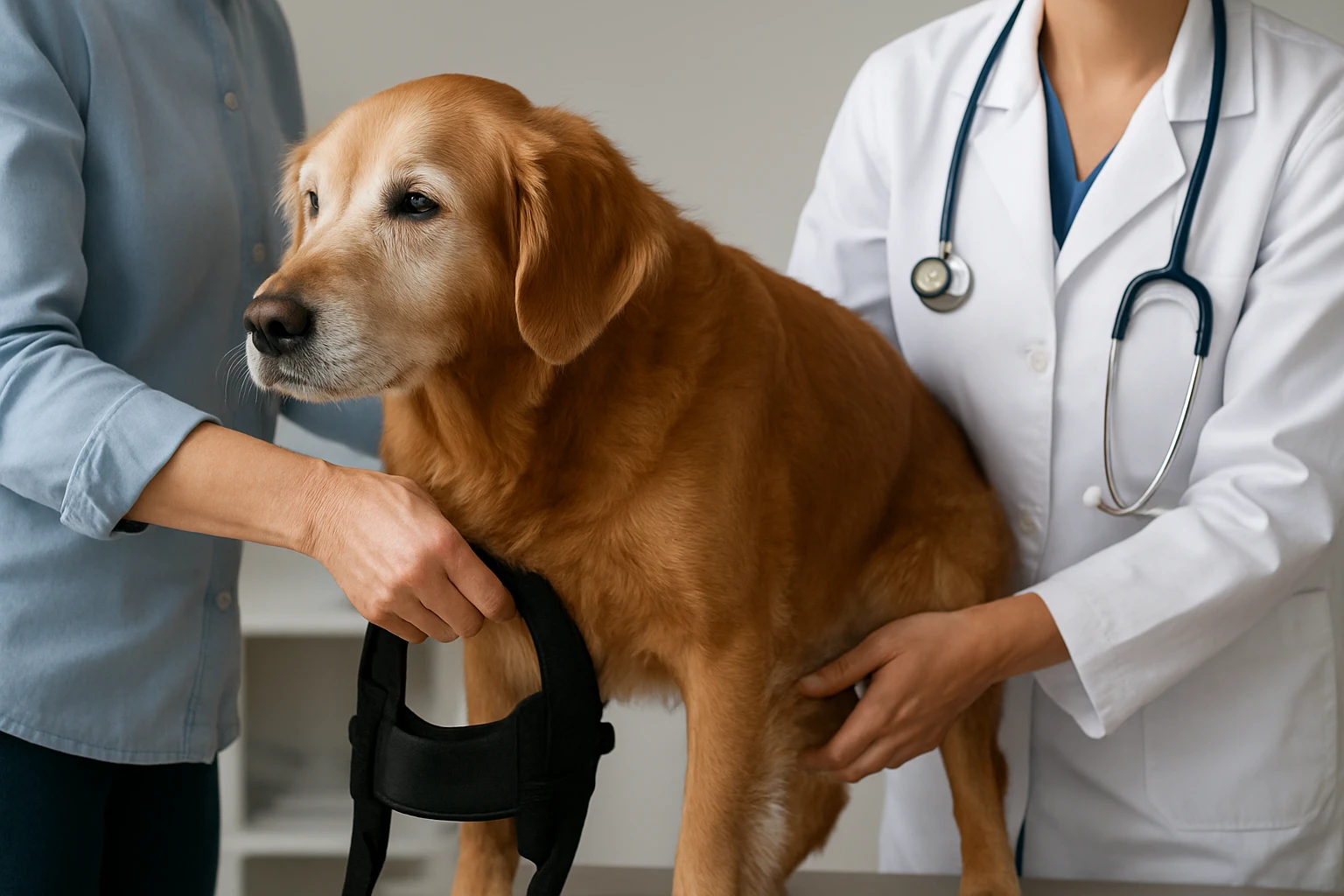

Senior Dog Mobility Assessment Guide: What Orthopedists Check and Why
Introduction
Senior dogs often experience reduced mobility due to arthritis, joint degeneration, or neuromuscular weakness. This guide explains the systematic approach orthopedists use to evaluate canine locomotion, outlines the clinical tools employed, and highlights evidence‑based interventions. Readers will learn how to interpret physical findings, understand imaging options, and select supportive products such as the Coodeo Dog Lift Harness and Vetoquinol Flexadin Joint Chews to improve quality of life.
Background and Context
Canine musculoskeletal health declines with age, mirroring human osteoarthritis patterns. The most common clinical signs include stiffness after rest, reluctance to climb stairs, and altered gait. Orthopedic specialists rely on a combination of subjective observation and objective measurement to differentiate primary joint disease from secondary causes such as obesity or neurological deficits. Understanding these fundamentals enables owners to collaborate effectively with veterinarians and to implement targeted home‑care strategies.
Physical Examination
The first step in any mobility assessment is a thorough physical examination. The veterinarian palpates each limb, assesses range of motion, and evaluates muscle tone. Joint effusion, crepitus, and pain on flexion are recorded. A systematic approach ensures that subtle abnormalities are not overlooked.
- Range of Motion (ROM): Measured in degrees using a goniometer; decreased ROM often indicates osteoarthritis.
- Muscle Atrophy: Visual inspection of the quadriceps and gluteal groups reveals chronic disuse.
- Pain Response: Mild to moderate pain provoked by manipulation guides therapeutic intensity.
When a dog demonstrates difficulty rising from a seated position, a supportive device such as the Coodeo Dog Lift Harness can provide temporary assistance while the underlying condition is addressed.
Gait Analysis
Gait analysis quantifies locomotor abnormalities. Orthopedists may use a pressure‑sensitive walkway, high‑speed video, or simple visual scoring systems. Key parameters include stride length, stance time, and limb symmetry. Deviations from normal patterns often correlate with pain or mechanical restriction.
Owners can perform a basic home assessment by observing the dog on a smooth surface. Look for limping, dragging, or a shortened stride on one side. Recording a short video and sharing it with the veterinarian can expedite diagnosis.
Imaging Studies
Radiography remains the gold standard for visualizing bone and joint architecture. Orthopedic specialists obtain orthogonal views of the hip, stifle, and elbow to identify osteophytes, joint space narrowing, or subchondral sclerosis. Advanced imaging, such as computed tomography (CT) or magnetic resonance imaging (MRI), may be indicated for complex cases involving soft‑tissue structures.
When imaging confirms degenerative joint disease, a multimodal treatment plan typically includes weight management, nutraceutical supplementation, and physical therapy.
Pain Assessment and Management
Accurate pain assessment is essential for tailoring therapy. Veterinarians employ validated scales such as the Canine Brief Pain Inventory (CBPI) or the Glasgow Composite Measure Pain Scale. These tools capture owner‑reported and clinician‑observed pain dimensions.
Pharmacologic options include non‑steroidal anti‑inflammatory drugs (NSAIDs), gabapentin, and disease‑modifying osteoarthritis drugs (DMOADs). In addition to medication, nutraceuticals provide a non‑prescription adjunct. The Vetoquinol Flexadin Joint Chews contain undenatured collagen, omega‑3 fatty acids, and vitamin E, which together support cartilage health and reduce inflammatory mediators.
- Undenatured Collagen: A unique form of collagen that differs from glucosamine and chondroitin by directly modulating the immune response.
- Omega‑3 Fatty Acids: Provide anti‑inflammatory benefits that complement NSAID therapy.
- Vitamin E: Acts as an antioxidant, protecting joint tissues from oxidative stress.
Each chew delivers 40 mg of collagen and is rated 4.7 out of 5 stars by over 4,500 reviewers, indicating high owner satisfaction.
Therapeutic Rehabilitation
Rehabilitation programs incorporate controlled exercise, hydrotherapy, and manual therapy. Low‑impact activities such as underwater treadmill sessions improve muscle strength without overloading painful joints. Stretching routines maintain flexibility, while proprioceptive exercises enhance balance.
Assistive devices play a pivotal role during the early phases of rehabilitation. The Coodeo Dog Lift Harness features breathable, padded straps and an adjustable belt, allowing caregivers to safely lift dogs up stairs or onto furniture. Its user‑friendly design protects the animal’s private area and is washable for hygiene. The product holds a 4.2‑star rating from more than 6,600 reviewers, reflecting reliable performance in real‑world settings.
- Adjustable Length: Accommodates caregivers of varying heights.
- Detachable Belt: Facilitates cleaning and storage.
- Breathable Material: Reduces skin irritation during prolonged use.
Comparison/Selection Guide
Choosing the appropriate supportive product depends on the dog’s specific functional limitations and the caregiver’s needs. The table below contrasts the two featured items.
| Feature | Coodeo Dog Lift Harness | Vetoquinol Flexadin Joint Chews |
|---|---|---|
| Primary Purpose | Mechanical support for lifting and stability | Oral nutraceutical for joint health |
| Price | $39.98 | $50.97 |
| Rating (reviews) | 4.2/5 (6,644 reviews) | 4.7/5 (4,530 reviews) |
| Key Benefits | Assists with stairs, reduces fall risk, breathable material | Provides undenatured collagen, omega‑3, vitamin E; once‑daily dosing |
| Maintenance | Hand‑washable, detachable belt | Store in a cool, dry place; chew daily |
| Ideal For | Dogs with severe balance deficits or post‑surgical recovery | Dogs with early‑stage osteoarthritis or chronic joint pain |
Owners of dogs that struggle to rise independently may prioritize the lift harness, whereas those seeking a long‑term dietary adjunct should consider the joint chews.
Best Practices & Tips
- Maintain an optimal body condition score; excess weight accelerates joint degeneration.
- Implement low‑impact exercise such as short, frequent walks on soft surfaces.
- Schedule regular veterinary re‑evaluations to monitor progression and adjust therapy.
- Use the Coodeo Dog Lift Harness during stair navigation until muscle strength improves.
- Administer one Vetoquinol Flexadin Joint Chew daily, preferably with a meal to enhance absorption.
- Incorporate joint‑friendly supplements only after consulting the veterinarian to avoid drug‑nutrient interactions.
- Keep a mobility journal documenting gait changes, pain scores, and product usage to facilitate data‑driven decisions.
Frequently Asked Questions
1. How often should a senior dog be evaluated by an orthopedist?
Annual examinations are recommended for dogs over eight years of age, with additional visits if the animal exhibits sudden lameness, swelling, or loss of function.
2. Can the Coodeo Dog Lift Harness be used for small breeds?
Yes; the harness is adjustable and includes detachable straps that accommodate a wide range of body sizes, making it suitable for small to medium dogs.
3. Are Flexadin Joint Chews safe for cats?
Although the product is formulated for both dogs and cats, owners should verify the appropriate dosage based on the cat’s weight and consult a veterinarian before use.
4. What distinguishes undenatured collagen from traditional glucosamine?
Undenatured collagen interacts with the immune system to promote the body’s own collagen synthesis, whereas glucosamine primarily provides building blocks for cartilage repair.
5. How long does it take to see improvement after starting joint chews?
Clinical studies suggest noticeable improvement in mobility scores within four to six weeks of consistent daily administration.
6. Is it necessary to combine medication with nutraceuticals?
Combination therapy often yields superior pain control, as nutraceuticals address underlying inflammation while NSAIDs provide rapid symptom relief.
7. What signs indicate that a lift harness is no longer needed?
When the dog can ascend and descend stairs without assistance, maintains stable balance on uneven terrain, and exhibits normal muscle tone, the caregiver may gradually reduce reliance on the harness.
Conclusion
Assessing senior dog mobility requires a systematic blend of physical examination, gait analysis, imaging, and pain scoring. By understanding each component, owners can collaborate effectively with orthopedists to formulate individualized treatment plans. Supportive products such as the Coodeo Dog Lift Harness and Vetoquinol Flexadin Joint Chews complement clinical interventions, enhancing comfort and extending functional independence for aging companions.
Products Featured in This Guide
Coodeo Dog Lift Harness
Price: $39.98
Rating: 4.2/5.0 (6,644 reviews)
Featured because it provides safe, adjustable support for dogs with balance deficits, facilitating stair navigation and post‑surgical recovery.
Vetoquinol Flexadin Joint Chews
Price: $50.97
Rating: 4.7/5.0 (4,530 reviews)
Featured because it delivers undenatured collagen, omega‑3 fatty acids, and vitamin E in a convenient once‑daily chew, supporting cartilage health and reducing inflammation in senior dogs.
