Introduction
One learns how to adapt a living space so that an aging canine can move safely and comfortably. The guide explains practical modifications that reduce injury risk and preserve independence for senior dogs. Readers will discover why visibility, barrier placement, floor traction, and resting areas are essential components of a senior‑dog safety plan. Implementing these steps can extend the quality of life for a beloved companion while providing peace of mind for the owner.
What You’ll Need
- Reflective dog safety vest
- Adjustable baby/dog safety gate
- Foldable wooden dog gate
- Non‑slip floor mats
- Soft bedding and supportive cushions
- Measuring tape and basic hand tools
Step 1: Assess High‑Traffic Areas
One should begin by walking through the home and noting corridors, staircases, and doorways that receive the most foot traffic. These zones often become hazardous when a senior dog’s vision or hearing declines, because sudden obstacles may cause trips or collisions. Use a measuring tape to record the width of each opening, ensuring that any added barrier will fit securely without gaps. Document any sharp corners, low‑lying furniture, or loose cords that could pose entanglement risks.
Step 2: Enhance Visibility in Low Light
Older dogs frequently experience reduced night vision, making it difficult to navigate dimly lit rooms. Adding a reflective garment improves a dog’s visibility to its owner and to other household members, especially during evening walks or bathroom trips. The ViewBrite Reflective Dog Safety Vest offers superior visibility up to 500 feet, water resistance, and reinforced stitching that withstands playful activity. Priced at $8.99 with a 4.6‑star rating from 95 reviews, this lightweight vest can be worn over a harness without restricting movement.
One should attach the vest securely using the adjustable straps, ensuring the reflective panels cover the torso where they are most visible. The high‑visibility yellow color contrasts with typical indoor lighting, reducing the chance of accidental bumps. When the dog moves through low‑light areas, the vest reflects ambient light, alerting the owner to the animal’s presence. This simple tool provides a cost‑effective solution compared with installing additional lighting fixtures.
Step 3: Install Physical Barriers to Restrict Access
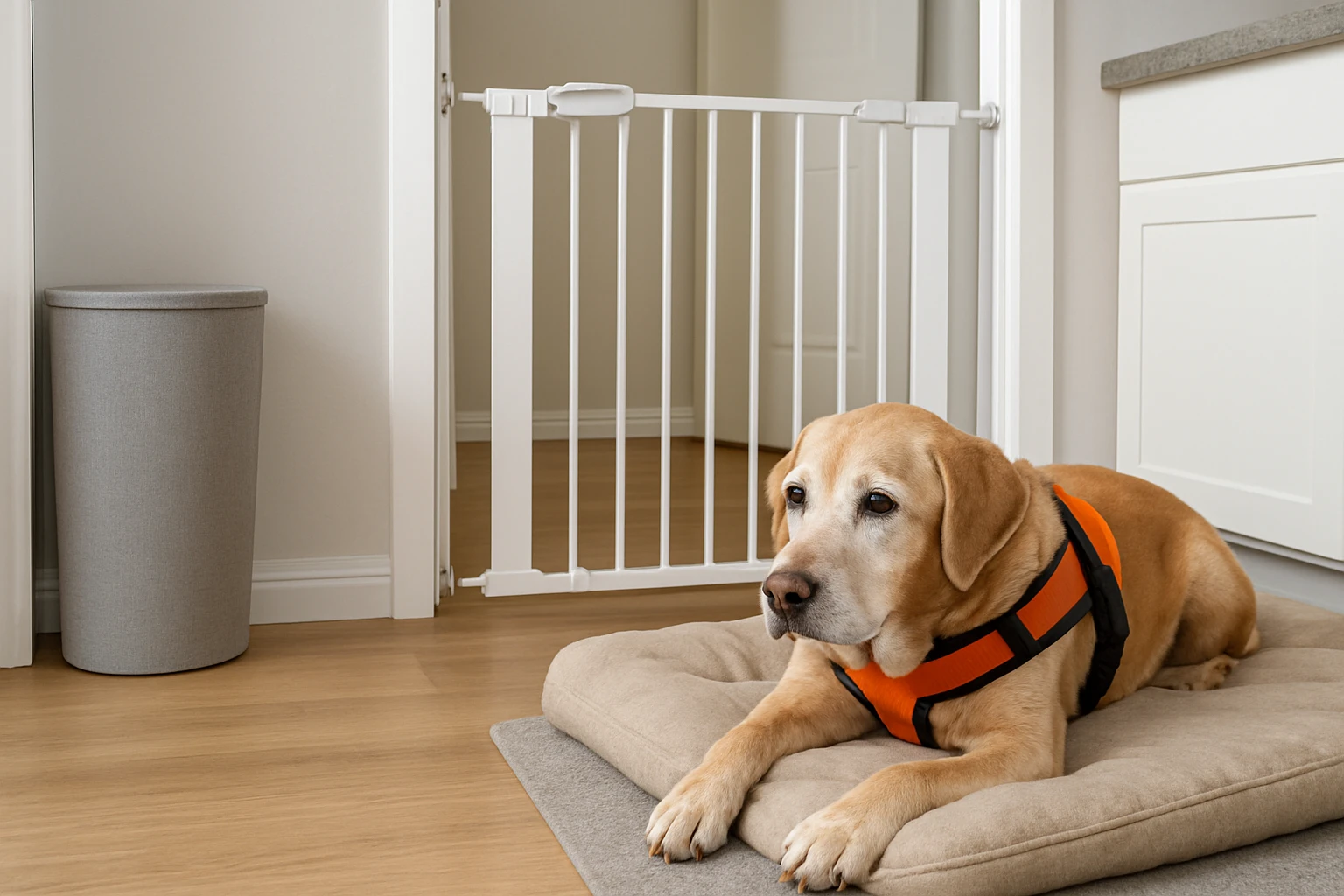
Senior dogs may be prone to wandering into unsafe zones such as kitchens, stairwells, or rooms with heavy foot traffic. Installing a gate creates a controlled environment that limits exposure to hazards while preserving the dog’s freedom in safe areas. The keny Adjustable Baby/Dog Safety Gate expands to fit openings between 29‑inches and 42.5‑inches, making it suitable for most doorway widths. At $49.99 and a 4.5‑star rating from 1,340 reviews, this gate features an auto‑close function, double‑lock design, and pressure‑mounted installation that requires no tools.
One should position the gate at the entrance to staircases or kitchen thresholds, adjusting the width using the included extension kits for a snug fit. The auto‑close mechanism ensures the gate returns to a closed position after each passage, preventing accidental openings. The double‑lock system resists tampering by curious pets, providing a reliable barrier that does not compromise the dog’s sense of security. For wider openings such as double doors or large hallway spans, the Pawland Foldable Wooden Dog Gate offers a freestanding solution that folds into a Z‑shape and can span up to 60 inches.
The Pawland gate, priced at $53.99 with a 4.6‑star rating from 1,068 reviews, combines sturdy FSC‑certified wood, steel wire reinforcement, and non‑slip rubber feet. Its accordion‑style design allows quick expansion for large doorways and rapid collapse for storage, making it ideal for occasional use in living rooms or open‑plan areas. Because the gate is heavy enough to remain stable when nudged, it does not shift under a senior dog’s weight, yet it is light enough for an adult to relocate without assistance. Compared with permanent wall‑mounted solutions, this gate offers flexibility for renters or homes undergoing reconfiguration.
Step 4: Create Comfortable Rest Zones
Senior dogs benefit from designated resting areas that support joints and reduce the effort required to rise and lie down. Choose a quiet corner away from drafts and high‑traffic pathways, then place an orthopedic foam mattress or a memory‑foam cushion that conforms to the animal’s body shape. Adding a low‑profile blanket can provide additional warmth without increasing the height of the surface, which could be challenging for an arthritic dog to climb.
One should ensure the rest zone is on a non‑slip surface; a rubber‑backed mat prevents the mattress from sliding when the dog shifts position. Position the area near a water source so the dog can drink without navigating stairs. Regularly rotate the bedding to maintain cleanliness and to inspect for wear that could expose hard edges. By offering a stable, cushioned space, the owner reduces the likelihood of joint strain and encourages the dog to rest in a safe location.
Step 5: Manage Flooring Hazards
Hard floors such as tile, hardwood, or laminate can become slippery for senior dogs whose paw pads may be thinner or whose gait is unsteady. Applying non‑slip rugs or runner tapes in high‑risk zones creates friction that improves traction. Choose low‑pile rugs that are easy to clean and that do not present a tripping hazard themselves.
One should secure rugs with double‑sided adhesive or non‑slip backing to prevent movement when the dog walks across them. In areas where rugs are not feasible, such as kitchens, consider using silicone floor strips that blend with the existing surface while providing grip. Regularly inspect the flooring for loose tiles or raised edges that could catch a dog’s claws. Maintaining a stable walking surface complements the barrier and visibility measures described earlier.
Tips & Pro Tips
- Test each gate with a gentle push to confirm it does not wobble before allowing the dog to approach.
- Schedule regular veterinary check‑ups to assess vision and hearing changes that may affect safety needs.
- Rotate the reflective vest’s position weekly to prevent skin irritation from prolonged contact.
- Keep a small supply of pet‑safe cleaning wipes near each gate to quickly address accidents.
- Consider installing motion‑activated night lights in hallways to supplement the reflective vest’s effectiveness.
Troubleshooting
If the automatic gate fails to close, verify that the latch is not obstructed by clothing or a pet toy, and adjust the tension screw according to the manufacturer’s instructions. Should the reflective vest cause discomfort, check that the straps are not overtightened and that the vest’s material is not rubbing against a collar. When the wooden gate appears unstable, ensure the rubber feet are fully seated on a level surface and add a small weight at the base if necessary.
Conclusion
One now possesses a comprehensive checklist for child‑proofing a home to accommodate an aging dog, covering visibility, barriers, flooring, and rest areas. By implementing the steps outlined, owners can mitigate common hazards and preserve their pet’s independence and comfort. The recommended tools—such as the ViewBrite Reflective Dog Safety Vest, keny Adjustable Baby/Dog Safety Gate, and Pawland Foldable Wooden Dog Gate—offer reliable, affordable solutions that integrate seamlessly into everyday life. Continued vigilance and periodic adjustments will ensure the home remains a safe sanctuary throughout the senior years of a beloved canine companion.
Products Mentioned in This Guide
Frequently Asked Questions
What are the most important modifications to make a home safer for an aging dog?
Install non‑slip floor mats, add low, stable gates, and provide soft bedding to reduce slips, block hazards, and support joints.
How can I choose the right size safety gate for my senior dog?
Measure the width of each doorway or hallway and select an adjustable gate that fits snugly without gaps, ensuring the dog can’t squeeze through.
Why should I use a reflective safety vest on an older dog?
A reflective vest improves visibility in low‑light areas, helping the dog avoid obstacles and alerting family members to its presence.
What type of flooring is best for senior dogs with limited traction?
Low‑pile, non‑slip mats or rubberized flooring provide extra grip while being comfortable for joints.
How often should I reassess my home’s safety for a senior dog?
Reevaluate every 3–6 months or after any change in the dog’s mobility to adjust barriers, mats, and bedding as needed.