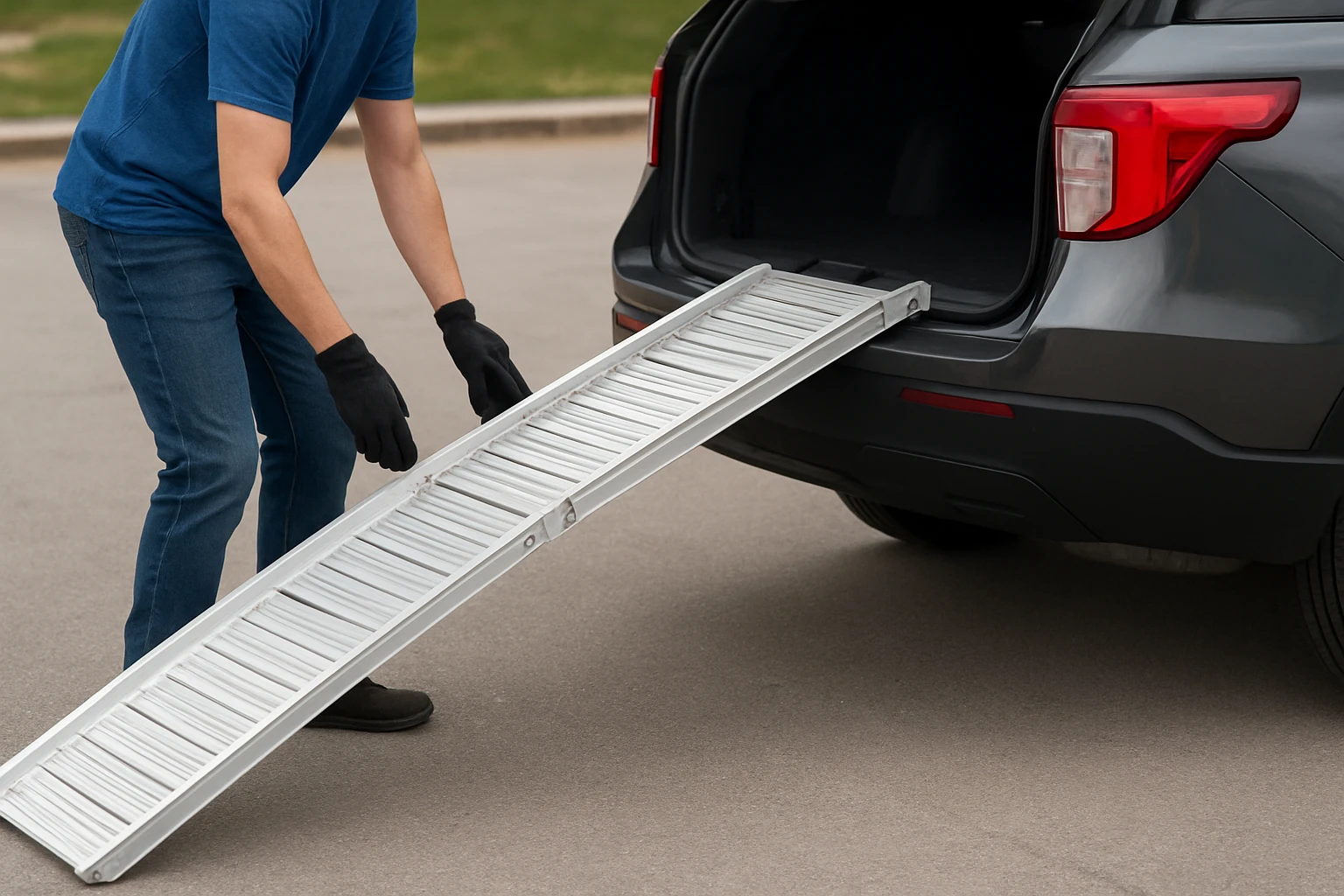
How to Set Up a Portable Ramp for SUVs, Trucks, and Sedans: Step‑by‑Step Safety Guide
Introduction
Setting up a portable ramp for a vehicle can transform the experience of loading pets, equipment, or mobility devices. This guide will teach readers how to select the appropriate ramp, prepare the area, and install the ramp securely on SUVs, trucks, and sedans. By following each step, one can reduce strain on joints, prevent damage to the vehicle, and ensure a safe, stable transition for both humans and animals. The information is valuable for pet owners, movers, and anyone who requires an accessible entry point for heavy or awkward loads.
What You’ll Need
- Portable ramp (recommended options are listed below)
- Measuring tape
- Non‑slip mat or rubber pads (optional for extra traction)
- Safety rope or straps
- Level or bubble gauge
- Gloves for handling heavy components
Step 1: Measure Your Vehicle’s Loading Height
Before selecting a ramp, determine the vertical distance from the ground to the vehicle’s floor. Use a measuring tape to record the height at the entry point, whether it is a rear hatch, side door, or trunk opening. This measurement will dictate the required ramp length to achieve a gentle slope, typically between 5° and 14°. A longer ramp reduces the angle, lessening stress on a dog’s joints or a wheelchair’s wheels. For example, a 71‑inch ramp creates a shallower incline than a standard 63‑inch model, making it ideal for senior pets.
When the height is known, compare it against the specifications of the ramps below. The GAOYITK Large Folding Dog Ramp extends to 71 inches, providing a gentle slope for vehicles up to 20 inches high. The HerCcreta Portable Dog Ramp measures 63 inches, suitable for most sedans and small SUVs. For heavier loads such as equipment or a wheelchair, the Stalwart Heavy Duty Curb Ramp offers a 27‑inch length with a 1000 lb capacity, while the CAMMOO 6 FT Wheelchair Ramp provides a 72‑inch span for larger angles.
Step 2: Unfold and Inspect the Ramp
Place the ramp on a flat surface and unfold it fully. Check that all hinges, latches, and screws are securely tightened. The GAOYITK ramp features a four‑fold design with double‑tightened screws, ensuring stability under a 250 lb load. The HerCcreta ramp includes an internal load‑bearing crossbar that prevents wobble, while the Stalwart curb ramp’s high‑density polyethylene construction resists cracking under a 1000 lb weight. The CAMMOO wheelchair ramp incorporates four adjustable legs and D‑shaped safety latches for a locked, non‑loose configuration.
Confirm that the non‑slip surface is intact. Both GAOYITK and HerCcreta ramps use PVC looped fibers or carpet‑like material to provide traction even when wet. The Stalwart ramp’s textured surface offers extra grip for wheeled carts, and the CAMMOO ramp includes triple anti‑slip zones for wheelchair wheels. If any component appears damaged, replace it before proceeding.
Step 3: Position the Ramp at the Vehicle
Align the ramp with the vehicle’s entry point, ensuring the wider end faces the vehicle for maximum stability. For SUVs and trucks, the 20‑inch width of the GAOYITK ramp gives ample space for larger dogs, while the 17.3‑inch width of the HerCcreta ramp accommodates medium‑size breeds. Place the ramp so that the base rests on a level surface; use a level or bubble gauge to verify that the ramp is not tilted sideways.
If the ground is uneven, add rubber pads or a non‑slip mat beneath the base. The Stalwart curb ramp includes side rails that keep carts from sliding off, making it ideal for uneven driveways. For wheelchair users, the CAMMOO ramp’s adjustable legs can be raised or lowered to compensate for step height differences, creating a perfectly level transition.
Step 4: Secure the Ramp
Use the safety rope or straps supplied with the ramp to anchor it to the vehicle’s frame or tow bar. The HerCcreta ramp comes with a safety rope and stainless steel buckles, providing extra security during loading. The GAOYITK ramp’s folding design includes built‑in handles that can be used to steady the ramp while loading. For heavier equipment, loop the Stalwart ramp’s side rails around the vehicle’s bumper or use the built‑in handles to keep the ramp from shifting.
Check that all latches are fully engaged. The CAMMOO ramp’s D‑shaped safety latches lock the sections together, preventing accidental collapse. A quick tug test should reveal no movement; if the ramp shifts, readjust the straps or reposition the base until it feels firm.
Step 5: Load the Pet, Wheelchair, or Cargo
Guide the pet or equipment up the ramp slowly, encouraging steady, even steps. The GAOYITK ramp’s non‑slip PVC surface offers excellent traction for senior dogs, while the HerCcreta ramp’s Loofah‑like carpet reduces impact on paws. For wheelchairs, the CAMMOO ramp’s triple anti‑slip design ensures wheels stay centered. If loading a heavy cart, the Stalwart ramp’s 1‑inch side rails keep the cart from veering off the edges.
Assist as needed, especially for nervous animals or heavy loads. Use a gentle voice and treats for dogs, and maintain a steady pace to avoid sudden jolts. For wheelchair users, position the ramp at a 5‑14° angle to reduce effort, as recommended by the manufacturer.
Tips & Pro Tips
- Check weight limits. Exceeding the ramp’s capacity can cause structural failure. GAOYITK and HerCcreta support up to 250 lb, Stalwart up to 1000 lb, and CAMMOO up to 800 lb.
- Maintain a gentle slope. Aim for a 1:12 ratio (1 inch rise per 12 inches run) to protect joints.
- Use a rubber mat. Adding a thin rubber mat under the ramp’s base improves grip on smooth garage floors.
- Store properly. Fold the ramp according to the manufacturer’s instructions; the GAOYITK and HerCcreta ramps fold into compact sizes for easy trunk storage.
- Regularly inspect hardware. Tighten screws on the GAOYITK ramp and check the crossbar on the HerCcreta ramp before each use.
Troubleshooting
| Problem | Possible Cause | Solution |
|---|---|---|
| Ramp slides during use | Insufficient friction on ground | Place rubber pads or a non‑slip mat beneath the base; tighten all straps. |
| Pet slips on surface | Surface worn or wet | Clean the PVC fibers; dry the ramp; consider a fresh non‑slip cover. |
| Ramp feels wobbly | Loose hinges or screws | Re‑tighten all fasteners; for GAOYITK, check double‑tightened screws; for HerCcreta, verify the internal crossbar is seated. |
| Cart rolls off side rails | Side rails not engaged | Adjust the Stalwart ramp’s side rails to snugly hug the cart wheels. |
Conclusion
By measuring vehicle height, selecting a suitable ramp, inspecting and securing it, and loading carefully, one can safely transport pets, wheelchairs, or heavy cargo on any SUV, truck, or sedan. The recommended products—GAOYITK Large Folding Dog Ramp, HerCcreta Portable Dog Ramp, Stalwart Heavy Duty Curb Ramp, and CAMMOO 6 FT Wheelchair Ramp—offer reliable performance, high weight capacities, and thoughtful safety features. Following the tips and troubleshooting advice ensures long‑term durability and peace of mind.
Products Mentioned in This Guide
Frequently Asked Questions
How do I determine the correct ramp length for my SUV, truck, or sedan?
Measure the vertical distance from the ground to the vehicle floor and choose a ramp whose length creates a gentle incline (ideally 1:12 ratio).
What safety equipment should I use when setting up a portable ramp?
Use safety ropes or straps to secure the ramp, a level to verify even placement, and optional non‑slip mats for extra traction.
Can a portable ramp be used for both pets and heavy equipment?
Yes, as long as the ramp’s weight capacity exceeds the combined load of the pet or equipment and any additional accessories.
Do I need to adjust the ramp for different vehicle types?
Position the ramp so its top aligns with the vehicle’s loading edge; trucks may require a longer ramp due to higher clearance, while sedans need a shorter, steeper incline.
How should I store and maintain my portable ramp after use?
Clean the surface, dry it thoroughly, and store it in a dry place away from direct sunlight to prevent warping or corrosion.